Apple CEO Tim Cook Explains His Relationship With Trump
Leading Apple: Tim Cook's Approach to Engaging with Power
In the complex world of global business and politics, how a company's leader chooses to interact with government officials can define its path. Tim Cook, the influential CEO of Apple, has consistently maintained a working relationship with U.S. President Donald Trump, a subject he recently addressed in a candid interview. This engagement highlights Cook's specific philosophy on leadership, advocacy, and navigating the often-turbulent waters of national and international policy.
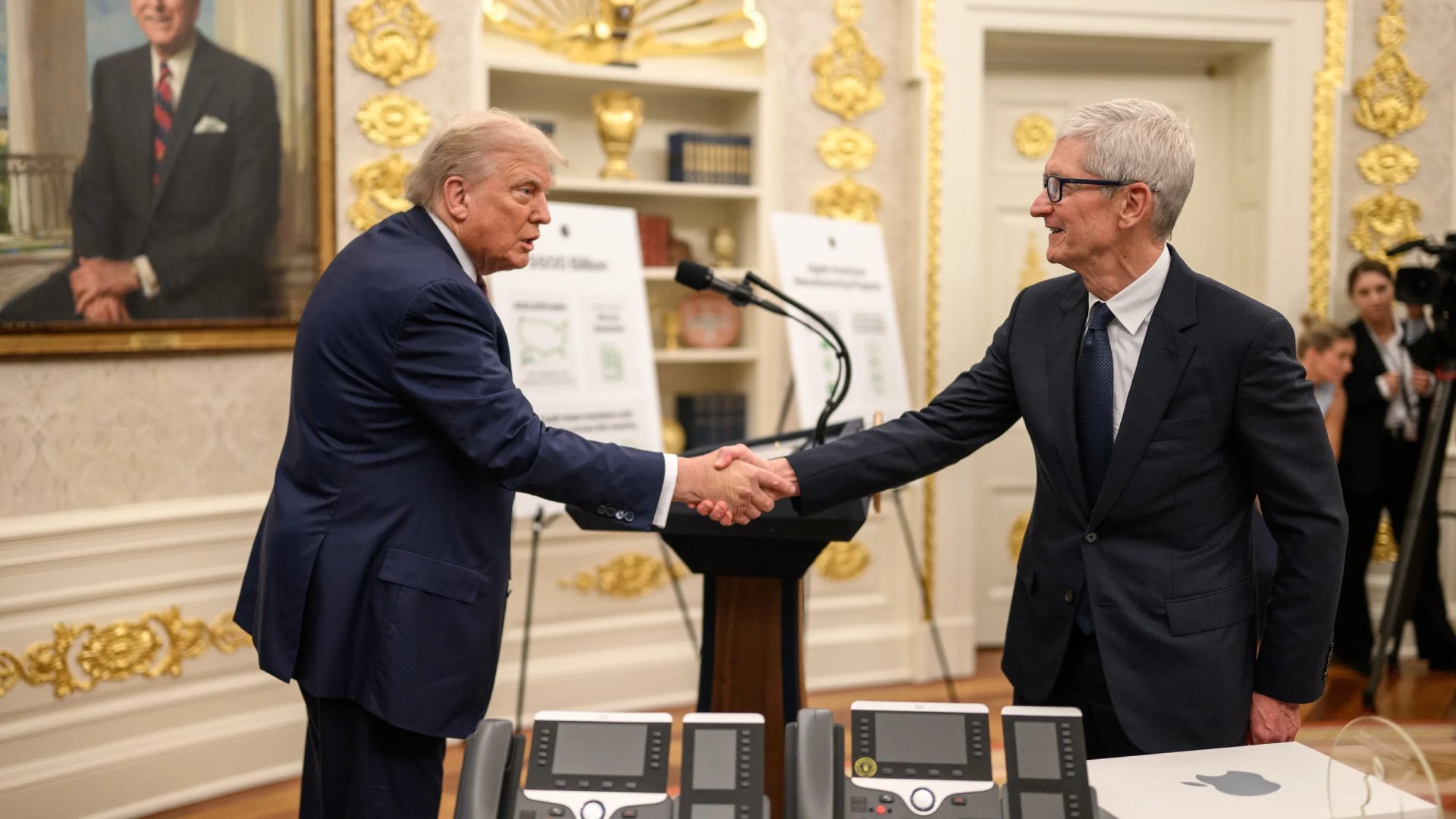
Cook's insights came during a conversation with Esquire's Ryan D'Agostino. While the primary focus of the discussion was a landmark occasion – Apple's 50th anniversary – D'Agostino also probed Cook on his strategy for interacting with the Trump administration. Cook’s response offered a window into his pragmatic yet principled approach, emphasizing direct communication and persistent advocacy over detached criticism.
The Importance of Accessibility and Direct Dialogue
When asked about his interactions, Cook noted a critical element: "The Trump administration is very accessible." This isn't a small detail; for the head of one of the world's largest and most influential companies, direct access to political leaders is invaluable. It signifies an open door for dialogue, a chance to voice concerns, and an opportunity to shape policy that can profoundly impact Apple’s operations, employees, and customers worldwide.
Cook elaborated on the benefits of this accessibility: "So you can talk with them about your point of view on things. They may not agree, but you can engage. You can be heard. You may not, in the end, be able to convince. But engagement for me, not just in the U.S. but around the world, is so important because it is very complex, working through local laws, local customs, local culture, local regulations. Every country is its own story. Everybody's looks at things differently."
This statement encapsulates a core belief: even if complete agreement is elusive, the act of engagement itself holds immense power. It means presenting Apple's perspective directly to decision-makers, ensuring that the company's concerns are understood, even if they are not always adopted. This direct channel prevents misunderstandings, allows for clarification, and fosters a mutual understanding of complex issues that simply cannot be achieved through intermediaries or public statements alone.
Navigating Global Complexity Through Engagement
Apple operates on a global scale, with supply chains, manufacturing facilities, retail stores, and millions of users spanning nearly every country. Each nation has its own unique set of laws, customs, cultural norms, and regulations – a mosaic of intricate systems that companies like Apple must navigate daily. Cook's emphasis on engagement stems directly from this reality. Attempting to operate successfully in such a diverse global landscape without direct communication with local governments would be akin to trying to sail a ship without a rudder.
Imagine the myriad of issues that require engagement: trade policies, intellectual property rights, data privacy regulations, labor laws, environmental standards, and economic incentives. Each of these can vary dramatically from one region to another, and changes in any of them can have significant repercussions for Apple's business model, its workforce, and its ability to deliver products and services to its customers. By actively engaging with governments, Cook ensures that Apple has a seat at the table, allowing it to provide valuable insights from an industry perspective and advocate for policies that support innovation, economic growth, and the rights of its users.
This approach isn't about blind agreement or political endorsement; it's about practical problem-solving. It's about understanding the specific context of each country, respecting its sovereignty, and finding ways to align Apple's global operations with local requirements. Without direct engagement, companies risk being blindsided by new regulations, facing unexpected trade barriers, or misinterpreting cultural nuances, all of which can lead to significant business disruptions and reputational damage. Cook's strategy is therefore not just a matter of diplomacy, but a crucial component of Apple's long-term global sustainability and success.
The Teddy Roosevelt Philosophy: Action Over Critique
Cook further reinforced his philosophy by invoking a famous quote from former U.S. President Teddy Roosevelt: "If you went in my conference room, you would see the Teddy Roosevelt quote 'It is not the critic who counts.'" This quote, often referred to as "The Man in the Arena" speech, speaks to the value of participation and effort over passive observation and judgment. It champions those who strive, who dare to take action, even if they fall short, over those who stand on the sidelines and merely comment.
For Cook, this isn't just a motivational phrase; it's a guiding principle for his leadership style. He clearly states, "I've never believed that just yelling from the sideline about plus or minus was a good strategy. Your voice just goes into the wind." This rejection of "yelling from the sideline" highlights his conviction that genuine influence comes from active participation. Simply criticizing policies or leaders from a distance, without attempting to engage directly, is seen as an ineffective use of one's voice and platform.
In the context of corporate leadership, this means that instead of merely issuing public condemnations or passive-aggressive statements, Cook chooses to be "in the arena." He opts for direct dialogue, even when views diverge significantly. This approach allows for a more nuanced discussion, where complex issues can be explored face-to-face, rather than through potentially distorted public discourse. It provides an opportunity to present data, explain consequences, and offer solutions directly to those who have the power to enact change. While public pressure can play a role in advocacy, Cook's primary method prioritizes constructive, direct engagement as the most effective path to influencing policy and protecting Apple's interests and values.
Consistency of Values: A Guiding North Star
Despite engaging with various political entities, Cook stresses the unwavering nature of Apple's principles: it is important to have "values that are consistent," and he assured that Apple's values and his own have not changed. This commitment to consistent values serves as a crucial anchor in a rapidly shifting world. For a company of Apple's stature, maintaining a clear ethical compass is not just about corporate social responsibility; it's fundamental to brand integrity, employee morale, and customer trust. These values dictate the company's actions, from product development to global supply chain management, and they inform Cook's approach to government relations.
He specifically highlighted four core areas where Apple's values remain steadfast:
- User Privacy: For Apple, privacy is a fundamental human right. This commitment is deeply embedded in their product design, security features, and how they handle user data. Engaging with governments on issues like data access, encryption, and surveillance is critical to upholding this value. Cook understands that a strong stance on privacy distinguishes Apple in the tech landscape and builds profound trust with its global customer base. Any policy discussion related to technology and national security must factor in Apple's unwavering dedication to protecting its users' personal information.
- The Environment: Apple has set ambitious goals for environmental sustainability, aiming for carbon neutrality across its entire manufacturing supply chain by 2030 and using only recycled or renewable materials in its products. This commitment influences everything from product design to packaging and energy consumption at its facilities. Engaging with governments on climate policies, renewable energy initiatives, and responsible resource management is essential for Apple to achieve these goals and lead by example in the fight against climate change.
- Accessibility: Apple believes technology should be accessible to everyone, regardless of ability. This is reflected in the wide array of accessibility features built into its hardware and software, designed to assist users with visual, hearing, mobility, and cognitive impairments. This value drives innovation to make technology more inclusive, and it often involves advocating for policies that promote universal design principles and ensure equitable access to technology for all citizens.
- Education: Apple has a long history of supporting education, providing tools and resources for students and educators worldwide. From its early days, the company has seen technology as a powerful enabler for learning and creativity. This value informs its initiatives to equip schools with devices, develop educational apps, and train teachers. Engaging with educational policy-makers and institutions is vital to fostering environments where technology can truly empower the next generation.
These values are not mere talking points; they are operational directives that guide Apple's business decisions and its advocacy efforts. When Cook engages with political leaders, he does so with these principles firmly in mind, advocating for policies that align with Apple's vision for a more private, sustainable, accessible, and educated world. This consistency provides a clear framework for interaction and ensures that Apple's voice in policy discussions is always rooted in its fundamental mission.
Bridging Divides in a Polarized World
Cook concluded his thoughts on engagement with a powerful observation about the current global climate: "So you'll see me everywhere, and you'll wonder 'oh, he's meeting with somebody that has a different view than him.' I think that's good. I think it's good. I think a problem in the world right now is that it's so polarized and different views aren't shared or discussed. They just become hardened. And I don't think that's good."
This statement underscores a significant concern of modern society: the increasing polarization of opinions and the breakdown of constructive dialogue. In an era where people often retreat into echo chambers, only engaging with those who share their views, Cook actively seeks out opportunities to interact with individuals and groups whose perspectives may diverge from his own or Apple's. He sees this not as a compromise of values, but as an essential step toward understanding, finding common ground, and preventing the hardening of intractable positions.
The danger of polarization is that it stops progress. When different sides refuse to speak to each other, problems fester, and solutions become impossible to forge. By stepping into these conversations, even with those who hold vastly different political or ideological stances, Cook aims to keep channels open. It's an acknowledgment that complex global challenges—be they economic, environmental, or social—require collaboration across divides, not further entrenchment.
In this context, meeting with a leader like Donald Trump, despite potential differences in policy approaches or personal philosophies, is an act of pragmatic leadership. It's about maintaining a line of communication that allows for the discussion of issues critical to Apple, its employees, and the broader tech industry. It’s an effort to influence policy and ensure that Apple’s perspectives are considered, even if full agreement is not always achieved. This approach reflects a belief that dialogue, even difficult dialogue, is ultimately more productive than silence or confrontation from a distance.
Policy, Not Politics: The CEO's Distinction
In a related interview last month, Cook explicitly clarified his role and intent, stating he is "not a political person." He further elaborated, "I interact on policy, not politics." This distinction is crucial for understanding his engagement strategy. For a CEO leading a global corporation that serves billions of customers across diverse political systems, entanglement in partisan politics would be counterproductive and divisive.
Politics, in this context, often refers to the partisan struggles for power, the ideological battles between parties, and the rhetoric that can divide populations. Policy, on the other hand, refers to the specific rules, laws, and regulations that govern how things operate—things like trade agreements, tax codes, data privacy legislation, and environmental regulations. Cook's focus is squarely on the latter. His interest lies in ensuring that policies are crafted in a way that supports innovation, protects consumer rights, fosters economic growth, and aligns with Apple's core values.
By focusing on policy, Cook can engage with administrations regardless of their political affiliation or specific ideological leanings. This allows for a more consistent and impactful advocacy for Apple's interests and values over the long term, transcending the temporary shifts of political power. It means he can discuss tariffs, manufacturing strategies, intellectual property protections, or digital rights with a focus on their practical implications, rather than getting drawn into the political debates surrounding the officials in power. This approach enables Apple to maintain its global standing as a technological leader, ensuring its ability to innovate and operate effectively across the globe, unburdened by the ever-shifting tides of partisan squabbles.
Conclusion: A Model for Responsible Corporate Leadership
Tim Cook's approach to government relations, particularly as articulated through his interactions with the Trump administration, offers a compelling model for responsible corporate leadership in the 21st century. His philosophy is built on the pillars of active engagement, unwavering adherence to core values, and a steadfast belief in the power of direct dialogue to bridge divides in an increasingly polarized world.
For Cook, being a CEO of a global company like Apple means more than just driving innovation and financial success; it also entails a profound responsibility to engage with the world's leaders on critical policy issues. He rejects the notion that a powerful corporate voice should be used merely for criticism from afar, advocating instead for the "man in the arena" approach—one that prioritizes being heard, understood, and proactively influencing the legislative and regulatory landscape.
By consistently upholding Apple's commitments to user privacy, environmental sustainability, accessibility, and education, Cook demonstrates that it is possible to maintain ethical integrity while navigating complex political environments. His willingness to meet with those who hold different views is not a sign of political alignment, but rather a strategic effort to foster mutual understanding and prevent the hardening of opposing stances, which he views as a significant problem in the modern world.
Ultimately, Tim Cook's strategy is a testament to the idea that effective leadership, especially in a globalized and interconnected society, requires a nuanced and pragmatic approach. It's about focusing on the tangible impact of policy, maintaining open lines of communication, and consistently advocating for principles that serve not only the company's interests but also the broader societal good. This deliberate, policy-focused engagement ensures that Apple can continue to innovate, thrive, and contribute positively to a world that desperately needs leaders willing to talk, listen, and act, rather than simply critique from the sidelines.
This article, "Apple CEO Tim Cook Explains His Relationship With Trump" first appeared on MacRumors.com
Discuss this article in our forums
from MacRumors
-via DynaSage

Post a Comment