Amazon Leo Satellite Internet Coming to Delta Flights in 2028
Amazon Leo and Delta: Revolutionizing In-Flight Wi-Fi with Gate-to-Gate High-Speed Internet
Imagine boarding an airplane, settling into your seat, and instantly connecting to internet speeds comparable to what you have at home. No more waiting until cruising altitude, no more frustratingly slow loading times, and no more dropped video calls. This isn't a futuristic dream; it's the reality that Amazon and Delta Air Lines are building together, set to launch in 2028.
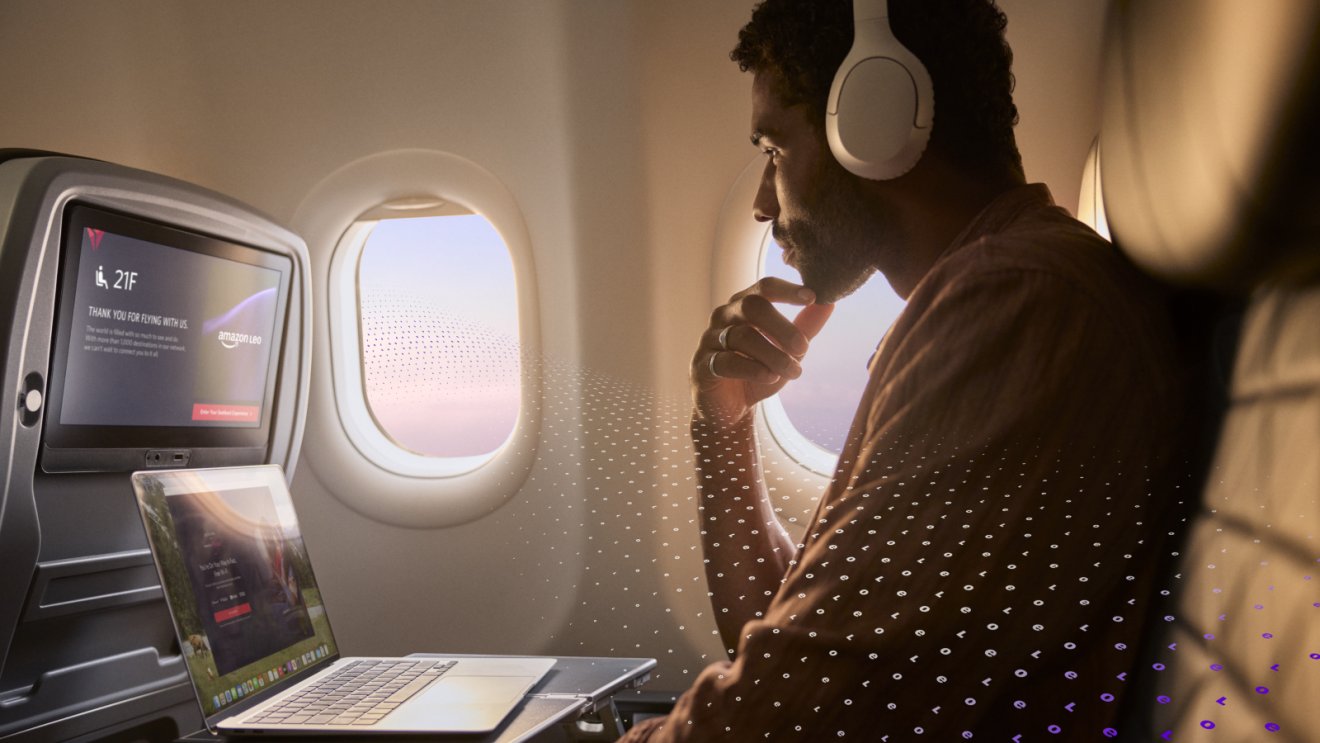
Amazon today announced a groundbreaking partnership with Delta, bringing its innovative Amazon Leo technology to passengers. Amazon Leo, powered by a vast network of thousands of satellites orbiting approximately 370 miles above our planet, promises to deliver an unprecedented level of high-speed Wi-Fi connectivity to Delta customers. This collaboration marks a significant leap forward in the aviation industry, redefining what passengers can expect from their in-flight experience.
The Groundbreaking Partnership: What to Expect from Amazon Leo on Delta
Under a new multi-year agreement, Delta is set to begin integrating Amazon Leo's advanced satellite internet service into its fleet starting in 2028. The initial rollout will see 500 aircraft equipped with this cutting-edge technology, promising to deliver "high-speed, low-latency Wi-Fi from gate-to-gate." This "gate-to-gate" promise is a crucial differentiator, meaning passengers will have continuous, reliable internet access from the moment they step onto the plane until they disembark at their destination – no more dead zones during taxiing, takeoff, or landing.
This commitment from Delta highlights its dedication to enhancing the customer journey. For years, in-flight Wi-Fi has been a source of frustration for many travelers due to its inconsistent speeds, high costs, and often unreliable connection. This partnership with Amazon Leo aims to eliminate these pain points entirely, setting a new benchmark for airline connectivity globally. The sheer scale of equipping 500 aircraft within a few years demonstrates the seriousness and ambition behind this collaboration.
Understanding Amazon Leo: The Power of Low Earth Orbit (LEO) Satellites
At the heart of this technological revolution is Amazon Leo, Amazon's ambitious constellation of satellites in Low Earth Orbit (LEO). Unlike traditional geostationary (GEO) satellites, which orbit much farther from Earth (around 22,000 miles), LEO satellites are significantly closer to the planet's surface. This proximity is the key to their superior performance, offering drastically reduced signal latency and higher speeds.
LEO vs. GEO: A Simple Explanation
Think of it like this: if you're talking to someone across a large room, there might be a slight delay in their response. If you're talking to someone right next to you, the response is immediate. GEO satellites are like talking to someone across the room – the signal has to travel a long distance up and down, causing noticeable lag. LEO satellites, however, are like talking to someone much closer, resulting in nearly instantaneous communication. For activities like video calls, online gaming, or real-time data access, low latency is absolutely essential.
How Amazon Leo Works
Amazon Leo isn't just one or two satellites; it's a vast network, or constellation, of thousands of interconnected satellites. These satellites constantly move across the sky, working together to create a seamless blanket of internet coverage. As one satellite moves out of range, another seamlessly takes over, ensuring a continuous connection. This intricate dance in space is managed by a sophisticated network of ground stations that link the satellites to the internet backbone on Earth. For an aircraft, this means the antenna on board can connect to whichever satellite is currently providing the strongest signal, ensuring consistent high-speed access.
Amazon's vision for Leo extends far beyond aviation. The project aims to provide high-speed, reliable internet to billions of people globally, especially those in remote or underserved areas where traditional broadband infrastructure is lacking. This partnership with Delta serves as a powerful demonstration of Leo's capabilities and its potential to transform various industries, starting with air travel.
The Technology Onboard: What Speeds and Hardware Mean for You
Each Delta aircraft integrated with Amazon Leo will be equipped with a single, purpose-built phased array antenna. This isn't your grandfather's clunky satellite dish. Phased array antennas are sleek, flat panels that can electronically steer their signal beam without any physical moving parts. This design is ideal for aircraft because it reduces drag, is more reliable, and can quickly switch between satellites as the plane flies.
Unprecedented Performance: 1 Gbps Downloads and 400 Mbps Uploads
The performance promised by Amazon Leo is nothing short of revolutionary for in-flight Wi-Fi. Delta planes will support download speeds of up to 1 Gigabits per second (Gbps) and upload speeds of up to 400 Megabits per second (Mbps). To put this into perspective, let's break down what these speeds mean for you as a passenger:
- Streaming High-Quality Content: At 1 Gbps, you could easily stream multiple 4K movies simultaneously on different devices without any buffering whatsoever. Forget downloaded content; you'll have access to the entire internet's library of entertainment.
- Seamless Video Conferencing: For business travelers, 400 Mbps upload speeds mean crystal-clear, lag-free video calls. You could participate in high-definition virtual meetings, share your screen, and collaborate in real-time as if you were in the office. This transforms travel time into productive work time.
- Online Gaming: Low latency combined with these high speeds makes competitive online gaming a genuine possibility in the air. This opens up entirely new entertainment options for passengers.
- Large File Transfers and Cloud Access: Whether you're a professional needing to upload large presentations, graphic files, or video clips, or simply trying to back up your vacation photos to the cloud, these speeds will make it quick and effortless.
- Social Media and Web Browsing: Websites will load instantly, and uploading photos and videos to social media will be as fast as on the ground. You can stay connected with friends and family without any delays.
These speeds are not just an incremental improvement; they represent a generational leap. Most current in-flight Wi-Fi systems struggle to offer even a fraction of these speeds, often leading to frustration and an inability to perform basic internet tasks effectively. Amazon Leo promises to deliver an internet experience that is virtually indistinguishable from a high-quality home or office connection.
Transforming the Delta Passenger Experience
The introduction of Amazon Leo on Delta flights is poised to fundamentally change how passengers experience air travel. It moves beyond just offering "internet access" to delivering truly connected and productive environments.
For the Business Traveler: The Ultimate Mobile Office
Business travelers will be among the biggest beneficiaries. Long flights, once a forced disconnect from work, can now become highly productive periods. Imagine:
* Attending virtual meetings and collaborating with colleagues.
* Accessing cloud-based documents and applications without lag.
* Sending and receiving large files.
* Staying on top of emails and communications in real-time.
The plane effectively transforms into an extension of the office, allowing professionals to maximize their travel time and arrive at their destination fully caught up and prepared.
For the Leisure Traveler: Entertainment and Connectivity Unbound
Leisure travelers, families, and solo adventurers will also find their journeys transformed:
* Endless Entertainment: Stream your favorite movies, TV shows, or live sports events from any platform, just as you would at home.
* Stay Connected: Video call family and friends, share real-time updates of your journey on social media, or plan the next leg of your trip with reliable internet access.
* Reduce Boredom: For families with children, high-speed Wi-Fi means kids can stay entertained with their favorite games and streaming content, making long flights significantly more manageable.
The Power of Free Wi-Fi for SkyMiles Members
Perhaps one of the most exciting aspects of this announcement, especially for loyal Delta customers, is that Leo-powered in-flight Wi-Fi will be free for all Delta SkyMiles members. This commitment aligns perfectly with Delta's existing strategy to enhance loyalty and provide premium services to its frequent flyers. Making high-speed internet free for members isn't just a perk; it's a game-changer that:
- Boosts Loyalty: It adds significant value to the SkyMiles program, encouraging more people to join and fly Delta.
- Sets an Industry Standard: Delta is positioning itself at the forefront of customer experience, putting pressure on other airlines to match or exceed this offering.
- Increases Adoption: By removing the cost barrier, more passengers are likely to use the service, leading to a more connected cabin environment.
This strategic move underscores Delta's reputation for innovation and customer-centricity, strengthening its brand in a highly competitive industry.
"We've designed Leo to provide high-speed internet to the billions of people on Earth without reliable connectivity, and this agreement with Delta is a great example of the impact and scale of the technology – bringing even faster in-flight Wi-Fi to tens of millions of passengers who fly Delta every year," said Andy Jassy, President and CEO of Amazon. "People increasingly want to stay connected wherever they are in the world, and Leo's speed and reliability is going to have a big impact for businesses, governments, and consumers. It's going to make the in-flight experience so much better, and it's going to change what's possible while traveling."
Andy Jassy's statement perfectly encapsulates the ambition and transformative potential of Amazon Leo. He emphasizes that the technology is not just about faster internet on planes but about a broader vision of global connectivity. This partnership with Delta is a powerful testament to the practical application and significant scale of Amazon's investment in space technology. It highlights how ubiquitous connectivity is no longer a luxury but an expectation, influencing how businesses operate, governments serve their citizens, and how individuals connect with the world.
The Broader Implications for Air Travel and the Satellite Internet Race
The collaboration between Amazon and Delta is not happening in a vacuum. The race to provide superior in-flight connectivity is intensifying, with several players vying for dominance. Companies like SpaceX's Starlink and OneWeb are also rapidly deploying their LEO constellations and making inroads into the aviation sector. Amazon Leo's entry into this market, particularly with a major airline like Delta, signals a robust commitment and leverages Amazon's immense resources and technological expertise.
This competition is ultimately beneficial for consumers. As more advanced satellite internet providers enter the market, airlines will have more options, driving down costs and improving service quality. The result will be a new baseline expectation for air travel: seamless, high-speed internet will become a standard offering rather than an unreliable premium service.
The future of air travel will see more integrated and personalized experiences. High-speed internet will enable:
* Enhanced In-Flight Entertainment: Imagine accessing an unlimited library of content, personalized recommendations, and even interactive experiences.
* Real-time Ancillary Services: Booking ground transportation, ordering food for delivery upon arrival, or checking connecting flight details in real-time will become effortless.
* Airline Operational Efficiencies: Airlines can benefit from better data flow between aircraft and ground operations, potentially improving maintenance, logistics, and passenger services.
Challenges and the Road Ahead
While the prospects are incredibly exciting, the journey to fully implement Amazon Leo across Delta's fleet by 2028 will undoubtedly involve significant challenges. Retrofitting 500 aircraft with new antenna systems is a complex logistical undertaking, requiring careful planning, engineering, and coordination. Moreover, the ongoing management and maintenance of a vast satellite constellation in Low Earth Orbit demand continuous innovation and investment from Amazon.
Security and privacy will also remain paramount. Ensuring that in-flight networks are secure from cyber threats and that passenger data is protected will be a continuous effort. Furthermore, as passengers become accustomed to these new speeds, demand will only grow, requiring Amazon Leo to continuously scale its capacity and refine its technology.
However, given Amazon's track record in large-scale technological deployments and Delta's commitment to customer satisfaction, this partnership is well-positioned to overcome these hurdles. The year 2028 will not just be the beginning of a new era for Delta passengers, but a significant milestone in the broader transformation of global connectivity.
Conclusion: A New Era of Connected Travel Dawns
The announcement of Amazon Leo coming to Delta flights in 2028 is more than just an upgrade to in-flight Wi-Fi; it's a paradigm shift in how we think about connectivity during air travel. By bringing high-speed, low-latency, gate-to-gate internet to hundreds of aircraft, Amazon and Delta are not just meeting current passenger demands but are actively shaping future expectations. The ability to seamlessly stream, work, connect, and play while soaring through the skies will transform the travel experience from a period of disconnect into one of continuous connection and productivity.
This partnership is a powerful testament to the convergence of aerospace innovation and customer-centric service. As Andy Jassy articulated, Amazon Leo is designed to connect the world, and this agreement with Delta is a clear demonstration of that vision taking flight. The future of air travel is here, and it's fast, free (for SkyMiles members), and always on. Get ready for a truly connected journey like never before.
This article, "Amazon Leo Satellite Internet Coming to Delta Flights in 2028" first appeared on MacRumors.com
Discuss this article in our forums
from MacRumors
-via DynaSage

Post a Comment