New Apple TV and HomePod Mini Remain 'Ready' to Launch
The Intelligent Home Awaits: Why New Apple TV and HomePod Mini Models Are Poised for a Breakthrough
Apple has been busy this month, captivating enthusiasts with a flurry of nine new product unveilings. From refreshed iPads to innovative accessories, the tech giant continues to refine and expand its vast ecosystem. However, amidst this excitement, two highly anticipated devices remain conspicuously absent from the spotlight: the next-generation Apple TV 4K and the updated HomePod mini. For those eager to upgrade their home entertainment and smart home experience, the wait continues, but the reason behind this delay is becoming clearer and far more intriguing.
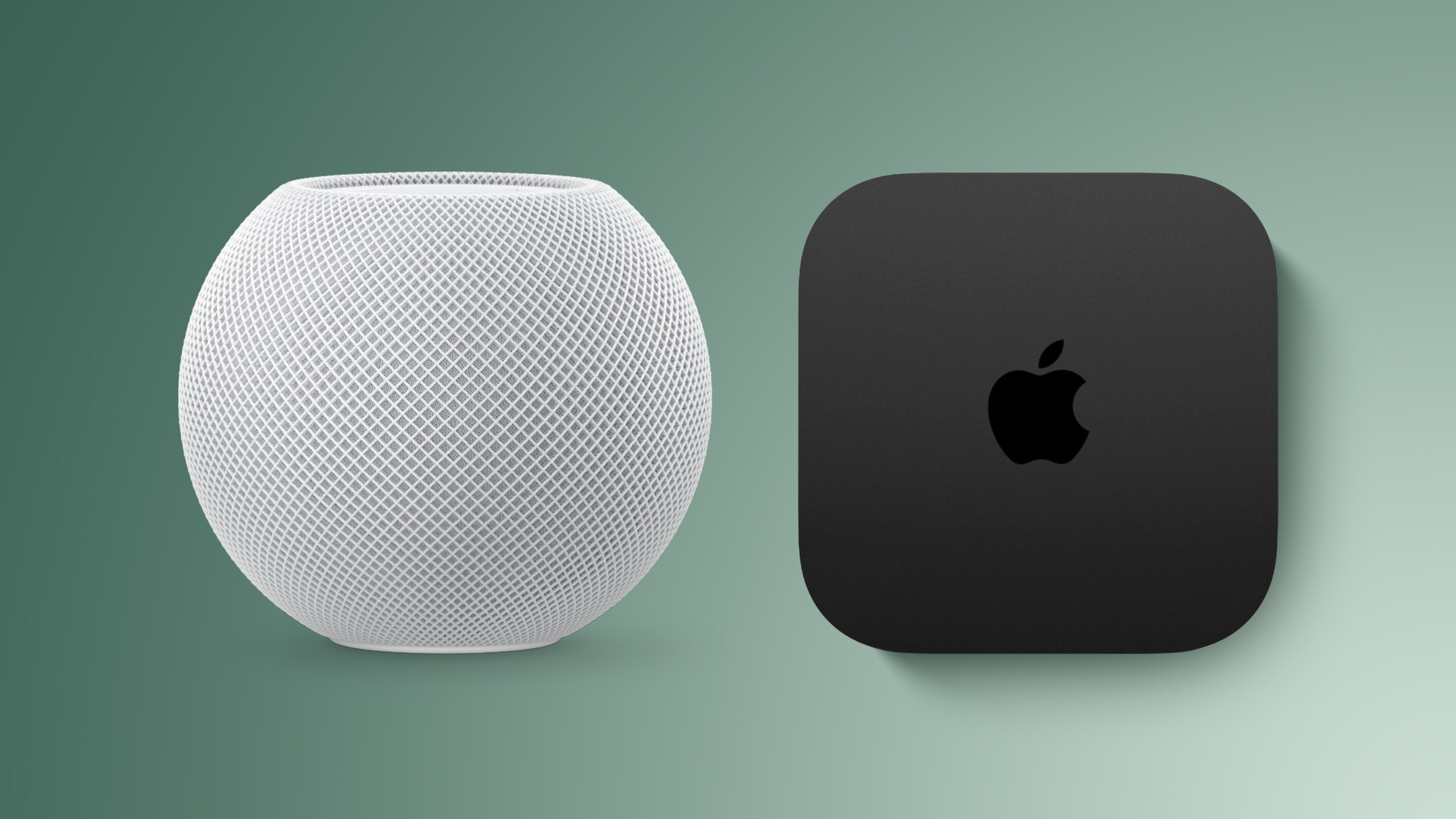
According to reliable industry insider Mark Gurman of Bloomberg, both new versions of the Apple TV and HomePod mini have been "ready" for release since last year. This revelation, shared in his Power On newsletter today, suggests that the hardware itself is largely finalized. So, what’s the holdup? Gurman reiterates a crucial point: Apple has strategically held back their release. The key factor is not a manufacturing snag or a design flaw, but rather the impending debut of a more personalized version of Siri and other groundbreaking Apple Intelligence upgrades, expected later this year.
This isn't just a simple software update; it represents a fundamental shift in how Apple's intelligent assistant will interact with users and devices. Apple is known for its meticulous approach to product launches, often synchronizing hardware releases with significant software advancements to deliver a complete, compelling experience. The decision to delay ready-to-go hardware underscores the profound importance Apple places on these AI-driven improvements, positioning them as a cornerstone of the next generation of its smart home devices.
The Prolonged Wait: A Strategic Hold for Intelligence
The notion that hardware is "ready" but consciously withheld is a testament to Apple's integrated ecosystem strategy. Unlike many competitors that might rush new hardware to market, Apple often takes its time to ensure the software experience is equally revolutionary. In this case, the personalized Siri and Apple Intelligence features are not merely add-ons; they are envisioned as transformative elements that will unlock the full potential of these new devices. Holding back allows Apple to launch a product that truly feels "new" and "intelligent" from day one, rather than introducing hardware that only later gains its defining features.
Inventory Low, Expectations High?
Further adding to the intrigue, Gurman also noted that inventory for the current Apple TV, HomePod mini, and even the full-sized HomePod is once again "running low" across Apple's global retail stores. Typically, dwindling stock can signal an imminent product refresh, as companies clear out old models to make way for new ones. However, in this unique situation, the meaning is less clear. Gurman himself cautions that it's uncertain if this low stock truly indicates an immediate release, precisely because the revamped Siri has yet to make its official debut. It could be a simple supply chain fluctuation, or perhaps a gradual winding down of older inventory that began long before the new software was finalized.
For consumers, this creates a dilemma. Should they buy the current models now, potentially missing out on significant upgrades, or continue to wait in uncertainty? The advice from many, including buyer's guides like MacRumors', leans heavily towards waiting, a sentiment we will explore further down. This cautious approach acknowledges the substantial leap forward implied by the Apple Intelligence integration.
The Game-Changer: Personalized Siri and Apple Intelligence
At the heart of this delay lies Apple's ambitious vision for artificial intelligence. "Personalized Siri" and "Apple Intelligence" are not just buzzwords; they represent a concerted effort to redefine user interaction across Apple's device lineup. Understanding these concepts is key to appreciating why the new Apple TV and HomePod mini are worth waiting for.
What is Personalized Siri?
The current iteration of Siri, while functional, has faced criticism for often feeling less capable than competing voice assistants. Personalized Siri aims to change that dramatically. Imagine a Siri that truly understands context, remembers past interactions, and proactively offers relevant assistance without you even having to ask. This could mean:
- **Deep Contextual Understanding:** Siri could understand follow-up questions without needing to restart the conversation, draw information from recent app usage, and know your preferences based on your behavior across devices.
- **Proactive Assistance:** Your HomePod mini might suggest playing your favorite morning news podcast when you wake up, or your Apple TV could recommend a movie based on your viewing history and what friends are watching.
- **Natural Language Interaction:** Moving beyond rigid commands to more fluid, human-like conversations, making interactions feel less like talking to a machine and more like talking to a very helpful assistant.
- **On-Device Personalization with Privacy:** Crucially, much of this personalization is expected to happen on-device, leveraging powerful neural engines in the new hardware. This approach is central to Apple's privacy philosophy, ensuring that your personal data remains private and secure, processed locally rather than being sent to the cloud for every interaction.
What is Apple Intelligence?
Apple Intelligence is the broader framework underpinning these advanced AI capabilities. It's Apple's answer to the burgeoning field of generative AI and machine learning, tailored specifically for its ecosystem. This framework is designed to integrate seamlessly across macOS, iOS, iPadOS, and watchOS, bringing intelligent features to everything from writing and image creation to system organization and app interaction. For devices like the Apple TV and HomePod mini, Apple Intelligence could mean:
- **Enhanced Media Discovery:** More intuitive recommendations for movies, TV shows, and music based on truly understanding your taste, mood, and even time of day.
- **Smarter Smart Home Control:** A HomePod mini powered by Apple Intelligence could better anticipate your smart home needs, learn routines more effectively, and execute complex multi-device commands with greater precision.
- **Gaming Enhancements:** The Apple TV could leverage AI for dynamic in-game adjustments, smarter NPC behavior, or even personalized difficulty settings, enhancing the gaming experience significantly.
- **Seamless Cross-Device Interactions:** Imagine telling your HomePod mini to "start the movie I was watching on my iPad," and the Apple TV instantly picks up exactly where you left off, even if it was a third-party app.
Why This Requires New Hardware
While some AI features can be delivered through software updates to existing devices, the most advanced, personalized, and privacy-focused aspects of Apple Intelligence often demand specialized hardware. This usually means powerful neural engines capable of complex machine learning calculations on-device, reducing reliance on cloud processing and enhancing speed and privacy. The new Apple TV and HomePod mini are expected to house chips specifically designed to handle these intensive AI tasks, making them true "intelligent" hubs for your home.
The Next-Generation Apple TV 4K: A Glimpse into the Future
The current Apple TV 4K, launched in October 2022, is a capable streaming box, offering high-quality video and a seamless Apple experience. However, in the fast-evolving world of home entertainment and smart home integration, two years can be a long time. An upgrade is not just welcome, but increasingly necessary to keep pace with modern demands and truly unlock the potential of Apple's ecosystem.
Rumored Specifications: A Powerhouse for the Living Room
Earlier rumors provide exciting clues about what to expect from the next Apple TV. It's shaping up to be far more than just a media streamer:
- **A17 Pro Chip:** This is arguably the most significant rumored upgrade. The A17 Pro chip, currently found in the iPhone 15 Pro, is the oldest chip that supports the full suite of Apple Intelligence features. Integrating this powerhouse into the Apple TV means a massive leap in performance. This translates to:
- **Superior Gaming:** With console-quality graphics and smoother frame rates, the Apple TV could become an even more formidable gaming platform, especially for Apple Arcade titles and potentially more demanding games ported from iOS.
- **Advanced AI Processing:** The A17 Pro's neural engine is critical for running personalized Siri and Apple Intelligence features locally. This means faster responses, more complex AI tasks, and enhanced privacy, as more data processing happens on the device rather than in the cloud.
- **Future-Proofing:** A chip of this caliber ensures the Apple TV can handle high-resolution content, sophisticated apps, and future software advancements for years to come.
- **N1 Chip for Next-Gen Connectivity:** The device is also expected to feature Apple's N1 chip, a dedicated connectivity component that will bring a host of wireless improvements:
- **Wi-Fi 7:** This next-generation Wi-Fi standard offers significantly faster speeds, lower latency, and greater capacity than Wi-Fi 6E. For a streaming device, this means smoother 4K/8K streaming, faster downloads, and a more responsive online gaming experience, especially in crowded network environments.
- **Bluetooth 6:** While details on Bluetooth 6 are still emerging, it typically promises improved efficiency, better range, and enhanced audio capabilities. This could mean more reliable connections for AirPods, game controllers, and other accessories, potentially even enabling advanced multi-device audio sharing.
- **Thread:** Thread is a mesh networking protocol specifically designed for smart home devices, forming a self-healing, low-power network. Its inclusion is vital for Matter compatibility, the new industry standard for smart home devices. With Thread, the Apple TV will serve as an even more robust and reliable smart home hub, ensuring seamless communication between a wider array of smart devices, regardless of manufacturer.
Potential New Features: Beyond Streaming
With these powerful internals, the next Apple TV 4K could offer:
- **Enhanced Gaming Experience:** Deeper integration with game controllers, possibly new exclusive Apple Arcade titles that leverage the A17 Pro's power, and even cloud gaming capabilities.
- **Advanced Smart Home Hub:** With robust Thread and Matter support, it could act as the central brain for an entire smart home, offering unparalleled reliability and control.
- **Improved Video Processing:** AI-powered upscaling for lower-resolution content, dynamic tone mapping for HDR, and potentially even new display technologies.
- **Innovative User Interface:** A more intuitive and intelligent interface driven by Apple Intelligence, offering personalized content recommendations, proactive suggestions, and a truly adaptive home screen.
- **Integration with Apple Vision Pro:** The Apple TV could become a companion device for spatial computing, enabling shared mixed-reality experiences in the living room or enhancing content consumption for Vision Pro users.
The Evolving HomePod mini: More Than Just a Speaker
The HomePod mini, introduced in October 2020, has been a popular choice for those seeking an affordable, Siri-enabled smart speaker with impressive sound for its size. However, four years is a long time in tech, and an update is long overdue, especially to bring it into the Apple Intelligence era.
Rumored Specifications: Intelligence in a Compact Form
The HomePod mini's rumored upgrades focus heavily on intelligence and connectivity:
- **Apple Watch's S9 Chip or Newer:** This is an interesting point of speculation. The S9 chip, found in the Apple Watch Series 9 and Ultra 2, is powerful for its size, featuring a significant neural engine for on-device processing. However, Gurman raises a valid question: "it is not entirely clear how that chip would be capable enough to support the revamped Siri powered by Apple Intelligence." This suggests that while the S9 is strong, the full scope of Apple Intelligence might demand even more. Apple might either optimize Apple Intelligence to run efficiently on the S9's capabilities for the HomePod mini, or perhaps the device will feature a customized variant or even a new chip altogether that balances power and cost for a smart speaker. The S9 would, at the very least, enable much faster and more accurate Siri responses, improved voice detection, and basic on-device AI tasks.
- **N1 Chip for Enhanced Connectivity:** Just like the Apple TV, the HomePod mini is expected to incorporate the N1 chip, bringing:
- **Wi-Fi 7 and Bluetooth 6:** Faster, more reliable wireless connections for streaming music, making calls, and connecting to other Apple devices.
- **Thread:** Crucial for its role as a smart home hub. Thread ensures the HomePod mini can reliably communicate with and control a wider array of Matter-compatible smart home accessories, creating a more robust and responsive smart home network.
- **Improved Sound Quality:** A natural expectation for any new speaker. This could involve better drivers, enhanced acoustic engineering, more powerful amplification, or advanced computational audio techniques to deliver a richer, clearer, and more immersive listening experience. Spatial Audio support could also be enhanced.
- **Newer Ultra Wideband (UWB) Chip:** The current HomePod mini already has a UWB chip for precise location awareness (e.g., handoff from iPhone). A newer chip could offer even greater precision, faster device finding, and potentially enable new interactive experiences with nearby Apple devices, such as more seamless media transfers or proximity-based smart home triggers.
- **A Red Color Option:** A minor but welcome aesthetic refresh, expanding the color palette beyond the current options and allowing for greater personalization.
Potential New Features: The Intelligent Companion
With these upgrades, the HomePod mini could transform into an even more indispensable smart home companion:
- **Truly Personalized Audio:** Siri could learn your music tastes based on time of day, mood, or activity, and proactively suggest playlists or radio stations.
- **Advanced Smart Home Orchestration:** Beyond simple commands, the HomePod mini could manage complex routines, adapt to environmental changes (e.g., automatically adjusting lights based on ambient light), and even learn your habits to preemptively control devices.
- **Enhanced Intercom and Communication:** Clearer voice calls, more intelligent message relaying, and potentially even integration with other communication apps.
- **Environmental Sensing:** While speculative, more advanced sensors could allow the HomePod mini to monitor air quality, temperature, or even detect specific sounds (like smoke alarms), acting as a proactive guardian for your home.
- **Seamless Multi-Room Audio:** Even more robust and precise multi-room audio synchronization across multiple HomePods.
The Release Window: When Can We Expect Them?
Given that the new Apple TV and HomePod mini models are intrinsically linked to the debut of personalized Siri and Apple Intelligence, the release timeline hinges directly on Apple's software rollout schedule. Gurman previously reported that Apple was aiming to release these Siri features in either iOS 26.5 or iOS 27.
Let's break down the potential windows:
- **Late March or Early April (iOS 26.5 Beta):** The first developer beta of iOS 26.5 could be available around this time. If some significant Siri upgrades are part of this initial beta, it's conceivable that Apple *could* announce the new hardware then. However, this would likely be a more subdued, press-release-driven launch, rather than a full-blown event, as the features would still be in beta for the public. This scenario implies that the core AI functionalities are robust enough for initial hardware integration.
- **WWDC (June - iOS 27 Debut):** This is a highly plausible scenario. Apple's Worldwide Developers Conference (WWDC) is where the company typically unveils its major software platforms, including the next version of iOS. Introducing Apple Intelligence and personalized Siri as marquee features of iOS 27, then immediately showcasing new hardware like the Apple TV and HomePod mini that are specifically designed to leverage these capabilities, would create a powerful and cohesive narrative. This would be a grand stage for a major reveal.
- **Fall Event (September - Alongside New iPhones):** If Apple Intelligence requires more development time, or if Apple prefers to bundle these devices with its most popular products, a September event alongside new iPhones is another strong possibility. This has historically been a prime window for major hardware releases and would give Apple ample time to perfect the software experience before a broad consumer rollout. Gurman's broad window of "any point between late March and the end of September this year" encompasses all these possibilities.
The exact timing will likely depend on the maturity and readiness of the Apple Intelligence features. Apple will want to ensure a polished and impressive debut for such a significant technological leap. Regardless, the consensus is that the wait should conclude before the end of Q3 2026, meaning within the next six months or so.
The "Don't Buy" Advice: Why Waiting Matters
With new versions of the Apple TV 4K and HomePod mini so close to release, buyer's guides from reputable sources like MacRumors have placed the current models under a clear "Don't Buy" recommendation. This advice is critical for anyone considering these devices right now.
Why is waiting so important in this instance?
- **Imminent Obsolescence:** The current Apple TV 4K (October 2022) and HomePod mini (October 2020) are, by Apple standards, quite old. Buying them now means investing in technology that will be instantly superseded by significantly more capable models in a matter of months.
- **Missing Key Features:** The core reason for the delay is Apple Intelligence. By purchasing current models, you would miss out on the personalized Siri experience, the advanced AI capabilities, and the future-proofed connectivity (Wi-Fi 7, Bluetooth 6, Thread) that the new hardware is designed to deliver. These aren't just minor improvements; they represent a fundamental shift in user interaction.
- **Hardware Limitations:** Older chips simply cannot handle the demanding on-device processing required for Apple Intelligence. Even if some basic AI features eventually come to older devices, they will likely be a pared-down version compared to what the new hardware can achieve.
- **Better Value:** When the new models launch, they will offer a far greater value proposition for their price, providing cutting-edge technology and access to Apple's latest software innovations. Buying an old model now means paying for yesterday's tech when tomorrow's is around the corner.
Therefore, for anyone in the market for an Apple TV or HomePod mini, patience is indeed a virtue. The upcoming models promise to be a significant leap forward, making the wait entirely worthwhile.
Conclusion: A Smarter Home Awaits
The prolonged wait for the next-generation Apple TV 4K and HomePod mini, while frustrating for some, is ultimately a strategic move by Apple that promises a more intelligent and integrated home experience. By tying the release of these devices to the groundbreaking personalized Siri and Apple Intelligence upgrades, Apple is setting the stage for a new era of proactive, context-aware, and seamlessly integrated smart home technology.
From the powerful A17 Pro chip and next-gen connectivity in the Apple TV, poised to redefine home entertainment and gaming, to the enhanced intelligence and audio quality in the HomePod mini, ready to become an even smarter companion for your daily life, the rumored specifications paint a picture of truly transformative devices. The synergy between robust new hardware and revolutionary AI software is at the core of Apple's vision, ensuring that when these products finally launch, they will be far more than just incremental updates.
As the potential release windows narrow, the anticipation only grows. Whether they arrive with iOS 26.5 or make a grand debut alongside iOS 27 at WWDC or a fall event, one thing is clear: the intelligent home, powered by Apple, is almost here. For consumers, the message remains consistent: hold off on purchasing current models. The future, with personalized intelligence at its core, is worth waiting for.

This article, "New Apple TV and HomePod Mini Remain 'Ready' to Launch" first appeared on MacRumors.com
Discuss this article in our forums
from MacRumors
-via DynaSage

Post a Comment