Three Upcoming Apple Products Seemingly Spotted in macOS 26.3 Code
The tech world is buzzing with fresh revelations straight from Apple's latest software update, macOS 26.3. It appears this update isn't just about bug fixes and performance tweaks; it's dropping strong hints about some significant new products that could soon join Apple's already impressive lineup. According to Macworld's Filipe Espósito, the code within this macOS version points to two highly anticipated devices: a more affordable MacBook and not one, but two new models of the Apple Studio Display.
This discovery by Espósito isn't just speculative; it builds upon earlier reports and persistent rumors from well-known industry insiders like Bloomberg's Mark Gurman. The presence of specific codenames within Apple's software is often a strong indicator of upcoming hardware, offering a rare glimpse into the company's future plans before any official announcements are made. This kind of digital breadcrumb trail is a familiar pattern for those who closely follow Apple's development cycles.
Espósito's deep dive into the macOS 26.3 source code uncovered the following intriguing codenames, which he has linked to specific products based on the prevailing whispers and previous credible leaks:
- J700: This codename is believed to represent a new, lower-cost MacBook.
- J427: This points to a new version of the existing Studio Display.
- J527: This suggests a higher-end, perhaps more premium, new Studio Display.
It's worth noting that these codenames aren't entirely new to the Apple rumor mill. Experienced tech observers and contributors, such as Aaron Perris from MacRumors, have previously reported seeing these very codenames in earlier software updates, including macOS 26.2 and iOS 18.5 from the previous year. The consistent appearance of these identifiers across multiple updates only strengthens the belief that these products are indeed in active development and are progressing steadily towards their official debut.
The accumulation of such evidence, from these internal code discoveries to other hints regarding new MacBook colors and filings for new display models, paints a clear picture: all three of these rumored products are moving ever closer to their public unveiling. The tech community is now holding its breath, eagerly awaiting what these new additions will bring to the Apple ecosystem.
The Anticipated Return of the MacBook: J700 Paves the Way for Affordability
The most exciting prospect for many users is the rumored "lower-cost MacBook" identified by the codename J700. This device is not merely an update to an existing line but signals a significant strategic shift for Apple, potentially reintroducing an entry-level laptop that prioritizes accessibility without compromising the core Apple experience.
Why a "Lower-Cost" MacBook? Understanding Apple's Strategy
Apple's current laptop lineup, primarily consisting of the MacBook Air and MacBook Pro, is highly regarded for its performance, design, and premium build quality. However, the entry price point for these machines can still be a barrier for a substantial segment of the market. A "lower-cost" MacBook would aim to address this, broadening Apple's appeal to a wider audience, including students, budget-conscious consumers, and those in emerging markets where price sensitivity is a major factor.
By offering a more affordable option, Apple could effectively compete with the burgeoning market of Chromebooks and entry-level Windows laptops, which often dominate educational institutions and households seeking basic computing solutions. This new MacBook would not be intended to replace the powerful MacBook Air or Pro lines but rather to serve as a distinct and welcoming entry point into the macOS ecosystem, much like the iPhone SE does for smartphones or the iPad base model for tablets. It's a move to capture a larger share of the general computing market, solidifying Apple's presence across all price tiers.
A Blast from the Past: The Original MacBook's Legacy and What's Next
The idea of a standalone "MacBook" without the "Air" or "Pro" designation isn't new. Apple previously offered a 12-inch "MacBook" from 2015 to 2019. This model was praised for its incredibly thin and light design, a fanless operation, and its Retina display. It was a pioneering device that pushed boundaries in terms of portability and minimalist design, introducing innovations like the butterfly keyboard and a single USB-C port, which, while forward-thinking, also presented challenges for users who needed more connectivity.
However, the original 12-inch MacBook faced criticism for its relatively high price for its performance, and its reliance on a single port proved cumbersome for many. The new J700 MacBook is expected to revive this "MacBook" brand, signaling a return to a more streamlined, universally appealing laptop. It’s highly probable that Apple has learned from the previous iteration. We can anticipate that this new model will retain the ultra-portable and fanless design while significantly improving performance and potentially addressing port limitations, all while hitting a much more attractive price point.
The A18 Pro Chip: A Different Kind of Power for a New Era
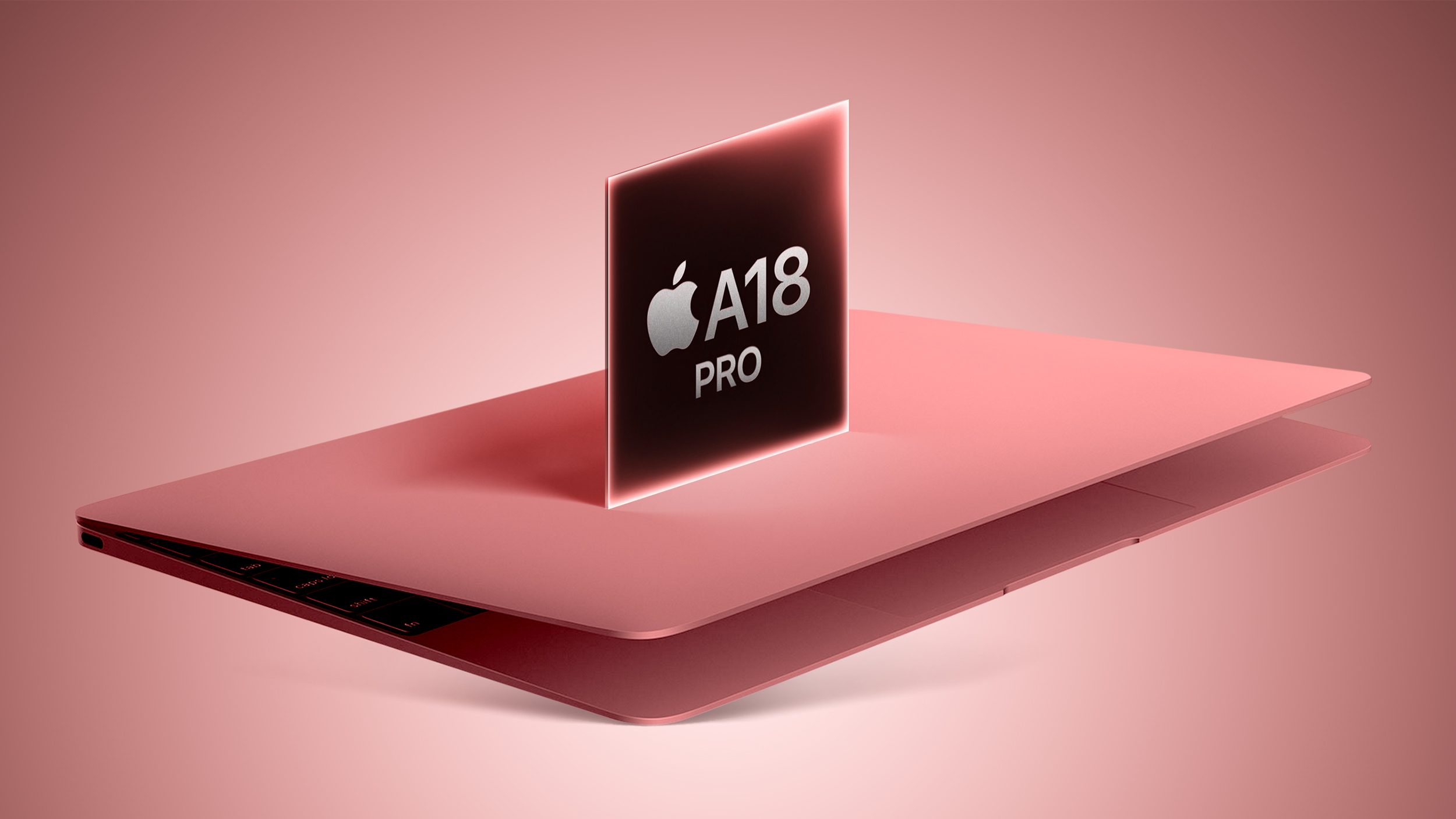
One of the most intriguing rumors surrounding the J700 MacBook is that it will be powered by a version of the iPhone 16 Pro's A18 Pro chip, rather than Apple's M-series chips found in the current MacBook Air and Pro lines. This represents a significant departure from the established norm for Apple laptops, which have, since 2020, exclusively featured M-series silicon.
The implications of an A-series chip in a MacBook are substantial. Apple's A-series chips, developed for iPhones and iPads, are renowned for their exceptional power efficiency, allowing for incredible battery life and a fanless design, which contributes to a silent and lightweight user experience. While an A-series chip might not offer the same raw multi-core performance for professional tasks like heavy video editing or 3D rendering as an M-series chip, it is more than capable of handling the vast majority of everyday computing needs. This includes web browsing, email, word processing, streaming media, light photo editing, and casual gaming with ease and outstanding efficiency.
For a "lower-cost" MacBook, the A18 Pro chip makes perfect sense. It would enable Apple to achieve its target price point while still delivering a fluid and responsive macOS experience. Furthermore, it highlights Apple's incredible versatility in silicon design, leveraging its expertise across its entire product ecosystem. This move would position the J700 MacBook as an ideal machine for users who prioritize portability, battery life, and affordability over peak professional-grade performance.
A Spectrum of Hues: Colors and a Playful Design Philosophy
Adding to the excitement is the rumor that the J700 MacBook will be available in a variety of bright and vibrant colors, such as yellow, green, blue, and/or pink. This is a nostalgic callback to Apple's playful design periods, notably the original iMac G3 and the colorful M1 iMacs. Apple has a history of using color to differentiate products and appeal to specific demographics, often targeting younger users or those who appreciate a more personalized aesthetic.
Introducing a colorful MacBook would inject a fresh and youthful energy into Apple's laptop lineup, which typically features more subdued metallic finishes. This design choice aligns perfectly with the concept of a more accessible, fun-to-use entry-level machine. It suggests a focus on personal expression and a break from the more professional, understated look of the Air and Pro models. Combined with an ultra-thin and light form factor, these vibrant hues could make the J700 MacBook a highly desirable device for students, creative enthusiasts, or anyone looking for a laptop that stands out from the crowd.
Key Specifications and an Appealing Price Point
Beyond the chip and colors, other rumored specifications for the J700 MacBook include a 12.9-inch display and 8GB of RAM. A 12.9-inch screen size offers an excellent balance between portability and usability, making the laptop incredibly easy to carry around while still providing ample screen real estate for productivity and media consumption. It would be slightly larger than the previous 12-inch MacBook, potentially offering a more comfortable viewing experience.
The 8GB of RAM is standard for entry-level devices and would be perfectly sufficient for the target audience. For tasks like web browsing, email, word processing, streaming video, and light multitasking, 8GB of RAM, especially when optimized by macOS and the efficient A18 Pro chip, would provide a smooth and responsive experience. It's important to remember that this MacBook is not designed for resource-intensive professional applications but rather for everyday computing needs where efficiency and fluidity are paramount.
Perhaps the most critical factor for a "lower-cost" device is its price. Estimates for the starting price in the United States range from an incredibly competitive $599 to $799. If Apple can indeed hit this price point, the J700 MacBook would be a game-changer. It would position Apple directly against popular Chromebooks and budget Windows laptops, offering the premium build quality, security, and user experience of macOS at an unprecedented price. Such aggressive pricing would significantly expand Apple's market reach, making the magic of a Mac accessible to millions more users globally.
Anticipated Unveiling: March Announcements and "Apple Experience" Events
The prevailing assumption among analysts and insiders is that Apple plans to unveil this lower-cost MacBook as part of a series of new product announcements scheduled for the first week of March. Apple often chooses this timeframe for significant product launches that don't warrant a full-scale, live keynote event, preferring press releases or smaller, targeted media briefings. This allows the company to efficiently introduce multiple products without overshadowing any single one.
Further strengthening this timeline is the rumor that media outlets will get hands-on time with the new laptop during the "Apple Experience". These exclusive events are reportedly scheduled for Wednesday, March 4, at 9 a.m. Eastern Time, in key global cities like New York, London, and Shanghai. The "Apple Experience" is a special opportunity for journalists and reviewers to test out new products immediately after their announcement, providing initial impressions and detailed coverage. The coordination of these global events strongly suggests a major product launch, and the lower-cost MacBook fits the profile perfectly as a device with broad appeal that Apple would want to showcase to the world's media.
The Next Generation of Visuals: Two New Studio Displays Emerge
Beyond the exciting prospect of a new MacBook, macOS 26.3 also strongly hints at the imminent release of two new Studio Display models, identified by the codenames J427 and J527. This signifies Apple's continued commitment to providing high-quality external displays for its Mac users, addressing diverse needs from general use to demanding professional workflows.

The Current Studio Display: Setting the Stage for Evolution
To understand the significance of these upcoming displays, it's helpful to look at the current Apple Studio Display. Launched in March 2022 alongside the Mac Studio, it quickly became a popular choice for Mac users seeking a high-quality external monitor. It features a 27-inch screen with a stunning 5K resolution (5120 x 2880 pixels), a standard 60Hz refresh rate, and up to 600 nits of brightness. Internally, it is powered by an A13 Bionic chip, which enables features like Center Stage for its built-in camera, spatial audio for its speaker system, and efficient image processing.
The current Studio Display also includes a useful array of ports: one Thunderbolt 3 port for connecting to a Mac and three USB-C ports for peripherals. In the U.S., pricing starts at $1,599. While it's an excellent display for many, its lack of mini-LED backlighting, HDR support, and higher refresh rates left some professionals yearning for more, especially when compared to Apple's own Pro Display XDR or competing professional monitors.
J427: The Enhanced Studio Display – A Significant Upgrade
The codename J427 likely refers to a direct successor or significantly enhanced version of the current Studio Display. The rumors suggest a host of substantial improvements that would elevate the visual experience and overall performance.
Mini-LED Backlighting: A Leap in Visual Fidelity
One of the most anticipated features for at least one of the new Studio Display models is mini-LED backlighting. This technology is already employed in Apple's Pro Display XDR, high-end iPads, and MacBook Pros, and its inclusion in the Studio Display would be a game-changer. Mini-LED utilizes thousands of tiny LEDs for its backlight, allowing for much finer control over local dimming zones compared to traditional LCD panels. This means the display can precisely control the brightness of specific areas of the screen, resulting in:
- Deeper Blacks: By dimming zones where black is needed, mini-LED can achieve near-OLED-level black levels, offering incredible contrast.
- Higher Brightness: Mini-LED displays can achieve significantly higher peak brightness, essential for HDR content.
- Improved Contrast Ratio: The ability to have bright highlights next to deep shadows within the same frame creates a more dynamic and immersive visual experience.
The addition of mini-LED would directly translate to a vastly superior visual experience, making images, videos, and games appear more vibrant, realistic, and detailed.
Higher Refresh Rates: Smoother Motion for Every Task
Another major rumored upgrade is a refresh rate of up to 90Hz or even 120Hz. The current Studio Display operates at a standard 60Hz. A higher refresh rate means the screen updates more frequently, leading to:
- Smoother Scrolling: Text and images will glide effortlessly as you scroll through web pages or documents.
- More Fluid Animations: macOS animations and transitions will appear noticeably smoother and more responsive.
- Enhanced Gaming: For users who enjoy gaming on their Macs, a 90Hz or 120Hz refresh rate provides a much more immersive and reactive experience, with less motion blur.
- Better for Video Editors: Professionals working with high frame rate video content will benefit from seeing their footage more accurately and smoothly.
This improvement would bring the Studio Display in line with Apple's ProMotion technology found in its high-end iPads and MacBook Pros, offering a premium, adaptive refresh rate experience.
HDR Support: Unlocking a World of Color and Detail
Coupled with mini-LED backlighting, HDR (High Dynamic Range) support is another critical enhancement. HDR allows displays to show a much wider range of colors and a greater difference between the brightest and darkest parts of an image than standard dynamic range (SDR). For users who consume or create HDR content – such as watching movies, editing HDR video, or viewing professional photography – this means:
- More Vibrant Colors: A broader color gamut provides richer, more true-to-life colors.
- Greater Detail in Shadows and Highlights: HDR preserves detail in both the brightest and darkest areas of a scene, creating a more realistic and impactful image.
The combination of mini-LED, higher refresh rates, and HDR would transform the Studio Display into a formidable tool for creative professionals and a delight for anyone who values a premium visual experience.
A19/A19 Pro Chip: Smarter Processing for a Smarter Display
The current Studio Display relies on an A13 Bionic chip to power its internal functions. The new models are rumored to feature an even more advanced A19 chip or even an A19 Pro chip. These newer chips, derived from Apple's latest iPhone processors, would bring significant performance improvements to the display's internal processing capabilities. This could mean:
- Enhanced Camera Features: More sophisticated image processing for the built-in webcam, potentially improving features like Center Stage, noise reduction, and low-light performance.
- Improved Audio Processing: Even better spatial audio and clarity from the integrated speaker system.
- Faster Display Management: Smoother handling of refresh rates, HDR tone mapping, and other display technologies.
- Future-Proofing: The more powerful chip would ensure the display remains capable of handling future macOS features and advanced display technologies for years to come.
This internal silicon upgrade underscores Apple's philosophy of embedding powerful custom chips across its product lines to enable intelligent features and seamless user experiences.
Design Continuity: A Familiar Form Factor
Despite these significant internal upgrades, no major design changes are expected for the new Studio Display. This is typical for Apple, which often retains successful external designs while focusing on internal technological advancements. A consistent design language helps maintain brand recognition and allows users to integrate new products seamlessly into their existing setups. While some might hope for thinner bezels or new stand options, the focus here appears to be on enhancing the core display technology and performance.
J527: The Higher-End Studio Display – What More Could It Offer?
The existence of a second codename, J527, suggesting a "higher-end" Studio Display, sparks considerable speculation. While details are scarce, this model could represent an even more premium offering than the already enhanced J427. Given Apple's product hierarchy, a "higher-end" Studio Display might feature:
- A Larger Screen Size: The dream for many professionals is a 32-inch screen, matching the size of the Pro Display XDR but at a potentially more accessible price point, or even larger. A bigger canvas provides more workspace for creative tasks and immersive viewing.
- Even More Advanced Panel Technology: While J427 might get mini-LED, J527 could push the boundaries further with an even higher count of local dimming zones, leading to unparalleled contrast and brightness. It could potentially even pave the way for early Micro-LED technology, though that is likely a longer-term prospect.
- Superior Brightness and Contrast: Exceeding the J427's specifications in these areas, perhaps reaching closer to the Pro Display XDR's extreme dynamic range capabilities.
- Expanded Port Selection: More Thunderbolt 4 ports, built-in Ethernet, or additional USB-C connections to serve as a comprehensive docking station for professional setups.
- Pro-Level Calibration Features: Advanced color calibration tools built into the display for professionals who demand absolute color accuracy.
This higher-end model could cater to a segment of creative professionals who need more than the standard Studio Display but find the Pro Display XDR's price prohibitive. It would further bridge the gap between Apple's consumer-grade displays and its ultra-premium professional offerings.
Release Timeline for the New Studio Displays
The new Studio Displays are generally expected to be released in the first half of 2026. However, it remains unclear whether they will be part of the same early March announcement event that is rumored for the lower-cost MacBook. Apple sometimes staggers its product releases, especially for displays, which often coincide with new Mac desktops or other professional-focused hardware. Given the significant upgrades, Apple might choose a separate event or a quieter press release later in the first half of the year to give these displays their dedicated spotlight.
Apple's Expanding Ecosystem: A Strategic Play
The revelations from macOS 26.3 point towards a clear strategic direction for Apple: to expand its reach across different market segments while continually innovating its core products. The lower-cost MacBook aims to make the macOS experience more accessible, bringing new users into the Apple ecosystem at an attractive price point. This move would solidify Apple's position in the entry-level laptop market, a segment where it currently has limited presence.
Concurrently, the introduction of two new Studio Displays demonstrates Apple's commitment to enhancing the user experience for its Mac desktop and laptop users, especially professionals. By offering more advanced display technology, Apple ensures that its ecosystem remains competitive and appealing for those who demand the best visual fidelity and performance for their creative and productivity workflows. The differentiation between a standard and higher-end model also caters to a broader range of professional needs and budgets, offering more choice within its premium display offerings.
Furthermore, these developments highlight Apple's increasing reliance on its custom silicon. The potential use of an A18 Pro chip in a MacBook and an A19/A19 Pro chip in the Studio Displays underscores the versatility and power of Apple's in-house chip design capabilities. This integrated approach allows Apple to finely tune hardware and software, delivering optimized performance and efficiency across its entire product range.
Conclusion: A Future of Choice and Cutting-Edge Displays
The codenames discovered within macOS 26.3 provide an exciting glimpse into Apple's near future. The prospect of a truly affordable MacBook, powered by an advanced A-series chip and sporting a vibrant new aesthetic, promises to democratize the Mac experience, opening doors for a new generation of users. This move could reshape the entry-level laptop market and significantly expand Apple's user base.
Simultaneously, the rumored upgrades to the Studio Display, including mini-LED backlighting, higher refresh rates, HDR support, and a more powerful A19/A19 Pro chip, are poised to set new benchmarks for external monitors. These advancements will offer unparalleled visual quality and performance, further solidifying Apple's reputation for crafting premium, high-fidelity displays for its professional and enthusiast users. The potential for a higher-end model, possibly with an even larger screen, only adds to the anticipation for those seeking the ultimate visual canvas.
As MacRumors.com and other tech outlets continue to track these developments, the industry eagerly awaits official confirmation from Apple. The first week of March promises to be a pivotal moment, potentially unveiling products that will not only redefine Apple's lineup but also influence the broader tech landscape. Whether you're a student looking for your first Mac, or a creative professional seeking a state-of-the-art display, Apple's upcoming announcements appear to have something significant in store for everyone.
This article, "Three Upcoming Apple Products Seemingly Spotted in macOS 26.3 Code" first appeared on MacRumors.com
Discuss this article in our forums
from MacRumors
-via DynaSage

Post a Comment