New MacBook Pros Reportedly Launching Alongside macOS 26.3
Apple's Next-Gen MacBook Pros: M5 Power, macOS 26.3, and the Future of Pro Computing
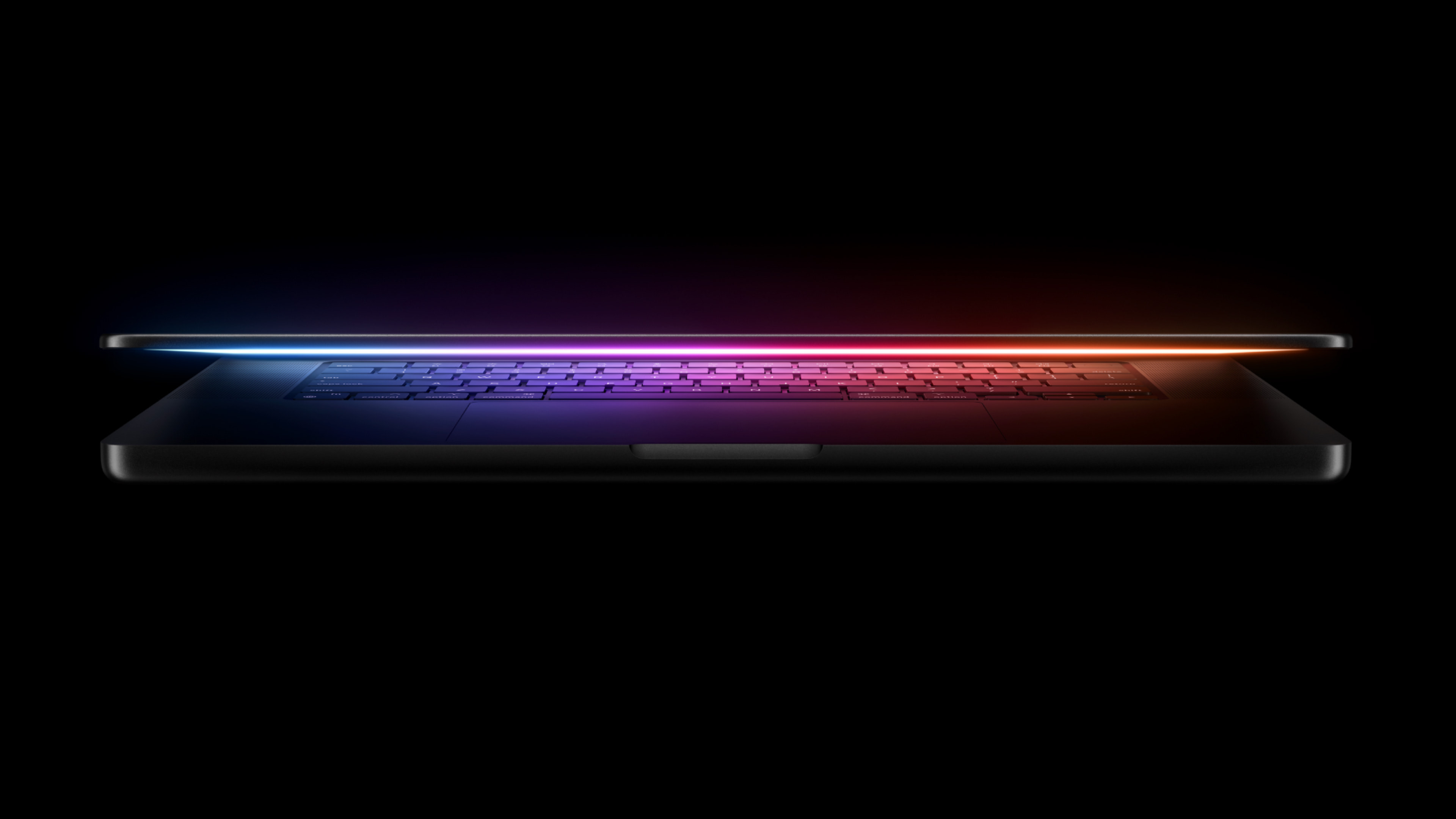
The world of Apple enthusiasts is buzzing with anticipation as new reports indicate that Apple is gearing up to launch updated MacBook Pro models, featuring the powerful M5 Pro and M5 Max chips. These next-generation machines are expected to arrive alongside the release of macOS 26.3, promising a significant boost in performance for professional users.
The Core of the Rumor: M5 Chips and macOS 26.3
The news comes from a highly credible source, Mark Gurman of Bloomberg's Power On newsletter. Gurman, known for his accurate insights into Apple's plans, clearly stated, "Apple's faster MacBook Pros are planned for the macOS 26.3 release cycle." He further elaborated that the new models, known by their internal code-names J714 and J716, are scheduled to coincide with the macOS 26.3 software window, which typically spans from February through March.
This timeline aligns with previous reports. Back in October, AppleInsider's Marko Zivkovic was among the first to suggest that MacBook Pro models equipped with M5 Pro and M5 Max chips would "expected to ship with macOS 26.3." The consistency across multiple reputable sources strengthens the likelihood of this upcoming launch.
Understanding the macOS Release Cycle
macOS 26.3 is currently in its beta testing phase, a crucial period where developers and public testers provide feedback to refine the software before its general release. While an exact launch date is never set in stone until Apple's official announcement, the expected seeding of the macOS 26.3 Release Candidate (RC) in the first half of February suggests that the final public version is imminent. This timing makes a February announcement for the new MacBook Pros highly plausible, although a March release remains a possibility should the software's beta cycle extend longer than anticipated, or if Apple decides to tie the hardware release to a subsequent point update like macOS 26.3.1.
The synchronized launch of new hardware with a major software update is a common strategy for Apple. New macOS versions often bring optimizations and features that are best experienced on the latest hardware, allowing both to shine. This ensures that users get the most out of their new MacBook Pro from day one, with software designed to leverage the specific capabilities of the M5 Pro and M5 Max chips.
The Power of Apple Silicon: M5 Pro and M5 Max
The introduction of the M1 chip marked a revolutionary shift for Apple, moving away from Intel processors to custom-designed Apple Silicon. This transition brought unparalleled performance per watt, integrated graphics, and a unified memory architecture that transformed the Mac experience. Each subsequent generation – M2, M3, and now the anticipated M5 – has built upon this foundation, delivering incremental yet significant improvements across the board.
What "Pro" and "Max" Mean for Performance
The "Pro" and "Max" designations in Apple's M-series chips signify different tiers of power and capability, tailored for specific professional workflows:
- M5 Pro: This chip is expected to offer a substantial upgrade over the standard M5 and previous-generation M4 Pro. It typically features more CPU cores (a mix of high-performance and high-efficiency cores), significantly more GPU cores for demanding graphics tasks, and increased unified memory bandwidth. This makes it ideal for users involved in intensive photo editing, video editing (up to 4K multi-stream), complex software development, and moderate 3D rendering. The M5 Pro should handle large projects with ease, providing a smooth and responsive experience even under heavy load.
- M5 Max: Representing the pinnacle of Apple's laptop chip performance, the M5 Max takes everything the Pro offers and amplifies it. It will likely boast an even greater number of CPU cores, a drastically higher count of GPU cores, and support for a much larger amount of unified memory (potentially up to 128GB or more). The M5 Max is designed for the most demanding professionals: filmmakers working with 8K footage, advanced 3D animators, scientific researchers running simulations, and machine learning engineers. Its raw processing power and massive memory bandwidth enable tasks that would cripple many desktop workstations, all within a portable form factor.
While specific technical details for the M5 generation are still speculative, we can anticipate improvements in several key areas based on past trends:
- CPU Performance: Faster single-core and multi-core performance, enhancing responsiveness and speeding up tasks like code compilation, audio mixing, and general system fluidity.
- GPU Performance: Significant gains in graphics processing, crucial for gaming, video rendering, visual effects, and graphic design. This will enable smoother playback of high-resolution video and faster export times.
- Neural Engine: Apple's dedicated hardware for machine learning and artificial intelligence tasks will see an uplift. This is increasingly important for features like advanced image processing, video analysis, voice recognition, and on-device AI capabilities that are becoming central to modern software.
- Energy Efficiency: Despite increased performance, Apple's Silicon typically maintains or improves power efficiency, leading to longer battery life and quieter operation, a hallmark of the MacBook Pro line.
Immediate Refresh: Internal Powerhouse with Familiar Looks
One important detail emerging from the rumors is that, beyond the new M5 Pro and M5 Max chips, "no major changes are expected for these models." This suggests that the upcoming MacBook Pro update will be an internal refresh, maintaining the current design language, display technology, and port selection.
This strategy is not uncommon for Apple. The company often alternates between significant redesigns and "spec bump" updates. This allows them to iterate on their silicon technology rapidly, providing performance improvements to users without the engineering complexities and delays associated with a complete external overhaul. For many users, particularly those upgrading from older Intel-based Macs or even early M1 models, the performance leap alone will be transformative, even if the exterior remains familiar.
Users can likely expect the same stunning Liquid Retina XDR display with its incredible brightness and contrast, the comfortable Magic Keyboard, and a robust selection of ports including Thunderbolt/USB 4, HDMI, an SDXC card slot, and MagSafe charging. While some might hope for external changes, the focus here is clearly on delivering raw computational power.
Looking Ahead: The Major Redesign of 2026/2027
While the immediate future holds an internal refresh, the longer-term outlook for the MacBook Pro is far more dramatic. Reports suggest that in late 2026 or sometime in 2027, the MacBook Pro is expected to receive a major redesign. This next evolutionary leap is rumored to bring a host of groundbreaking features that could redefine the professional laptop experience.
Key Rumored Features for the Future MacBook Pro:
- OLED Display with Touch Capabilities: This is arguably one of the most anticipated upgrades. OLED (Organic Light-Emitting Diode) technology offers perfect blacks, infinite contrast ratios, vibrant colors, and improved power efficiency compared to the current mini-LED Liquid Retina XDR displays. The addition of touch capabilities would be a monumental shift for the Mac, potentially allowing for direct interaction with macOS applications, similar to an iPad. This could open up entirely new workflows for creatives, designers, and even general users, bridging the gap between tablet and laptop. It could also signify a deeper integration with Apple Pencil support, although that remains speculative for the Mac directly.
- M6 Pro and M6 Max Chips: Following the M5 generation, the M6 chips would naturally bring even greater performance. With Apple's consistent focus on AI, these chips are likely to feature significantly enhanced Neural Engines, making them unparalleled powerhouses for on-device machine learning tasks. Further CPU and GPU advancements would push the boundaries of what's possible in a portable workstation.
- Thinner Design: Apple has always strived for elegant, thin industrial designs. A major redesign in 2026/2027 could see the MacBook Pro become even thinner and lighter, without compromising on performance or battery life. Achieving this with powerful "Pro" and "Max" chips requires advanced thermal management and miniaturization techniques, showcasing Apple's engineering prowess. A thinner chassis might also necessitate changes in port selection, which would be an interesting development to watch.
- Built-in Cellular Connectivity: The inclusion of built-in cellular (likely 5G) would be a game-changer for professionals who need constant internet access on the go. Imagine seamless connectivity for cloud-based workflows, video conferencing from remote locations, or instant data syncing without relying on Wi-Fi hotspots or tethering to a phone. This feature, already standard on iPads and iPhones, would bring an always-on, always-connected experience to the MacBook Pro, enhancing productivity and flexibility for mobile professionals.
This multi-year roadmap highlights Apple's long-term vision for the MacBook Pro – a device that continually pushes the boundaries of performance, display technology, and user interaction, while maintaining its core identity as a powerful tool for professionals.

Who Should Consider Upgrading (or Waiting)?
With these rumors swirling, many users will be wondering if now is the right time to upgrade their MacBook Pro, or if they should hold out for the M5 models or even the more distant 2026/2027 redesign. The decision largely depends on your current machine and your professional needs.
Users with Older Intel-Based Macs:
If you're still using an Intel-powered MacBook Pro, especially one from before 2020, the answer is a resounding yes – an upgrade to any Apple Silicon MacBook Pro will be transformative. The M5 Pro or M5 Max models will offer an astronomical leap in performance, battery life, and efficiency. Applications will launch faster, complex tasks will render quicker, and your overall computing experience will feel significantly more modern and responsive. The M5 generation will only widen this gap, making the upgrade even more compelling.
Users with M1 or Early M2 MacBook Pros:
For those with M1 Pro or M1 Max MacBook Pros, the decision is less clear-cut. These machines are still incredibly powerful and capable. An upgrade to M5 Pro or M5 Max would provide noticeable performance gains, particularly for the most demanding multi-core and graphics-intensive workflows. If your current M1 machine is struggling with specific tasks or you constantly push its limits, waiting for the M5 might be worthwhile. Otherwise, your M1 machine likely has plenty of life left.
Users with Current M3 MacBook Pros:
If you recently purchased an M3 Pro or M3 Max MacBook Pro, it's highly unlikely you need to upgrade to the M5 generation immediately. The M3 chips are cutting-edge and offer exceptional performance. The M5 will certainly be faster, but the generational leap from M3 to M5 is typically an incremental one. Your M3 machine is future-proofed for years to come. It would be advisable to wait for the M6 generation or the major redesign in 2026/2027 if you're looking for a truly significant upgrade in features beyond raw performance.
The "Caution" label in the MacBook Pro Buyer's Guide is a strong indicator that a refresh is imminent. This guide advises potential buyers to hold off on purchasing if an update is on the horizon, to ensure they get the latest and greatest technology for their investment.
Apple's Strategy: Pushing the Boundaries of Pro Computing
These rumored updates underscore Apple's commitment to the professional market. By continually advancing its custom silicon and planning for revolutionary hardware changes, Apple aims to keep the MacBook Pro at the forefront of portable computing. The tight integration between hardware and software, a hallmark of Apple's ecosystem, ensures that each component works in harmony to deliver an optimal user experience.
The increasing focus on AI capabilities within the M-series chips is also a strategic move. As AI becomes more integral to everyday applications – from image and video editing to predictive text and advanced search – powerful on-device neural engines will be crucial. Apple is positioning the MacBook Pro not just as a performance machine, but as an intelligent computing platform ready for the AI-driven future.
Furthermore, the rumors of a major redesign in 2026/2027 with features like OLED and cellular connectivity demonstrate Apple's long-term vision to create a laptop that is more integrated, more capable, and more adaptable to modern workflows. A thinner design and always-on connectivity reflect the evolving needs of professionals who demand both power and portability.
Conclusion: An Exciting Road Ahead for MacBook Pro Users
The reports from Mark Gurman and AppleInsider paint an exciting picture for the MacBook Pro line. The imminent launch of M5 Pro and M5 Max models, synchronized with macOS 26.3, promises an immediate and significant boost in performance for demanding users. While these models are expected to retain the familiar design, the internal power upgrade will be a compelling reason for many to consider an update.
Looking further down the road, the rumored major redesign in 2026/2027, complete with OLED touch displays, thinner chassis, built-in cellular, and the next-generation M6 chips, suggests that Apple has ambitious plans to redefine the professional laptop experience. These innovations promise to keep the MacBook Pro not just competitive, but leading the charge in the rapidly evolving landscape of personal computing.
As the macOS 26.3 Release Candidate approaches, all eyes will be on Apple for an official announcement. For now, the anticipation builds for what promises to be another impressive chapter in the MacBook Pro's storied history.
This article, "New MacBook Pros Reportedly Launching Alongside macOS 26.3" first appeared on MacRumors.com
Discuss this article in our forums
from MacRumors
-via DynaSage

Post a Comment