Will Final Cut Pro on Mac Get Every New Feature Without a Subscription? Here's What Apple Says
Understanding Final Cut Pro's Future: Subscription vs. One-Time Purchase
Apple has recently clarified its plans for professional software, particularly regarding its popular video editing application, Final Cut Pro for Mac. This clarification comes amidst the introduction of the new Apple Creator Studio, a subscription bundle offering access to several creative and productivity apps. For many users, a critical question remains: will the traditional one-time purchase version of Final Cut Pro continue to receive all the latest features, or will it be left behind?
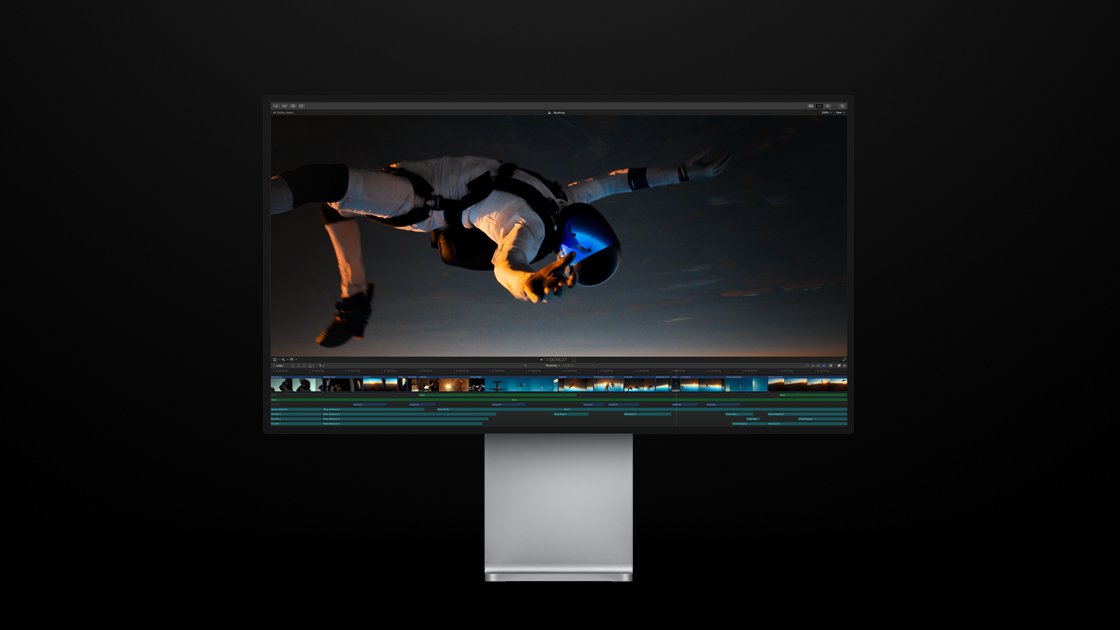
The landscape of software licensing has been steadily shifting over the past decade. Traditionally, users would buy a software license once and own that version forever, perhaps paying for major upgrades every few years. However, the rise of cloud computing and continuous development cycles has led many software companies, including major players like Adobe and Microsoft, to embrace subscription models. These models typically offer ongoing access to the latest features, cloud services, and support for a recurring fee. Apple's move with the Creator Studio bundle and its impact on apps like Final Cut Pro is a significant step in this broader industry trend, aiming to provide a more integrated and continuously updated experience for its users.
This shift often sparks debate among users. Proponents of subscriptions highlight the benefits of always having the newest tools, access to a wider suite of applications, and sometimes cloud storage or collaborative features. On the other hand, many users, especially professionals who rely on stable workflows and precise budgeting, prefer the upfront cost and perpetual ownership of a one-time purchase. They value the certainty of owning their tools outright and avoiding ongoing monthly or annual fees, which can add up significantly over time. Apple's decision to maintain a one-time purchase option for Final Cut Pro, priced at $299.99, acknowledges this user segment, but it introduces a new layer of complexity regarding feature availability.
Final Cut Pro: The Core of the Discussion
The Enduring One-Time Purchase Option
For many years, Final Cut Pro has been a cornerstone of video editing on the Mac platform, known for its powerful features and optimized performance on Apple hardware. Its availability as a one-time purchase for $299.99 has been a key factor for many professionals and enthusiasts who prefer to own their software outright. This model allows users to invest once and receive updates for that major version, often for an extended period, without additional charges. This commitment from Apple to continue offering this perpetual license is a relief for those who value long-term ownership and predictable costs. It means that existing Final Cut Pro users, or new users who prefer this model, can still buy the software without entering a subscription agreement.
The continued existence of this option underscores Apple's recognition of a strong user base that values permanence over subscription flexibility. For independent filmmakers, small production houses, or educational institutions, a one-time cost can be easier to manage than recurring subscription fees. It also provides a sense of security, knowing that access to the primary functionality of their critical editing tool won't be interrupted by a lapsed payment. However, the pressing question for these users is whether their owned version will remain on par with the subscription offering in terms of new features and capabilities, especially as Apple continues to innovate rapidly in its pro apps ecosystem.
Introducing Apple Creator Studio: A New Era for Pro Apps
The Apple Creator Studio is a new subscription bundle designed to offer a comprehensive suite of tools for creative professionals and power users. This bundle is Apple's answer to the growing demand for integrated creative workflows and a way to provide continuous value through a single subscription. It aims to simplify access to a range of Apple's powerful applications, bringing them under one umbrella. For a monthly fee of $12.99 or an annual cost of $129.99 in the U.S., subscribers gain access to not just Final Cut Pro, but also other key apps like Logic Pro, MainStage, and even third-party applications like Pixelmator Pro, alongside Apple's own productivity apps such as Keynote, Numbers, Pages, and Freeform.
The vision behind Creator Studio appears to be about fostering a more dynamic and interconnected creative environment on the Mac. By bundling these applications, Apple hopes to encourage users to explore new tools and integrate them into their projects seamlessly. For instance, a video editor might also dabble in music production with Logic Pro or graphic design with Pixelmator Pro, all within a single subscription. This model can be particularly appealing to content creators who juggle multiple creative disciplines and require a broad toolkit. It also represents Apple's strategy to move towards a service-oriented revenue stream, offering ongoing value and support through a unified subscription platform. However, the introduction of this bundle inevitably raises questions about how it will coexist with the traditional one-time purchase options for individual applications.
Feature Parity: A Critical Question for Final Cut Pro Users
The heart of the current discussion revolves around "feature parity"—whether all versions of Final Cut Pro will receive the same set of new features. According to an interview with digital filmmaking news website CineD, Apple marketing manager Bryan O'Neil Hughes provided some clarity. He confirmed that both the one-time purchase and Apple Creator Studio versions of Final Cut Pro for Mac would indeed include several new "intelligent" features. These are significant advancements that leverage Apple's powerful silicon and machine learning capabilities to streamline various aspects of the video editing workflow, making professional editing more efficient and intuitive.
Confirmed "Intelligent Features" for All
Specifically, Hughes mentioned three key new features that will be available across both licensing models:
- Visual Search: This intelligent feature likely allows editors to quickly find specific objects, people, or scenes within their footage using descriptive text. Imagine needing to find every shot containing a "red car" or "person smiling"; Visual Search could dramatically reduce the time spent manually scrubbing through hours of footage. This capability represents a significant leap forward in media asset management and content organization within Final Cut Pro.
- Transcript Search: For projects involving spoken dialogue, Transcript Search will be invaluable. This feature would automatically transcribe audio tracks and allow editors to search for specific words or phrases within the dialogue. This not only aids in finding specific sound bites but also facilitates text-based editing, where an editor might rearrange clips by manipulating their corresponding transcribed text, offering a new, highly efficient way to craft narrative from spoken word.
- Beat Detection: Essential for music videos, commercials, and any project where footage needs to be precisely synced to a musical rhythm, Beat Detection automates the process of identifying musical beats. This feature would analyze audio tracks and mark the beats, allowing editors to snap clips, transitions, and effects to the rhythm with greater ease and precision. This eliminates much of the tedious manual work involved in rhythmic editing, enabling more dynamic and engaging visual compositions.
The inclusion of these powerful, AI-driven tools in both the one-time purchase and subscription versions is a positive sign, indicating that Apple is committed to providing core innovation to all its Final Cut Pro users. These features leverage advanced algorithms and machine learning to automate complex tasks, significantly enhancing productivity and creative possibilities for editors across the board. They demonstrate Apple's investment in making Final Cut Pro smarter and more responsive to the demands of modern video production.
The Cloud of "Every" Feature
Despite the positive news regarding the confirmed intelligent features, Apple’s statement still leaves a critical aspect open to interpretation. Bryan O'Neil Hughes's comment did not explicitly confirm if both versions of the app would receive every additional "intelligent" feature in the future. This subtle distinction is crucial. While certain flagship features are guaranteed, the language implies that there might be other "intelligent" features, perhaps more advanced or integrated with cloud services, that could become exclusive to the Creator Studio subscription model. This lack of explicit, long-term assurance of 100% feature parity forever introduces an element of uncertainty for those who prefer the one-time purchase.
For professional users who rely on Final Cut Pro for their livelihood, this ambiguity is a source of concern. The fear is that over time, the one-time purchase version might slowly diverge from the subscription version, gradually missing out on cutting-edge innovations that could enhance their workflow or provide a competitive edge. This could force users who wish to stay at the absolute forefront of technology to eventually switch to a subscription, even if they prefer not to. Apple's practice of providing major updates for perpetual licenses has historically been robust, but the new Creator Studio model suggests a potential shift towards differentiating features based on licensing. This could create a two-tiered system where subscription users always get the "best" version, while perpetual license holders get a slightly less comprehensive, albeit still powerful, experience.
The Enigma of "Premium Content"
Adding another layer of distinction, Apple's website explicitly states that the one-time purchase version of Final Cut Pro for Mac will miss out on some "premium content." The exact nature of this "premium content" remains somewhat vague, but its exclusion for perpetual license holders is a clear differentiator. The website notes: "A one-time purchase will still be available, but access to some of the premium content is available only to Apple Creator Studio subscribers. If you already own Final Cut Pro, it will continue to be updated."
While the phrase "premium content" doesn't specify new core features of the editing engine, it could encompass a wide range of valuable assets and services. This might include, but is not limited to, extensive libraries of high-quality stock media (video clips, images, sound effects, music tracks), exclusive templates for titles, transitions, and effects, or perhaps even advanced plugins developed by Apple or third parties that are bundled with the subscription. It could also potentially involve deeper integration with cloud-based services, collaborative tools, or exclusive tutorials and learning resources. For video editors, access to a vast library of professionally curated content can significantly speed up production and enhance the quality of their projects, making its exclusivity to subscribers a compelling reason for some to consider the Creator Studio bundle.
The potential impact of this "premium content" being exclusive to subscribers is significant. It suggests that while the core functionality and even some "intelligent" features will remain available to all, the subscription model will offer added value that enhances the creative process beyond the raw editing capabilities. This strategy allows Apple to provide ongoing incentives for the subscription, creating a richer ecosystem for those who opt into the Creator Studio. For one-time purchasers, it means a potentially less robust experience in terms of supplementary assets and integrated services, nudging them towards a subscription if these additional resources become crucial for their workflow.
A Broader Look: Other Professional Apps in the Creator Studio
The introduction of the Apple Creator Studio doesn't only affect Final Cut Pro. It also brings changes to other professional and creative applications, with varying levels of feature parity between subscription and one-time purchase options. This creates a "mixed bag" scenario, where some apps maintain full feature parity, while others adopt a freemium or tiered feature model.
Logic Pro and MainStage: A Clear Path Forward
In contrast to the slight ambiguity surrounding Final Cut Pro, Apple has been remarkably clear and reassuring about its professional audio applications, Logic Pro and MainStage. The company's website explicitly promises full feature parity for these tools: "Logic Pro and MainStage have all the same features whether they are subscription or one-time-purchase versions."
This unequivocal statement is excellent news for musicians, audio engineers, and live performers who rely on these powerful applications. Logic Pro, Apple's flagship digital audio workstation, and MainStage, designed for live performance, are critical tools in their respective fields. Knowing that a one-time purchase will continue to grant access to every new feature and update without the need for a subscription offers peace of mind. This commitment from Apple ensures that users can choose their preferred payment model without fear of missing out on essential tools or future innovations in audio production. It maintains the integrity of the one-time purchase for these specific pro apps, offering stability and predictability that is highly valued in the music industry.
The "Mixed Bag" for Other Creative Tools
Beyond Final Cut Pro, Logic Pro, and MainStage, other applications included in the Creator Studio bundle exhibit a more varied approach to feature availability. This "mixed bag" includes popular apps like Pixelmator Pro, as well as Apple's suite of productivity applications: Keynote, Numbers, Pages, and Freeform. For these apps, some "intelligent" features or premium content will indeed be exclusive to Creator Studio subscribers, signaling a clear divergence based on the licensing model.
Pixelmator Pro's Exclusive Warp Tool
Pixelmator Pro, a powerful and popular image editing application for macOS, is one example where the subscription model will offer exclusive features. Only Pixelmator Pro users with a Creator Studio subscription will receive a new "Warp tool." This advanced feature allows users to twist, bend, and shape image layers with precision and flexibility. For graphic designers, illustrators, and photo retouchers, a Warp tool is an essential component for intricate manipulations, creative distortions, and correcting image perspectives. It provides an intuitive way to deform images, text, and shapes, opening up a wide array of creative possibilities for effects, mock-ups, and artistic expressions.
The decision to make such a specific and valuable tool subscription-exclusive highlights Apple's strategy to add compelling value to the Creator Studio bundle beyond just offering software access. While Pixelmator Pro will continue to be a robust standalone application, the absence of this particular advanced feature in the non-subscription version might be a noticeable limitation for users who frequently perform complex image transformations. This move subtly encourages users who desire the most complete and cutting-edge toolkit to consider the Creator Studio subscription, even for third-party applications integrated into the bundle.
Enhancements for Keynote, Pages, Numbers, and Freeform
Apple's widely used productivity suite—Keynote (presentations), Pages (word processing), Numbers (spreadsheets), and Freeform (digital whiteboard)—will also see differentiated features. Creator Studio subscribers will gain access to a new "Content Hub" within these apps. This hub is described as a repository of high-quality photos and graphics, along with new premium templates, themes, and more. This means subscribers will have a significantly enhanced library of visual assets and professionally designed starting points for their documents, presentations, and creative boards.
The Content Hub can dramatically improve the visual appeal and efficiency of creating documents and presentations. Access to a vast collection of curated, high-resolution images and graphics means users won't have to search for external stock photos, ensuring consistency and quality across their projects. Similarly, premium templates and themes can save countless hours of design work, allowing users to quickly produce polished and professional-looking materials. Apple also stated that its Freeform app, a collaborative digital canvas, will be updated with additional "intelligent" features specifically for Creator Studio subscribers later in the year, further enhancing its capabilities for brainstorming and project organization.
The "Freemium" Model for iWork Apps
Interestingly, Keynote, Numbers, Pages, and Freeform do not have an upfront cost; they are already free for all Mac users. However, with the introduction of subscription-exclusive features like the Content Hub and future "intelligent" capabilities, these apps are effectively transitioning into a "freemium" model. This means that while the core functionality remains free and accessible to everyone, certain advanced features, premium content, or enhanced capabilities will only be unlocked through an Apple Creator Studio subscription.
This approach allows Apple to continue providing essential productivity tools to a broad audience without charge, while simultaneously offering a premium tier for users who require more extensive resources and advanced features for professional or complex projects. Fortunately, Apple has assured users that all four of these apps will continue to receive other new features and updates without requiring a subscription. This means that free users will still get bug fixes, performance improvements, and general enhancements, ensuring that the apps remain functional and up-to-date. However, the most cutting-edge, AI-powered, or content-rich additions will be reserved for subscribers, creating a clear value proposition for the Creator Studio bundle, especially for those who heavily rely on these apps for their creative or professional endeavors.
User Reactions and The Way Forward
The Disappointment and Confusion
The introduction of the Creator Studio bundle and the accompanying changes to feature availability have been met with a mixed reception from the Apple user community, with a significant number of users expressing disappointment and confusion. Many long-time users of Apple's professional applications have grown accustomed to the clarity and predictability of the one-time purchase model, where a single investment granted access to a continually updated suite of tools without ongoing fees. The current shift, particularly the ambiguity around Final Cut Pro's long-term feature parity and the explicit segregation of "premium content," has disrupted this expectation.
The primary concern for users who dislike subscriptions revolves around the perceived erosion of value in a one-time purchase. They fear that their perpetual license might eventually become a second-class citizen, receiving only essential updates while all truly innovative and exciting features are reserved for subscribers. This sentiment is often rooted in a desire for complete ownership and control over their tools, free from the recurring financial commitment that subscriptions demand. Furthermore, the varying approaches to feature parity across different apps within the Creator Studio bundle—with Logic Pro enjoying full parity, Final Cut Pro facing some uncertainty, and other apps adopting a freemium model—creates a complex and potentially confusing landscape for consumers trying to understand what they are truly getting for their money, whether through a one-time purchase or a subscription.
Balancing Act: The Continued One-Time Options
Despite the concerns, Apple's decision to retain one-time purchase options for apps like Final Cut Pro, Logic Pro, and MainStage does help to alleviate some of the widespread disappointment. This approach is a pragmatic balancing act, attempting to cater to both the growing segment of users who prefer subscription-based access to a comprehensive suite of tools and the loyal base of professionals who favor perpetual licenses. By ensuring that key applications remain available for an upfront fee, Apple avoids a complete alienation of its long-standing users who are averse to recurring payments or need predictable, one-off costs for their budgeting.
For many, the availability of a perpetual license, even with potential limitations on "premium content," is a welcome alternative to an exclusively subscription-based future. It provides a choice, allowing users to weigh the benefits of continuous access to all features and bundled content against the security and cost predictability of owning their software. However, while this flexibility is appreciated, it doesn't entirely resolve the underlying tension. Users will still need to carefully consider whether the one-time purchase will continue to meet their evolving professional needs or if the eventual divergence in features will compel them to switch to the subscription model to remain at the cutting edge. This ongoing evaluation will define how users engage with Apple's pro apps in the years to come, balancing current needs with future-proofing their creative workflows.
Apple Creator Studio: Availability and Pricing
For those interested in exploring the new subscription model, Apple Creator Studio officially launched on Wednesday, January 28. In the U.S., pricing for the bundle is set at $12.99 per month, or a more cost-effective option of $129.99 per year, which offers a discount for annual commitment. This pricing structure is competitive, especially considering the range of professional and creative applications included in the bundle, potentially offering significant savings compared to subscribing to each app individually or purchasing multiple perpetual licenses. Interested users can find more detailed information and further insights into the Creator Studio by reading our earlier coverage, which provides a comprehensive overview of the new service and its implications for Apple's ecosystem of creative software.
Conclusion: Navigating the New Creative Landscape
Apple's introduction of the Creator Studio bundle marks a significant evolution in how its professional and creative applications are offered and accessed. While the company maintains a commitment to the one-time purchase model for flagship software like Final Cut Pro, Logic Pro, and MainStage, the future is clearly moving towards a more service-oriented approach. This new landscape brings both opportunities and challenges for users. The Creator Studio offers a compelling value proposition for those who embrace subscriptions, providing a wide array of tools and exclusive content under a single, convenient payment. However, it also introduces a degree of uncertainty for perpetual license holders, particularly concerning the long-term feature parity of Final Cut Pro and the exclusivity of "premium content" and certain "intelligent" features to subscribers.
The varied approaches to feature availability across different apps within the bundle—from full parity for Logic Pro to a freemium model for iWork apps and a nuanced situation for Final Cut Pro—highlight a complex strategy. As Apple continues to innovate, users will need to carefully weigh their individual needs, budget, and preference for ownership against the benefits of an always-updated, feature-rich subscription. The goal for Apple is clearly to foster a vibrant ecosystem of creative tools, but the path forward requires users to navigate a more intricate decision-making process than ever before. Ultimately, the success of this new direction will depend on how Apple manages the expectations and needs of its diverse user base, ensuring that both one-time purchasers and subscribers feel valued and empowered in their creative endeavors.
This article, "Will Final Cut Pro on Mac Get Every New Feature Without a Subscription? Here's What Apple Says" first appeared on MacRumors.com
Discuss this article in our forums
from MacRumors
-via DynaSage

Post a Comment