iPhone 18 Pro Leak: Smaller Dynamic Island, No Top-Left Camera Cutout
iPhone 18 Pro: Unraveling the Mystery of Its Front Design – A Clearer Picture Emerges
The world of Apple enthusiasts is always abuzz with speculation, especially when it comes to the highly anticipated Pro models of the iPhone. For months, whispers and conflicting reports have swirled around the upcoming iPhone 18 Pro's front-panel design, creating a web of intrigue that left many wondering what to truly expect. Some early supply-chain whispers hinted at groundbreaking under-display Face ID technology, suggesting a radical departure from current designs. Others reported a more conventional top-left hole-punch camera, a design seen in many Android devices. And of course, there was intense debate: would the now-iconic Dynamic Island shrink, shift its position, or perhaps even vanish entirely, paving the way for a truly uninterrupted display?
Navigating these conflicting narratives can be challenging, as early leaks are often fragmented, misinterpreted, or simply incorrect. However, a significant development has recently emerged that appears to cut through the noise, offering a much clearer vision of the iPhone 18 Pro's anticipated aesthetic. This fresh information comes from a reputable source on Weibo, a Chinese social media platform, known as Instant Digital. Their latest share includes new details and, crucially, compelling imagery that seems to finally clarify the situation, putting many of the preceding rumors to rest and bringing a sense of direction to the design conversation.
This clarification is pivotal because the front design is often the most visible and impactful change for users. It dictates how we interact with our devices, how much screen real estate we have, and the overall modern feel of the phone. Understanding these early design choices gives us a glimpse into Apple's engineering priorities and its long-term vision for smartphone interfaces. Let's delve into what this latest leak reveals and how it reshapes our expectations for the iPhone 18 Pro.
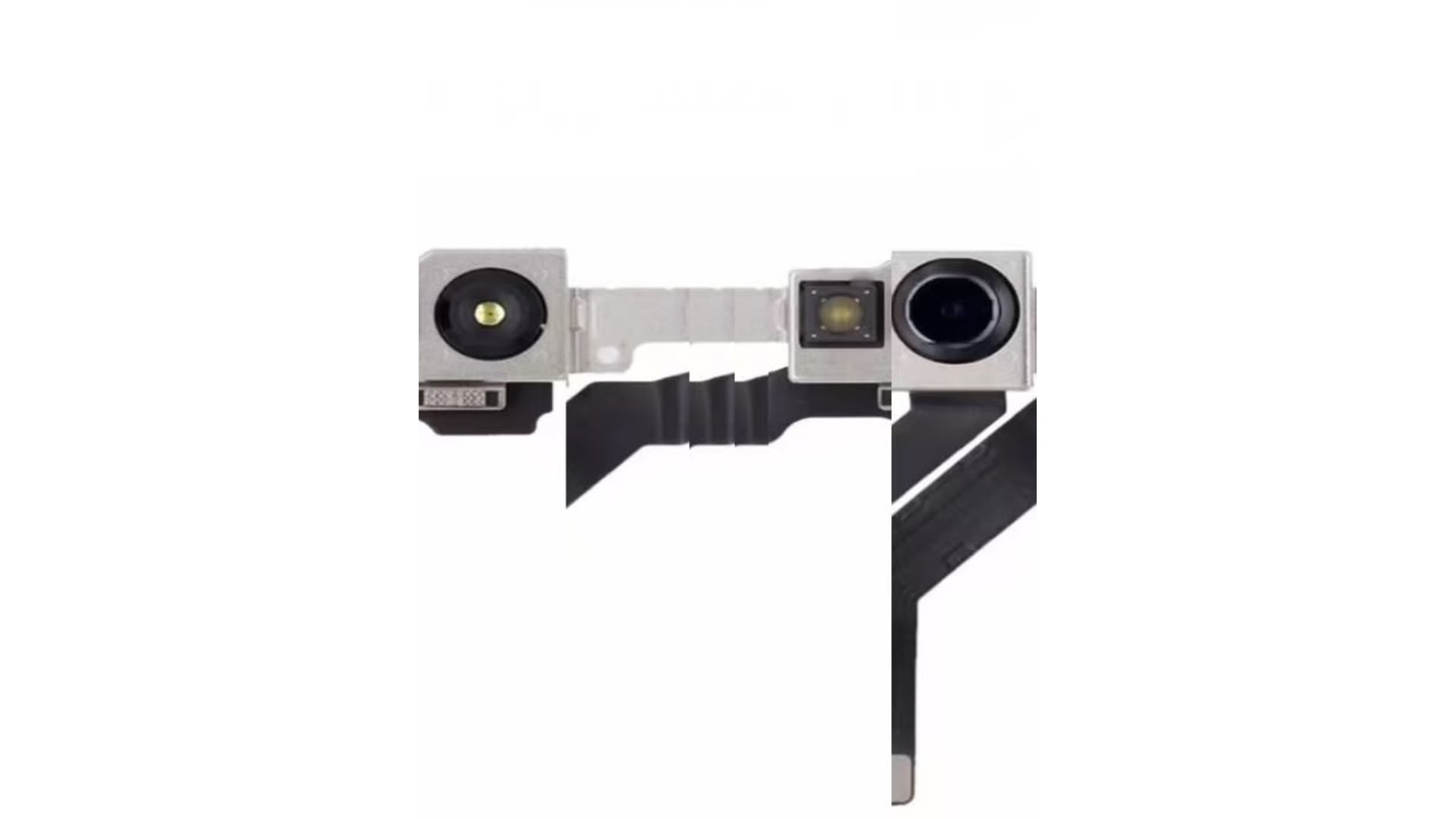
Decoding the Leaked Face ID Module: A Glimpse Inside
The core of Instant Digital's revelation lies in an image depicting what appears to be a leaked Face ID sensor assembly. This isn't just a random component; it's the sophisticated array of sensors that powers Apple's secure facial recognition system. Upon closer inspection, the image showcases a carefully engineered module, composed of three distinct units, all mounted on a single, flexible cable. This integrated design is typical for compact, high-precision electronic components within modern smartphones.
Each of these three modules plays a vital role in the Face ID process. On the far left of the assembly, we can identify an infrared flood illuminator. This component is responsible for emitting invisible infrared light onto the user's face, ensuring that Face ID can work effectively even in low-light conditions. It 'illuminates' the face with a uniform layer of infrared light, making it visible to the other sensors. To its right, positioned centrally within the assembly, is the dot projector. This is perhaps the most iconic component of Face ID, as it projects tens of thousands of invisible infrared dots onto the user's face. These dots create a unique, three-dimensional depth map of the face, which is then used for secure authentication. Finally, to the right of the dot projector, we find the infrared camera. This camera is specifically designed to capture the infrared light patterns projected by the dot projector and reflected off the user's face, converting that data into the detailed depth map required for identification.
The specific arrangement of these components within this leaked assembly is more than just an engineering detail; it's a critical piece of information that helps us understand Apple's strategy for the iPhone 18 Pro's front design. The relative sizes and optical requirements of these components dictate where they can be placed on or under the display. The flood illuminator, being optically simpler and relatively small, is an ideal candidate for integration beneath the screen. Conversely, the dot projector and infrared camera, which require precise optical alignment and an unobstructed view to accurately map a face, pose greater challenges for under-display integration. This distinction is crucial to interpreting the implications for the Dynamic Island and the overall screen aesthetics.
The Strategic Placement: Under-Display and the Evolved Dynamic Island
The layout of the leaked Face ID module provides a crucial clue to how Apple intends to redesign the iPhone 18 Pro's front panel. Its structure suggests a very specific approach to integrating these complex sensors while aiming for a more immersive display. The key takeaway is that not all Face ID components are destined to move under the display simultaneously, at least not yet. Instead, Apple appears to be pursuing a phased approach, beginning with the least optically demanding element.
Crucially, this layout strongly indicates that the infrared flood illuminator – the component responsible for bathing your face in invisible infrared light – is the only Face ID element likely to be placed entirely under the display. Being relatively small and optically straightforward, its integration beneath the screen in the top-left area of the phone's display is a technically feasible step. This move would be a significant milestone, representing Apple's first visible foray into true under-display sensor technology for Face ID, pushing closer to the dream of an all-screen front. By moving this component, Apple can free up precious space within the visible display area.
However, the dot projector and the infrared camera, which are vital for creating the precise 3D depth map of your face, present a different set of challenges. Their optical requirements are much stricter; they need a clear, unobstructed path to accurately emit and capture infrared light. Because of these technical demands, the leak suggests these two critical components would remain centered at the top of the display. Instead of disappearing entirely, they would be housed within a significantly reduced, pill-shaped Dynamic Island. This implies that while the Dynamic Island would get smaller, it would not vanish altogether on the iPhone 18 Pro. This evolution aligns with a gradual progression towards under-display technology, rather than an abrupt, full transition.
Debunking the Top-Left Hole-Punch Camera Rumor
This new information from Instant Digital serves as a direct pushback against earlier, widely circulated reports that suggested a radically different design for the iPhone 18 Pro. Last month, a prominent publication, The Information, had reported that the front camera would be moved to the top-left corner of the display on iPhone 18 Pro models. Their report explicitly claimed that this change would completely eliminate the familiar pill-shaped cutout, implying a standalone hole-punch design similar to many Android devices for the front camera. This sparked considerable discussion, as it would represent a significant aesthetic shift for Apple, moving away from its integrated notch/Dynamic Island design philosophy.
Instant Digital's latest findings, however, appear to challenge this interpretation head-on. According to the leaker, the confusion originated from early reports coming out of Chinese and Korean supply chain sources. These initial reports correctly identified a possible relocation of an *infrared component*. The critical error, Instant Digital explains, occurred during subsequent translation and interpretation into some English-language coverage. What was an infrared component—likely the flood illuminator—was mistakenly conflated with a visible, left-side hole-punch *front camera*.
This leap in interpretation, Instant Digital points out, merged different Face ID elements (a non-visible infrared illuminator) with a separate component (the visible front camera) and overlooked Apple's typical, evolutionary approach to its front sensor layout. Apple rarely makes such drastic, uncharacteristic design shifts without a clear functional reason. Instead, their pattern often involves minor internal reconfigurations that pave the way for external refinements over time. What was a minor internal change—relocating an infrared component—was thus misread and amplified into a major external redesign—a top-left hole-punch visible camera cutout. This clarification underscores the challenges of interpreting supply-chain leaks, where technical details can easily be lost or distorted in translation and speculation.

The Evolved Dynamic Island: Smaller and Smarter
So, what does all this mean for the iPhone 18 Pro and iPhone 18 Pro Max's front design? In short, the reports of a top-left hole-punch camera, which captivated many, now appear to be incorrect. This latest, more credible leak firmly steers expectations back towards a familiar yet refined design philosophy for Apple's upcoming Pro models. The only visible change suggested by Instant Digital's information, and corroborated by the technical layout of the leaked Face ID module, is a smaller, centered Dynamic Island.
This conclusion aligns perfectly with previous reports from reputable sources like Bloomberg, as well as other rumors that have long pointed towards a reduction in the size of the Dynamic Island. This shrinking is made possible precisely by the relocation of the infrared flood illuminator. By moving this component out of the Dynamic Island and discreetly placing it under the display, Apple effectively frees up valuable physical space within the visible cutout. The result is a more compact pill shape, which, while still housing the crucial dot projector and infrared camera, intrudes less on the main screen area.
The Dynamic Island, introduced with the iPhone 14 Pro, was a clever innovation that transformed a static notch into an interactive, animated hub for alerts, activities, and background tasks. It dynamically expands and contracts to show incoming calls, music playback, timers, Face ID authentications, and other live activities, making efficient use of the space around the front sensors. A smaller Dynamic Island would further enhance the user experience by providing even more unobstructed screen real estate, making content consumption more immersive and reducing the visual footprint of the sensor housing. It represents a significant refinement of a design element that has already proven its utility and charm. This iterative improvement is very much in line with Apple's historical approach to design evolution.
The Journey Towards an All-Screen iPhone: Apple's Enduring Vision
The concept of an "all-screen" iPhone, a device with a display that stretches seamlessly from edge to edge without any visible cutouts or bezels, has been a long-standing aspiration for Apple, and indeed, for the entire smartphone industry. Ever since the iPhone X introduced the notch as a controversial but necessary housing for Face ID, Apple has been on a relentless journey to minimize its impact. The notch was a bold step, enabling Face ID and shrinking bezels significantly compared to previous iPhones with Touch ID home buttons. However, it still represented an intrusion into the display.
The introduction of the Dynamic Island with the iPhone 14 Pro was another significant step in this journey. It wasn't just a reduction in physical size from the notch; it was a conceptual transformation. The "dead space" of the notch became an interactive, functional element, intelligently displaying information and controls. This innovation showed Apple's commitment to not just shrinking the cutout but making it a valuable part of the user interface. While the Dynamic Island cleverly masked the physical components beneath, the ultimate goal has always been to make those components truly invisible.
The move to place the infrared flood illuminator under the display on the iPhone 18 Pro is a critical stride towards this "holy grail" of an all-screen design. It demonstrates Apple's progress in overcoming the complex engineering challenges associated with placing optical sensors beneath an active display. The display itself needs to be transparent enough for the sensors to function, yet opaque enough to display pixels brightly and uniformly. This requires intricate manufacturing processes and advanced sensor technology. Each component moved under the display reduces the need for visible cutouts, bringing us closer to a truly uninterrupted visual experience. While the dot projector and infrared camera still reside within a smaller Dynamic Island, this phased approach suggests Apple is methodically tackling the technical hurdles, component by component. It signals a clear trajectory towards an iPhone where the display is truly the only thing you see on the front.
The Credibility of Leaks and the Excitement They Generate
In the fast-paced world of consumer electronics, especially concerning a company as secretive as Apple, leaks and rumors have become an integral part of the product cycle. They generate immense excitement, fuel debate, and often provide early insights into upcoming innovations. However, not all leaks are created equal. The veracity and accuracy of information depend heavily on the source and its track record.
In this instance, the insights provided by Instant Digital carry significant weight. This leaker has a history of accurately revealing details about unreleased Apple products, earning a reputation for reliability within the tech community. Furthermore, the credibility of this particular leak has been bolstered by rapid corroboration. Shortly after Instant Digital shared the details, the X (formerly Twitter) account "ShrimpApplePro," another well-known and often accurate source for Apple device leaks, publicly corroborated the information. This dual confirmation from two respected leakers significantly increases our confidence in the accuracy of the revealed design details for the iPhone 18 Pro.
Supply chain leaks typically originate from various stages of the manufacturing process – from component suppliers to assembly plants. At these points, designs, prototypes, and specifications can inadvertently or deliberately make their way into the public domain. While Apple goes to extreme lengths to maintain secrecy, the sheer scale of its global supply chain makes complete lockdown almost impossible. These leaks, when accurate, offer a fascinating peek behind the curtain, satisfying the immense curiosity of consumers and allowing for a more informed discussion about future technologies. For enthusiasts and industry watchers, a well-corroborated leak is akin to an early Christmas present, providing a tangible sense of what’s to come months before an official announcement.
What This Means for the User Experience
The design of a smartphone’s front panel is more than just aesthetics; it fundamentally impacts the user experience. A smaller Dynamic Island, rather than a top-left hole-punch, brings several benefits and maintains a consistent design language that Apple users have come to appreciate. Firstly, a smaller Dynamic Island, centrally located, preserves the symmetrical balance of the display. This subtle design choice contributes to a more harmonious visual experience, ensuring that elements appear naturally centered and that the phone feels aesthetically pleasing in hand.
Secondly, by maintaining the Dynamic Island concept, even in a reduced form, Apple ensures continuity in how users interact with their device. The Dynamic Island has become a familiar, intuitive space for notifications and live activities. Keeping it, albeit smaller, means users won't have to relearn interaction patterns or adapt to a completely new visual language for alerts. This consistency contributes to a smoother, more predictable user experience, which is a hallmark of Apple's design philosophy.
Furthermore, the increased screen real estate around a smaller Dynamic Island enhances content consumption. Whether watching videos, playing games, or browsing websites, less intrusion means a more immersive view. This subtle expansion of the usable screen area, especially around the top, improves readability and reduces visual distractions. The ultimate goal is to make the technology disappear, allowing users to focus entirely on their content. The refined Dynamic Island brings us one step closer to that ideal, offering an optimized balance between advanced sensor technology and an unobstructed, beautiful display.
Anticipating the Official Unveiling
Apple is historically known for unveiling its new flagship iPhone models during a special event typically held in September. Barring any more conflicting rumors or unexpected design changes in the coming months, we now possess a significantly clearer and more confident picture of what to expect the front display of the iPhone 18 Pro models to look like. The narrative has shifted from a fragmented collection of possibilities to a more cohesive vision: an iPhone 18 Pro that refines its iconic Dynamic Island, shrinking it through clever engineering and the strategic placement of some Face ID components under the display.
This clarity allows prospective buyers and tech enthusiasts alike to begin forming more concrete expectations. It suggests an iterative yet impactful evolution, staying true to Apple's design principles while pushing the boundaries of display integration. The absence of a top-left hole-punch camera, combined with the promise of a more compact Dynamic Island, paints a picture of an iPhone that prioritizes both sophisticated functionality and a highly refined visual experience. As the September launch approaches, the excitement will only continue to build, focused now on the finer details and other potential innovations the iPhone 18 Pro might bring.
Update: Today's leak has since been corroborated by the X account "ShrimpApplePro," which has accurately leaked some details about Apple devices in the past.
This article, "iPhone 18 Pro Leak: Smaller Dynamic Island, No Top-Left Camera Cutout" first appeared on MacRumors.com
Discuss this article in our forums
from MacRumors
-via DynaSage

Post a Comment