Google Gemini Partnership With Apple Will Go Beyond Siri Revamp
Apple and Google Forge Landmark AI Partnership: Gemini to Power Future Apple Intelligence and a Revitalized Siri
In a groundbreaking announcement that reshapes the landscape of artificial intelligence, tech titans Apple and Google have confirmed a multi-year collaboration. This strategic alliance will see Google’s advanced Gemini models become the foundational technology underpinning not only a significantly more personalized version of Siri but also an extensive suite of future Apple Intelligence features. This move marks a pivotal moment, signaling a new era of cross-company innovation aimed at delivering sophisticated AI capabilities directly to Apple users.
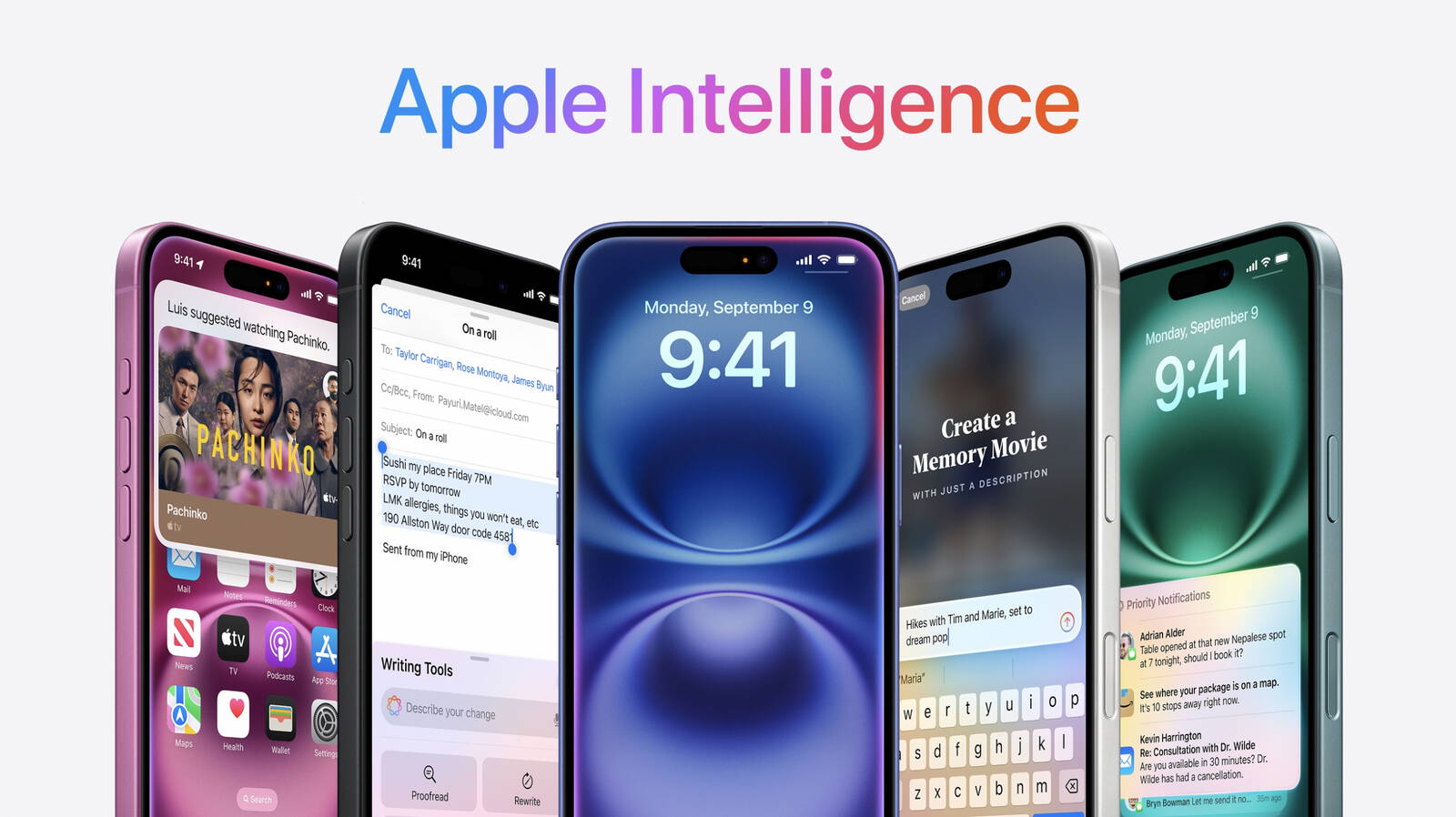
The partnership, detailed in a joint statement, reveals that "the next generation of Apple Foundation Models will be based on Google's Gemini models and cloud technology." This foundational integration is designed to fuel the evolution of Apple Intelligence, with a particular focus on enhancing Siri to become a truly intuitive and contextually aware digital assistant. While the immediate impact will be a more personalized Siri arriving later this year, the broader implications suggest a deeply integrated AI experience across Apple's ecosystem, from iPhones and iPads to Macs and beyond.
Apple has expressed its profound "excitement about the innovative new experiences" that this collaboration is poised to unlock. However, the initial announcement deliberately remained light on specific feature details, a common approach in the early stages of such significant technological ventures. This discretion allows both companies to fine-tune development and strategy before unveiling concrete functionalities, building anticipation for what promises to be a transformative update to Apple's offerings. The tech community is now buzzing with speculation about the potential breadth and depth of these forthcoming innovations.
Understanding the Core of the Partnership: Gemini and Foundation Models
To truly grasp the significance of this announcement, it's crucial to understand the technology at its heart: Google Gemini and Apple Foundation Models. Gemini represents Google's most powerful family of artificial intelligence models, designed to be multimodal, meaning they can understand and operate across various types of information, including text, code, images, audio, and video. Its advanced architecture allows for complex reasoning, problem-solving, and creative generation, setting it apart as a leading-edge AI system.
Apple Foundation Models, on the other hand, refer to the fundamental, large-scale AI models that Apple develops and deploys across its devices and services. These models are the bedrock upon which specific AI features like Siri, image processing, and predictive text are built. By basing these next-generation Foundation Models on Google's Gemini technology, Apple is essentially leveraging Google's vast expertise and computational power in large language models and multimodal AI. This decision underscores the immense complexity and resource demands involved in developing truly cutting-edge AI, prompting even a company as formidable as Apple to seek strategic alliances.
The "multi-year collaboration" aspect is also key. It indicates a long-term strategic alignment rather than a one-off licensing deal. This commitment suggests deep integration and shared development roadmaps, potentially leading to highly optimized and deeply embedded AI capabilities that evolve consistently over time. Such a long-term vision is essential for building robust and reliable AI systems that can adapt to ever-changing user needs and technological advancements.
The Role of Google Cloud Technology
Beyond just the Gemini models themselves, the partnership explicitly mentions the involvement of Google's cloud technology. This signifies that much of the heavy lifting for training, refining, and potentially even certain aspects of running these advanced AI models will occur on Google Cloud's infrastructure. Cloud computing offers immense scalability, specialized hardware (like TPUs – Tensor Processing Units, optimized for AI workloads), and advanced data processing capabilities that are critical for modern AI development.
While Apple has its own robust cloud infrastructure and its unique Private Cloud Compute for processing sensitive user data, integrating with Google Cloud for specific AI training and processing tasks can significantly accelerate development cycles and enhance model performance. This collaboration highlights a growing trend in the tech industry where even competing companies find common ground in leveraging specialized strengths, particularly in resource-intensive fields like AI.
The Current Landscape of Apple Intelligence: What Could Be Enhanced?
One of the intriguing questions arising from this announcement is whether Gemini will extend its influence to existing Apple Intelligence features that have already been unveiled. Currently, Apple Intelligence encompasses a suite of capabilities such as Writing Tools, Image Playground, and Notification Summaries. It remains unclear if Gemini will help power these specific features, but understanding their current function provides context for potential future enhancements.
Writing Tools: Elevating Communication
Apple's Writing Tools are designed to assist users in crafting more polished and effective text across various applications. This includes features like rewriting sentences to be more concise or formal, proofreading for grammatical errors, and generating summary points from longer texts. While these tools already leverage sophisticated on-device machine learning, a Gemini-powered foundation could bring unprecedented levels of natural language understanding and generation.
Imagine a Writing Tool that not only corrects grammar but also suggests stylistic improvements tailored to your personal writing voice, or one that can transform bullet points into a compelling narrative with a single prompt. Gemini's advanced language capabilities could enable more nuanced rephrasing, more creative content generation, and a deeper understanding of context to ensure suggestions are always relevant and helpful.
Image Playground: Unleashing Creativity
Image Playground offers users the ability to create and manipulate images using simple text descriptions. This generative AI feature allows for playful experimentation, generating unique visuals based on prompts. If Gemini were to integrate here, it could significantly enhance the fidelity, artistic range, and semantic understanding of the image generation process. Gemini's multimodal nature, which allows it to process both text and images, could lead to more accurate interpretations of user prompts, the ability to generate more complex scenes, and potentially even blend real-world images with AI-generated elements seamlessly.
This could mean more realistic creations, a wider array of artistic styles available, and the capacity to iterate on images with greater precision, turning vague ideas into concrete visual representations with remarkable ease. The integration of advanced generative models often leads to a leap in creative potential for users.
Notification Summaries: Streamlining Information Overload
Notification Summaries are designed to help users manage information overload by intelligently grouping and summarizing notifications, presenting the most important information at a glance. This feature relies on AI to understand the content and priority of various alerts. A Gemini-powered system could drastically improve the accuracy and relevance of these summaries. By leveraging its deep language understanding, Gemini could extract key information from complex notifications more effectively, prioritize alerts with greater precision based on user behavior and preferences, and even provide actionable insights directly within the summary.
This could mean smarter filtering of spam, more concise and informative summaries of group chats, and a truly personalized digest of your daily digital life, ensuring you stay informed without being overwhelmed. The ability of Gemini to understand context across different applications would be particularly beneficial here.
Apple's Unwavering Commitment to Privacy: Private Cloud Compute
Apple and Google have entered into a multi-year collaboration under which the next generation of Apple Foundation Models will be based on Google's Gemini models and cloud technology. These models will help power future Apple Intelligence features, including a more personalized…
— News from Google (@NewsFromGoogle) January 12, 2026
Amidst the excitement of advanced AI, Apple reiterates its steadfast commitment to user privacy, a cornerstone of its brand identity. The company affirms that Apple Intelligence features, including those potentially powered by Gemini, will continue to operate under "industry-leading privacy standards." This commitment is upheld through Apple’s unique approach to AI processing: utilizing a combination of on-device processing and its innovative Private Cloud Compute servers.
What is Private Cloud Compute?
Apple's Private Cloud Compute (PCC) is a cutting-edge architecture designed to extend the privacy and security of on-device processing to the cloud. When a complex AI request cannot be fully processed on an Apple device due to computational demands, it is sent to PCC. The critical difference with PCC is that these cloud servers are custom-built by Apple with hardened security, and they are designed to be "uninspectable." This means even Apple engineers cannot access or view user data processed on these servers.
Furthermore, each request sent to PCC is cryptographically verified to ensure it's from a genuine Apple device running publicly available software, not a custom or malicious build. The data is processed, and the results are sent back to the user's device, with no user data stored or logged by Apple on these cloud servers. This "zero-knowledge" approach ensures that even when AI tasks require the power of the cloud, user privacy remains paramount.
Navigating the Google Partnership with Privacy in Mind
The collaboration with Google Gemini raises legitimate questions about how Apple will maintain its stringent privacy standards. While the partnership states that Apple Foundation Models will be *based* on Gemini and Google cloud technology, it doesn't necessarily mean raw user data will flow freely to Google's general cloud services. It's highly probable that Apple's integration will involve running aspects of Gemini models within the confines of its Private Cloud Compute, or that Google provides the underlying model architecture which Apple then fine-tunes and deploys securely.
Apple's historical stance and explicit statements indicate that any cloud-based processing of personal user data for Apple Intelligence will occur within its secure Private Cloud Compute environment. This means that while the intelligence of Gemini might be leveraged, the private context and user-specific information remain under Apple's control and within its privacy framework. This distinction is crucial for understanding how Apple can partner with an external entity like Google while still upholding its core privacy principles. The technical specifics of this integration will undoubtedly be complex, but Apple will need to clearly articulate its privacy safeguards to its user base.
Siri's Long-Awaited Transformation: A Truly Personalized Assistant
The centerpiece of this immediate partnership appears to be the revitalization of Siri. The "more personalized version of Siri" is highly anticipated, especially following a lengthy delay in its introduction. This advanced Siri is now expected to debut with iOS 26.4 in March or April. This significant update promises to move Siri beyond its current limitations, making it a far more capable and intuitive digital assistant.
The new capabilities outlined are particularly exciting:
Better Understanding of a User's Personal Context
Currently, Siri often struggles with context. If you ask about "that movie" you were just discussing in Messages, it might not know what you mean. The revamped Siri aims to bridge this gap. By understanding your personal context—what you've been doing, reading, or talking about across your apps—Siri can offer far more relevant assistance. This means Siri will finally be able to maintain conversational threads, recall previous interactions, and infer your intent based on your ongoing activities.
For example, if you just looked at a restaurant on Maps, you could ask Siri, "What time do they close?" without needing to specify the restaurant again. This level of contextual awareness is a hallmark of advanced AI and will make interactions with Siri feel significantly more natural and helpful.
On-Screen Awareness
A major limitation of the current Siri is its inability to truly "see" and understand what's on your screen. This often requires users to manually navigate to information or dictate specific details. With on-screen awareness, Siri will be able to comprehend the content displayed on your device and interact with it directly.
Imagine you're looking at an email with flight details, and you can simply ask Siri, "Add this flight to my calendar," or "When does this flight arrive?" without manually copying and pasting information. This capability dramatically reduces friction in completing tasks and allows for more seamless integration between Siri and the apps you're using.
Deeper Per-App Controls
The promise of deeper per-app controls means Siri will gain a much richer understanding of individual applications and their functionalities. Instead of generic commands, Siri will be able to perform specific actions within apps more intelligently. This goes beyond simply opening an app; it means Siri can interact with the app's internal logic and data.
For instance, you might be able to ask Siri to "find that photo of the Eiffel Tower from last summer in Photos" or "create a shopping list in Reminders with milk and bread," and Siri will execute these commands with precision, understanding the nuances of each application. This deep integration is crucial for transforming Siri into a truly powerful personal agent.
Real-World Example: Mother's Flight and Lunch Plans
Apple provided a compelling example to illustrate these new capabilities: an iPhone user asking Siri about their mother's flight and lunch reservation plans. The key here is that Siri would pull information from disparate sources – likely the Mail app for flight confirmations and the Messages app for lunch plans – and synthesize it into a coherent answer. This demonstrates a multi-faceted contextual understanding that current Siri lacks, showcasing the power of cross-app intelligence and personalized data interpretation.
This level of integration and contextual understanding is what users have long desired from a digital assistant. It moves Siri from being a command interpreter to a proactive, intelligent assistant that can genuinely help manage a user's digital and real-world life.
The Implications of a "Lengthy Delay"
The mention of a "lengthy delay" in Siri's personalization features is significant. It suggests that integrating advanced AI models and achieving the desired level of performance and privacy has been a complex undertaking. Developing sophisticated AI, especially one that deeply understands personal context and integrates across an entire ecosystem, requires immense computational resources, vast amounts of data, and meticulous engineering to ensure accuracy, reliability, and security.
The delay could also indicate the challenges of harmonizing Apple's stringent privacy principles with the demands of powerful cloud-based AI models. Ensuring that user data remains private while leveraging the capabilities of models like Gemini requires innovative architectural solutions, such as Private Cloud Compute. The fact that Apple is now moving forward, especially with Google as a partner, suggests they have found a viable path to address these complexities.
Beyond Siri: The Future of Apple Intelligence with Gemini
While the immediate focus is on Siri, the announcement explicitly states that Gemini will "help power future Apple Intelligence features." This opens a pandora's box of possibilities for how AI could transform the entire Apple ecosystem. With Gemini's multimodal capabilities, we could see advancements far beyond current expectations.
Smarter Devices, Seamless Interactions
Imagine your iPhone proactively suggesting solutions based on your calendar, emails, and even your health data, all without explicit prompts. Your Apple Watch could offer more personalized health insights, and your Mac could automate complex workflows based on observing your habits. The potential for intelligent automation and proactive assistance across all Apple devices becomes immense.
For instance, your device might intelligently manage notifications, prioritize emails based on sentiment, or even draft replies that align with your communication style. The integration of advanced generative AI could also lead to more dynamic and adaptive user interfaces that personalize themselves based on your context and needs.
Enhanced Accessibility and Inclusivity
Advanced AI can significantly improve accessibility features. A Gemini-powered Apple Intelligence could lead to more accurate real-time transcription, more natural text-to-speech voices, and even more sophisticated visual description tools for users with visual impairments. The ability to understand complex requests and provide tailored assistance can empower a wider range of users to interact with their devices more effectively.
A More Cohesive Ecosystem
This partnership could cement Apple's vision for a seamlessly integrated ecosystem where all devices and services work in concert, powered by a unified, intelligent core. With Gemini's capabilities informing Apple's foundation models, the potential for intelligent hand-offs between devices, unified personalized experiences, and truly predictive assistance becomes a tangible reality. This is not just about individual features but about a systemic shift in how users interact with technology.
The Broader Tech Landscape: A New Era of Collaboration
This collaboration between Apple and Google is more than just a product announcement; it's a significant indicator of the evolving dynamics in the tech industry. For years, Apple has prided itself on its vertically integrated approach, often building technologies entirely in-house. While this strategy has its merits, the rapid and resource-intensive advancements in AI are prompting even the largest tech companies to consider strategic partnerships.
Google, a leader in AI research and development, benefits by extending the reach of its Gemini models to millions of Apple users, further solidifying its position as a key AI infrastructure provider. Apple, in turn, gains access to world-class AI models, accelerating its own AI roadmap without having to replicate Google's decade-plus investment in large-scale language model research and training infrastructure.
This partnership could set a precedent for future collaborations between tech giants, where specialized strengths are leveraged to drive innovation. It acknowledges that in the complex world of cutting-edge AI, even competitors can find common ground to advance the technology for mutual benefit and ultimately, for the benefit of users.
What's Next? Anticipating the Rollout of iOS 26.4 and Beyond
All eyes are now on the anticipated release of iOS 26, particularly the 26.4 update in March or April, which is slated to introduce the more personalized Siri. This will be the first tangible demonstration of the Apple-Google AI partnership and will offer users a glimpse into the future of Apple Intelligence.
Following this initial rollout, we can expect Apple to gradually introduce more Apple Intelligence features powered by the Gemini-infused foundation models, potentially extending to iPadOS 26 and other operating systems. The multi-year nature of the agreement suggests a roadmap of continuous innovation, with new capabilities and refinements emerging over time.
As the integration deepens, users will likely experience a more intuitive, proactive, and personalized interaction with their Apple devices than ever before. This partnership is not merely an incremental update; it's a fundamental shift in how Apple approaches artificial intelligence, promising a truly intelligent and seamless user experience powered by the combined might of two technological giants.
This article, "Google Gemini Partnership With Apple Will Go Beyond Siri Revamp" first appeared on MacRumors.com
Discuss this article in our forums
from MacRumors
-via DynaSage

Post a Comment