End-to-End Encrypted RCS Messages Referenced in Latest iOS 26.3 Beta
Apple Moves Closer to End-to-End Encrypted RCS Messages: A New Era for iPhone Communication
In a significant development for digital privacy and cross-platform messaging, Apple appears to be making substantial progress toward supporting end-to-end encryption (E2EE) for RCS messages. This exciting news comes almost a year after the GSM Association (GSMA) first announced its commitment to bringing this vital privacy feature to messages exchanged between Android and iPhone devices. For millions of users, this could herald a new age of secure, rich communication, finally bridging a long-standing gap in the mobile messaging world.
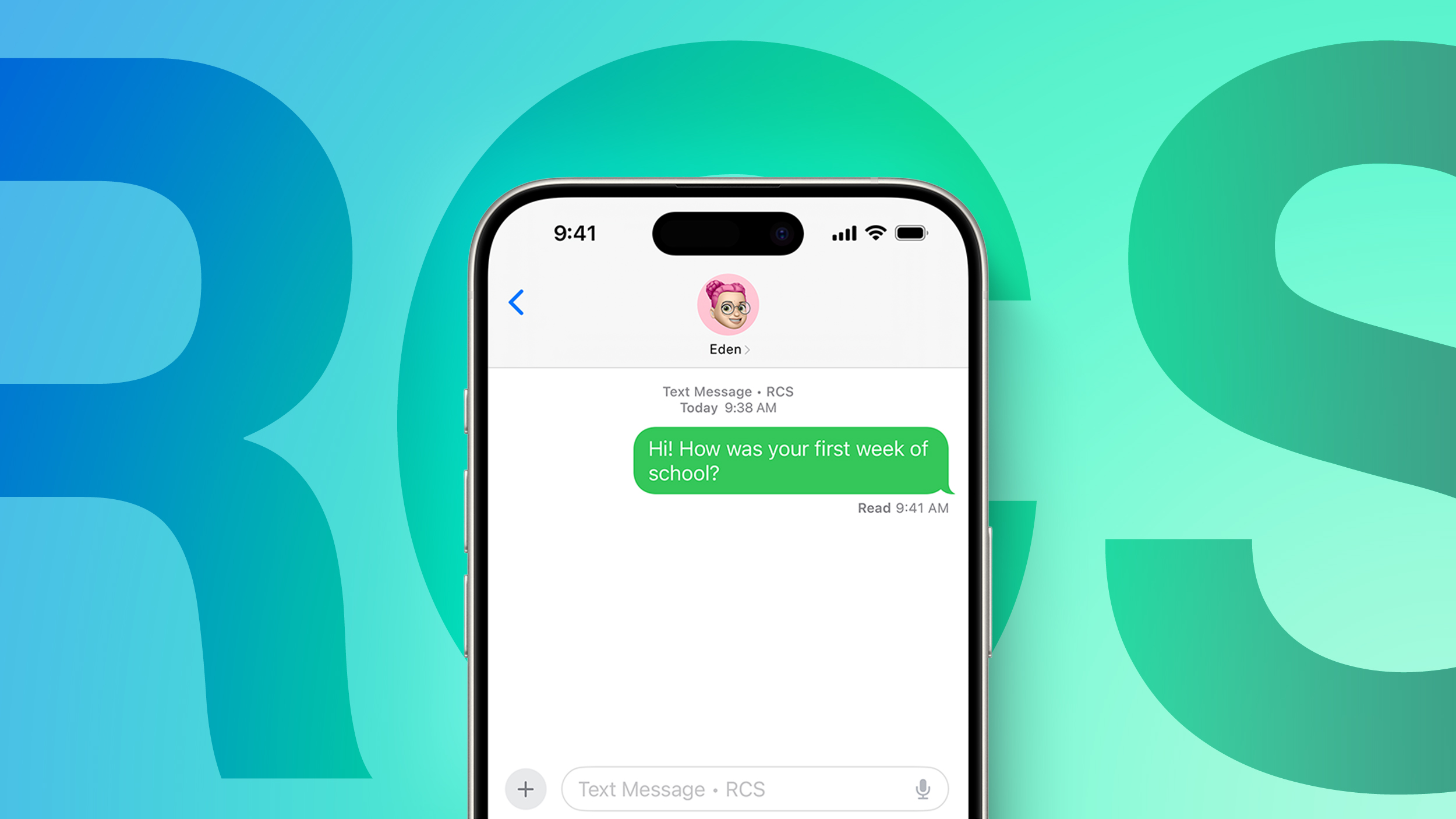
The Latest Revelation: iOS 26.3 Beta Hints at E2EE
The recent buzz originates from Tiino-X83 on X (formerly Twitter), who discovered compelling evidence within the latest iOS 26.3 beta. This beta version includes new references to a "carrier bundle setting." This particular setting is designed to give mobile carriers the ability to enable or disable E2EE for RCS messages. While the presence of such a setting doesn't guarantee immediate activation, it strongly indicates that Apple is actively laying the technical groundwork for this feature to be implemented in the near future.
The significance of a carrier bundle setting for E2EE cannot be overstated. It suggests a level of control and flexibility that aligns with global regulatory requirements. In some regions, local laws might prohibit end-to-end encryption for all users, or mandate that users be clearly informed about the encryption status of their messages. The GSMA standard specifically stipulates these requirements, ensuring transparency and compliance. Therefore, this setting could be crucial for displaying the encryption status to users, adhering to these important guidelines and avoiding potential legal hurdles in various countries.
Understanding RCS: The Future of Standard Text Messaging
Before diving deeper into encryption, it's essential to understand what RCS (Rich Communication Services) is and why its adoption by Apple is such a big deal. For years, SMS (Short Message Service) has been the default standard for text messages across different phone brands. While reliable, SMS is an outdated technology, conceived in an era before smartphones and pervasive internet access. It's limited to basic text, small file attachments, and lacks modern features users have come to expect from messaging apps.
RCS is essentially a modernized, significantly upgraded version of SMS. It transforms standard text messaging into an experience akin to popular internet-based messaging apps like WhatsApp or iMessage. With RCS, users can enjoy a host of enhanced features, including:
- Read Receipts: See when your messages have been delivered and read.
- Typing Indicators: Know when the other person is typing a reply.
- High-Quality Media Sharing: Send larger photos, videos, and audio clips without heavy compression.
- Richer Group Chats: More robust group messaging capabilities, including adding and removing participants.
- Larger Message Sizes: Send longer messages without breaking them into multiple texts.
- Location Sharing: Easily share your location with contacts.
- Enhanced Security (with E2EE): The most crucial upcoming feature, providing privacy for your conversations.
Apple officially added support for RCS on iPhones with iOS 18, which adopted the RCS Universal Profile 2.4. This initial step significantly improved the cross-platform messaging experience between iPhones and Android devices, particularly for media sharing and group chats. However, the lack of end-to-end encryption for these RCS messages remained a notable omission, keeping them less secure than iMessage or other dedicated secure messaging apps. SMS, of course, remains available as a fallback option for situations where RCS is not supported, ensuring messages always get through, albeit in a more basic form.
The Power of End-to-End Encryption (E2EE)
So, what exactly is End-to-End Encryption (E2EE), and why is it considered the gold standard for digital communication security? In simple terms, E2EE ensures that only the sender and the intended recipient can read a message. No one in between – not your internet service provider, not your mobile carrier, and critically, not even the messaging service provider (in this case, Apple or Google) – can access the content of your communication. It's like sending a letter in a magical, unbreakable vault that only you and the recipient have the key to open.
Here’s how it generally works: when you send an E2EE message, it's encrypted on your device before it ever leaves. This encrypted message travels through various servers and networks. When it reaches the recipient's device, and only then, is it decrypted. The "keys" to encrypt and decrypt the message are held exclusively on the sender's and recipient's devices, making it virtually impossible for any third party to intercept and read the content. This differs significantly from "encryption in transit" or "encryption at rest," where data might be encrypted while moving or stored on a server, but the service provider typically holds the keys, meaning they could potentially access the content if compelled or compromised.
The importance of E2EE in today's digital landscape cannot be overstated. It protects sensitive personal information, private conversations, financial details, and even professional secrets from potential eavesdropping, hacking attempts, or governmental surveillance. In an era where data breaches are common and privacy concerns are paramount, E2EE offers a crucial layer of defense, giving users peace of mind that their communications remain truly private. For RCS messages, introducing E2EE would mean that conversations between an iPhone and an Android phone would achieve a level of security previously only available through platform-specific apps like iMessage or third-party solutions like Signal and WhatsApp.
A Timeline of Promises and Progress
The journey to end-to-end encrypted RCS has been a gradual one, marked by industry collaboration and, at times, Apple's notable silence. The initial major announcement regarding E2EE for RCS came in March 2025. This was part of version 3.0 of the RCS Universal Profile, a global standard developed by the GSMA to ensure interoperability and a consistent rich messaging experience across networks and devices. At that time, Apple publicly stated its intention to add support to the Messages app in future iOS, iPadOS, macOS, and watchOS software updates.
Following this commitment, however, Apple remained notably quiet on the subject. This silence led to speculation and anticipation among users and industry watchers alike. While Apple had already started rolling out basic RCS support with iOS 18, the crucial E2EE component was still missing. The recent discovery of carrier bundle references in the iOS 26.3 beta breaks this silence and provides the first concrete indication that Apple is indeed actively working to fulfill its promise. It suggests that behind the scenes, development has been ongoing, even if public updates were scarce.
Le chiffrement de bout en bout arrive sur le RCS de l’iPhone !
— Tiino-X83 (@TiinoX83) January 12, 2026
Je viens de vérifier les carrier bundles d’iOS 26.3 bêta 2, et Apple a ajouté un nouveau paramètre permettant aux opérateurs d’activer le chiffrement pour le RCS
Pour le moment, aucun opérateur ne l’a encore activé pic.twitter.com/RkFGH5J5ut
It's important to temper expectations slightly: these carrier bundle references in the latest iOS 26.3 beta could simply be Apple laying the foundational groundwork for future support. They are not an absolute guarantee that E2EE for RCS messages will arrive with the immediate software release of iOS 26.3. However, they are undeniably a strong indicator that Apple is committed to bringing this support at some point in the future, marking a significant step towards achieving truly secure and interoperable messaging across platforms.
Bridging the "Green Bubble" Divide with Security
For years, a subtle but pervasive social dynamic has existed in the U.S. and other regions, centered around the color of messaging bubbles. iPhone users communicating with other iPhone users see "blue bubbles," indicating iMessage, which boasts robust features and end-to-end encryption. When an iPhone user messages an Android user, the messages appear in "green bubbles," signifying SMS/MMS, which lacks advanced features and, crucially, E2EE. This "green bubble" phenomenon has often led to a perception of inferior communication, and sometimes even social pressure, for those on Android devices.
The introduction of RCS support on iPhone with iOS 18 already began to alleviate some of the functional disparities of the "green bubble" experience. High-quality photos, videos, and improved group chats meant that cross-platform communication became much more visually appealing and feature-rich. However, the core security gap remained: "green bubble" messages were still not end-to-end encrypted, leaving conversations vulnerable to potential interception.
When end-to-end encryption is finally implemented for RCS messages on iPhones, it will be a monumental step in truly bridging this divide. While the bubbles might still visually distinguish between iMessage and RCS, the underlying security architecture will be significantly more aligned. Users will be able to communicate across platforms with the confidence that their conversations are private and secure, irrespective of whether their contact uses an iPhone or an Android device. This levels the playing field in terms of privacy, addressing a long-standing criticism directed at Apple and promoting a more inclusive and secure messaging ecosystem for everyone.
The Role of Carrier Bundles and Regulatory Nuances
The discovery of the E2EE setting within a "carrier bundle" is a key technical detail that merits further explanation. A carrier bundle is essentially a collection of settings and configurations provided by a mobile network operator (e.g., AT&T, Verizon, Vodafone) that is downloaded to your iPhone. These bundles dictate how your phone connects to the carrier's network, handles voice calls, manages data, and, increasingly, enables specific messaging features like Wi-Fi calling or, in this case, RCS encryption.
By placing the E2EE setting within a carrier bundle, Apple is providing carriers with granular control over this feature. This approach is not arbitrary; it directly addresses the complex global regulatory landscape surrounding encryption. As mentioned, certain local regulations can prohibit the use of E2EE for all users, or at least require explicit user notification regarding encryption status. For instance, some governments might demand lawful access to communications for national security or law enforcement purposes, which E2EE inherently complicates.
Therefore, giving carriers the ability to enable or disable E2EE for RCS allows Apple to deploy the feature globally while enabling individual carriers to comply with their respective local laws. It also means that the rollout of E2EE for RCS might not be uniform across all regions or carriers. Users should pay attention to their carrier's specific support and any on-screen indicators that will likely appear to confirm whether their RCS conversations are indeed end-to-end encrypted. This mechanism ensures Apple can adhere to its privacy principles while navigating diverse legal frameworks worldwide.
Profound Implications for Privacy and Security
The potential arrival of end-to-end encrypted RCS messages on iPhones carries profound implications for user privacy and security. In an age where personal data is constantly at risk, knowing that your casual texts, shared photos, and private conversations are protected from prying eyes is invaluable. Here's a deeper look at what this means:
- Enhanced Message Security: The primary benefit is that all RCS messages between iPhone and Android will be significantly more secure. This moves them beyond the vulnerability of standard SMS, which transmits data in plain text, making it easily interceptable.
- Protection Against Interception: E2EE acts as a strong deterrent against various forms of interception, including passive eavesdropping by malicious actors, data mining by third parties, and even unauthorized access by service providers.
- Safeguarding Sensitive Information: Whether you're discussing personal health, financial matters, legal issues, or simply sharing intimate moments, E2EE ensures that this sensitive information remains confidential between you and your intended recipient.
- Building Trust in Digital Communication: As more messaging platforms adopt strong encryption, it builds greater trust among users in digital communication as a whole. This trust is crucial for encouraging open and honest interactions online.
- A Unified Standard for Secure Messaging: While dedicated secure messaging apps exist, E2EE for RCS moves the baseline of secure communication for general messaging higher. It means that even casual conversations, sent through the default messaging app on your phone, can benefit from robust privacy protections.
This development underscores Apple's broader commitment to privacy, a pillar often highlighted in its marketing and product development. By extending E2EE to RCS, Apple is not just improving an interoperable standard; it's extending its privacy ethos to a wider audience, regardless of their device choice.
The Competitive Landscape: iMessage, WhatsApp, Signal, and RCS
The introduction of end-to-end encrypted RCS messaging reshapes the competitive landscape of digital communication. For years, users have had to choose between different platforms, each with varying levels of security and features:
- iMessage: Apple's proprietary messaging service offers robust E2EE for messages between Apple devices, along with a rich set of features. It has been a significant differentiator for the iPhone ecosystem.
- WhatsApp: Owned by Meta, WhatsApp is one of the most popular messaging apps globally, offering E2EE by default for all communications. It boasts a vast user base and a wide array of features, making it a go-to for many cross-platform interactions.
- Signal: Widely regarded as the gold standard for secure messaging, Signal provides strong E2EE for all messages, calls, and media. Its focus is purely on privacy, often appealing to users with heightened security concerns.
- Telegram: Known for its speed and channel features, Telegram offers E2EE only for "secret chats," not for standard cloud chats, which is a key distinction from WhatsApp and Signal.
With E2EE for RCS, the "standard" text messaging experience on Android and between Android and iPhone will gain a critical security feature that was previously lacking. This positions RCS more competitively against platforms like WhatsApp and Signal, at least in terms of baseline security. While RCS may not immediately match the full feature sets or global user base of these established apps, bringing E2EE to the default messaging experience is a massive leap forward.
For Apple, this move can be seen as a strategic response to regulatory pressures (especially in regions like the EU), user demand for better cross-platform communication, and a desire to align its privacy principles with industry best practices, even for non-iMessage interactions. It ensures that even when an iPhone user is communicating outside the blue bubble, they are doing so with a significant privacy upgrade.
Looking Ahead: The Future of Messaging on iPhone
The references in iOS 26.3 beta provide a compelling glimpse into the future of messaging on iPhones. While the exact rollout timeline remains unconfirmed, the strong indicators suggest that end-to-end encrypted RCS is not a matter of "if," but "when."
Once implemented, users can expect to see clear indicators within the Messages app, notifying them when an RCS conversation is end-to-end encrypted. This transparency is crucial for user awareness and adherence to the GSMA standard's requirements. We can also anticipate more widespread adoption of RCS features across the board, as the security aspect removes a major drawback of the standard compared to proprietary encrypted apps.
This development aligns perfectly with Apple's consistent messaging around user privacy. By integrating E2EE into RCS, Apple extends its privacy commitment beyond its own ecosystem, enhancing the security of interactions with the broader Android community. This could lead to a more harmonious and secure mobile communication landscape, where device choice doesn't dictate a compromise on fundamental privacy rights.
Ultimately, this move benefits everyone. iPhone users will enjoy more secure and feature-rich communication with their Android-using friends and family. Android users will experience a significant upgrade when texting iPhone users, reducing the "green bubble" stigma and gaining vital privacy protections. The mobile industry as a whole moves towards a more secure, interoperable, and user-centric future for standard text messaging.
Conclusion: A New Chapter for Secure Cross-Platform Messaging
The hints of end-to-end encrypted RCS messages in the latest iOS 26.3 beta mark a pivotal moment in the evolution of mobile communication. After years of the "green bubble" divide and a clear security disparity between iPhone-to-iPhone and iPhone-to-Android messaging, Apple is taking concrete steps to bridge this gap. By embracing E2EE for RCS, Apple is not only fulfilling its previous commitments and aligning with industry standards but also delivering a massive privacy upgrade to millions of users worldwide.
This development promises a future where robust security is no longer confined to specific apps or device ecosystems but becomes a foundational element of standard cross-platform text messaging. It's a win for privacy, interoperability, and the overall user experience, paving the way for a more secure and connected digital world.
This article, "End-to-End Encrypted RCS Messages Referenced in Latest iOS 26.3 Beta" first appeared on MacRumors.com
Discuss this article in our forums
from MacRumors
-via DynaSage

Post a Comment