CES 2026: Google Brings Gemini AI Features to Google TV, Previewing What Apple TV Could Get
A Glimpse into the Future of Television: Google Gemini AI Comes to Google TV, Hinting at What's Next for Apple TV
The Consumer Electronics Show (CES) is always a hotbed for innovation, and CES 2026 proved no different. This year, Google made a significant splash by announcing a suite of new Gemini features that are set to revolutionize the Google TV experience. While Google TV might not be a primary platform for many dedicated Apple users, these advancements offer a fascinating look into the capabilities of artificial intelligence (AI) integrated directly into our television sets. More importantly, they provide a compelling preview of the intelligent functionalities that could soon arrive on Apple TV, given Apple's own strategic moves in the AI space.
What is Google TV, and Why Does This Matter?
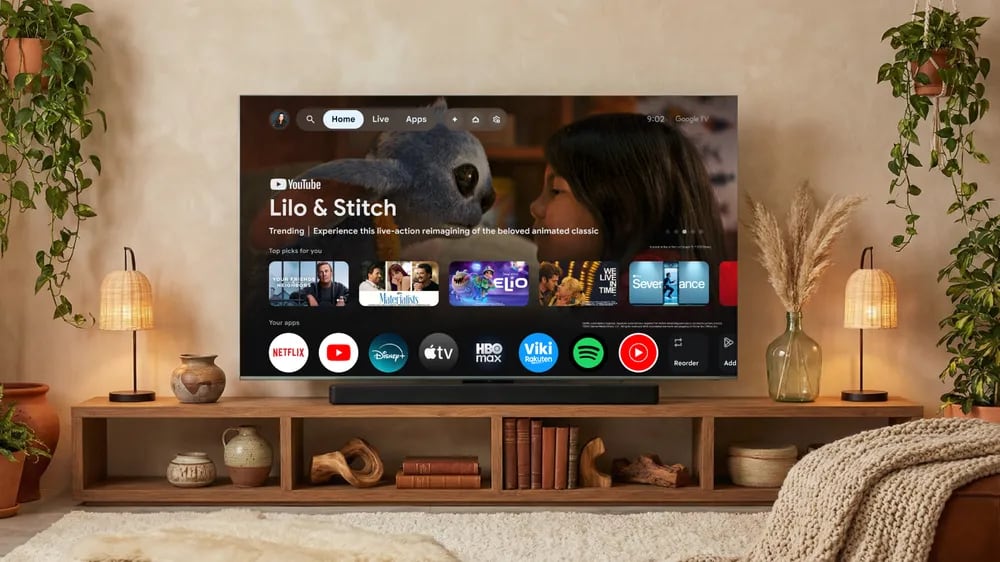
Before diving into the exciting AI enhancements, it's helpful to understand what Google TV is. Google TV isn't just a single device; it's a smart TV platform built into various television sets from manufacturers like Sony, Samsung, TCL, and more, as well as standalone set-top boxes. It acts as a central hub for all your streaming services, live TV, and apps, offering personalized recommendations and a unified interface. Essentially, it transforms your television into a smarter, more connected entertainment system.
The introduction of Gemini, Google's advanced AI model, into this ecosystem signifies a major leap forward. It moves beyond simple voice commands and content aggregation, pushing televisions into a realm of truly intelligent, interactive companions. For Apple users, this is particularly relevant because Apple is known for its ecosystem approach and its commitment to integrating cutting-edge technology into its devices. The innovations seen on Google TV today could very well be the foundation for similar or even more advanced features on future Apple TV devices, especially as Apple embraces its own AI journey.
Gemini's Arrival on Google TV: A New Era of Interaction
The core promise of Gemini on Google TV is a more intuitive, personalized, and powerful way to interact with your television. It aims to transform passive viewing into an active, engaging experience, where your TV can understand, assist, and even create. This isn't just about finding something to watch; it's about making the entire home entertainment experience seamless and enjoyable for everyone in the family.
Google's vision for Gemini on Google TV revolves around several key pillars: intelligent information delivery, personalized content exploration, creative media manipulation, and effortless device control. Each of these pillars is designed to leverage Gemini's advanced natural language understanding and generative AI capabilities to provide a fundamentally new way of interacting with what has traditionally been a relatively static appliance.
Diving Deep into Gemini's Features: Transforming Your TV Experience
1. Intelligent Answers with a Visual Flair
One of the standout features of Gemini on Google TV is its ability to answer queries with a "visually rich framework." This means when you ask your TV a question, you won't just get a spoken answer or plain text. Instead, Gemini will present information using a combination of imagery, videos, and real-time updates directly on your screen. Imagine asking about a movie, and not only getting a synopsis but also seeing trailers, cast photos, and clips related to it.
This extends to dynamic, time-sensitive information like sports. Ask about a game, and you could see live scores, player statistics, highlight reels, and team information, all presented graphically in an easy-to-digest format. This goes far beyond what traditional smart TV interfaces offer, moving closer to having a personal research assistant embedded right into your living room's main screen. It's about providing context and depth to your queries, making information consumption more engaging and immediate.
2. "Deep Dives": Simplifying Complex Topics for Everyone
Another innovative feature is "Deep Dives." This capability allows users to receive narrated, interactive overviews of a topic, simplified for the entire family. Think of it as a personalized documentary on demand, but with the flexibility to pause, explore specific elements, and have the content tailored to your understanding level. If your child asks about dinosaurs, Gemini could launch an interactive Deep Dive, complete with engaging narration, animated visuals of different species, and simple explanations of their habitats and history.
This feature has immense educational and entertainment potential. It transforms the TV into a learning tool, capable of explaining everything from scientific concepts to historical events in an accessible and captivating manner. The "interactive" aspect is key, suggesting users won't just be passive recipients of information but can actively engage with the content, perhaps by asking follow-up questions or choosing different paths within the Deep Dive. This represents a significant shift from static, pre-recorded educational content to dynamic, AI-generated learning experiences.
3. Your Personal Photo Assistant, Right on the Big Screen
For many, our digital photo libraries are vast and often underutilized. Gemini on Google TV changes this by allowing users to search through their Google Photos Library using natural language. No more endless scrolling to find that specific vacation photo or a picture of a particular person. You can simply tell Gemini, "Show me photos from our trip to Hawaii last summer," or "Find all the pictures of Grandma and the kids."
This intelligent search capability brings powerful organization to your memories, making them more accessible and enjoyable. The ability to recall specific moments or people with just a voice command transforms the living room TV into a large, interactive photo album, perfect for sharing memories with family and friends without the hassle of small phone screens or cumbersome navigation menus. It leverages AI's understanding of context, dates, and facial recognition to make your photo library truly smart.
4. Unleashing Creativity: Image and Video Generation
Beyond search, Gemini also introduces powerful creative tools directly to Google TV. It enables on-the-fly image editing, with options to apply artistic styles to your photos or generate cinematic slideshows from a collection of images. Imagine transforming a family photo into a painting in the style of Van Gogh with a simple voice command, or having Gemini automatically curate and animate a beautiful slideshow of your latest holiday snaps, complete with transitions and background music.
Taking this a step further, Google is integrating its generative AI tools:
- Nano Banana: Google's image generator, Nano Banana, can reimagine personal photos in entirely new ways or even create original media from scratch, all from the comfort of your couch. Want to see your dog as a superhero? Or generate a fantastical landscape for a bedtime story? Nano Banana makes it possible. This opens up entirely new avenues for entertainment and personal expression, turning the TV into a creative canvas.
- Veo: Google's video generation tool, Veo, is also coming to Google TV. While specifics on its initial implementation are still emerging, the potential is immense. Imagine describing a short scene and having Veo generate a video clip, or creating personalized animated greetings. This brings sophisticated video production capabilities, previously reserved for professionals, into the hands of everyday users, making creative content generation a part of the living room experience.
5. The Most Practical Innovation: Natural Language TV Settings
Perhaps the most universally useful new feature Gemini integration brings is the option to optimize TV settings using natural language. How many times have you fumbled with remote controls and complex on-screen menus to adjust picture or sound? With Gemini, those frustrations could be a thing of the past. Users can simply tell Gemini things like, "The screen is too dim," "I can't hear the dialogue," or "Make the colors more vibrant" to make quick, intuitive adjustments to picture and sound.
This feature dramatically simplifies the user experience, making the TV more accessible and responsive to individual needs. It moves beyond pre-set modes, allowing for nuanced adjustments based on real-time viewing conditions and personal preferences. This level of intelligent control, powered by AI's understanding of context and user intent, represents a significant step forward in making our technology truly work for us, rather than requiring us to adapt to its complexities.
Rollout and Availability
According to Google, these groundbreaking Gemini features will first arrive on TCL devices, demonstrating a strong partnership with a leading TV manufacturer. Following this initial rollout, Google plans to extend these capabilities to other Google TV devices over the coming months. This phased approach allows for refinement and optimization, ensuring a robust and polished experience as Gemini expands its reach across the Google TV ecosystem. It also signals Google's commitment to making these advanced AI features broadly available to its user base.
The Apple Connection: How Google TV Paves the Way for Apple TV
While these announcements specifically concern Google TV, they hold significant implications for Apple users and the future of the Apple TV. Apple has long been rumored to be enhancing its AI capabilities, and recent developments suggest a strategic move towards a more intelligent, AI-powered ecosystem.
Apple's AI Strategy: Partnering with Google Gemini
Crucially, Apple is planning to use a version of Google Gemini for some of its upcoming AI features. This partnership is a testament to Gemini's capabilities and signals that elements of Google's AI technology will power critical aspects of Apple's future intelligent experiences, including a smarter version of Siri. This collaboration means that the advancements Google showcases on its own platforms, like Google TV, are not just interesting developments in a competing ecosystem but potential blueprints for what Apple might integrate into its own devices.
The decision to leverage Gemini for Siri is particularly telling. Siri has been a core part of the Apple experience for years, but the expectation is for a significant upgrade, making it more contextual, proactive, and capable of handling complex requests. If Gemini is enhancing Siri, it implies that Apple's voice assistant will gain many of the sophisticated natural language understanding and generative capabilities demonstrated on Google TV.
The Next-Generation Apple TV: Hardware Ready for AI
Hardware is often the foundation for new software capabilities, and the next-generation version of the Apple TV is expected to receive a powerful upgrade: an A17 Pro chip. This is the same high-performance chip found in some of Apple's latest iPhones, known for its exceptional processing power and, critically, its neural engine capabilities. This A17 Pro chip is fully compatible with Apple Intelligence, Apple's comprehensive AI system announced to integrate deeply across its operating systems and devices.
The combination of a powerful chip and Apple Intelligence compatibility means the upcoming Apple TV will have the raw processing power needed to run sophisticated AI models locally, enhancing privacy and responsiveness. This hardware foundation is essential for supporting features akin to what Gemini is bringing to Google TV, ensuring smooth performance for everything from intelligent content recommendations to on-device media generation.
Potential AI Features for Apple TV: Learning from Google
With Apple adopting Gemini and Apple TVs soon becoming capable of new AI features through Apple Intelligence, it's highly plausible that some of the groundbreaking functionalities Google has announced for Google TV could be replicated on the Apple TV. Let's explore some of these potential similarities:
1. Smarter Content Discovery and Recommendations
Just as Gemini provides visually rich answers and "Deep Dives," Apple Intelligence could empower a next-gen Siri on Apple TV to offer more intelligent and engaging content recommendations. Instead of just showing a list of movies, Siri could present a dynamic overview, complete with trailers, cast interviews, and even contextually relevant trivia, all within a beautiful Apple interface. Imagine asking, "What's a good sci-fi movie for family night?" and Siri not only suggesting options but also providing interactive summaries that highlight why each choice might be suitable, factoring in viewer preferences and ratings.
2. Advanced Siri for TV Control
The natural language optimization for TV settings is a prime candidate for replication on Apple TV. Apple has always prioritized user experience and ease of use. A more intelligent Siri, powered by Apple Intelligence, could allow users to say, "The picture is too dark for this show," or "I'm having trouble hearing the dialogue in this scene," and have the Apple TV automatically adjust brightness, contrast, or audio equalization. This would move beyond simple volume and input commands, making the Apple TV far more responsive to the nuances of viewing conditions and user comfort.
3. Personalized Media Experiences
Google's integration with Google Photos and its generative AI tools like Nano Banana and Veo offer a tantalizing vision for Apple Photos and creative features on Apple TV. With Apple Intelligence, users could potentially search their Apple Photos library with natural language, finding specific people or events with ease. Imagine "Show me all the photos of our trip to Disneyland last year," and having them displayed beautifully on your TV. Furthermore, Apple could introduce similar capabilities for applying artistic styles to photos, generating cinematic slideshows from your memories, or even leveraging its own generative AI to create unique visual content directly on the Apple TV, integrating deeply with the Apple Photos and iCloud ecosystem.
4. Enhanced Accessibility and User Interface
AI's ability to understand natural language and anticipate user needs can also greatly enhance accessibility. For users with visual or auditory impairments, an AI-powered Apple TV could offer more sophisticated narration options, intelligent closed captioning adjustments, or even verbal descriptions of on-screen content in real-time. The overall user interface could become more adaptive and personalized, learning from usage patterns to surface relevant content and features proactively, making the Apple TV more intuitive for everyone.
5. Gaming and Interactive Experiences
The A17 Pro chip and Apple Intelligence also open doors for more sophisticated gaming and interactive applications on Apple TV. AI could be used to create more dynamic game worlds, intelligent non-player characters, or even personalized game experiences that adapt to the player's skill level. "Deep Dives" could inspire new forms of educational or interactive content, transforming the living room into a hub for discovery and learning, powered by Apple's distinctive approach to design and user engagement.
The Timeline: When to Expect Apple's AI Leap
The updated Apple TV and the new version of Siri, deeply integrated with Apple Intelligence and potentially leveraging Gemini's capabilities, could both make their debut as early as spring 2026. This timeline aligns with Apple's typical product cycles and the rapid pace of AI development. It suggests that Apple is not far behind in bringing similar, if not more refined, intelligent features to its own living room entertainment platform.
The Broader Impact of AI on Television
The developments announced by Google at CES 2026, and their potential reflection in future Apple TV updates, signify a profound shift in how we interact with our televisions and, by extension, our homes. This isn't just about adding new features; it's about fundamentally redefining the role of the TV in our daily lives.
Personalization Beyond Content
AI moves personalization beyond just recommending what to watch. It extends to how we watch, how we control, and how we create. Our TVs will become truly intelligent devices that understand our preferences, anticipate our needs, and adapt to our environment, creating a viewing experience that is unique to each individual or household.
Simplifying Complexity
One of the greatest benefits of AI integration is its ability to simplify complex tasks. From navigating vast content libraries to adjusting intricate display settings, AI makes technology more accessible and user-friendly. This means less time struggling with remotes and menus, and more time enjoying content.
A Hub for Creativity and Learning
With generative AI tools and interactive learning capabilities, the television evolves from a consumption device into a platform for creation and education. Families can learn together, express creativity, and engage with information in entirely new, dynamic ways, turning the living room into a vibrant center for exploration.
The Future of Smart Homes
As TVs become smarter and more capable, they further solidify their role as central hubs in the smart home ecosystem. With advanced AI, the TV can become an even more intuitive controller for other smart devices, a primary display for information, and a proactive assistant that enhances comfort and convenience throughout the house.
Conclusion
Google's announcements at CES 2026 regarding Gemini AI on Google TV represent a significant milestone in the evolution of smart televisions. These features — from visually rich answers and interactive "Deep Dives" to AI-powered photo management, generative media creation, and natural language settings control — paint a vivid picture of a future where our TVs are not just displays, but intelligent, intuitive companions.
For Apple users, this glimpse into Google's future is particularly exciting. Given Apple's strategic partnership with Google Gemini for its next-generation Siri and the anticipated A17 Pro chip and Apple Intelligence compatibility for the Apple TV, it's highly probable that many of these advanced AI capabilities will find their way into the Apple ecosystem. The updated Apple TV and a smarter Siri, expected in spring 2026, could bring a similar level of intelligent control, personalized content, and creative tools to Apple's loyal user base.
The AI revolution is rapidly transforming our technology, and the living room TV is clearly at the forefront of this change. Both Google and Apple are racing to deliver experiences that are more personal, intuitive, and powerful than ever before. The future of television promises to be far more interactive, intelligent, and integrated into our lives, making entertainment, learning, and creativity more accessible and enjoyable for everyone.
This article, "CES 2026: Google Brings Gemini AI Features to Google TV, Previewing What Apple TV Could Get" first appeared on MacRumors.com
Discuss this article in our forums
from MacRumors
-via DynaSage

Post a Comment