Apple to Show More Ads in App Store Starting in March
Apple Is Expanding Ads in the App Store: What You Need to Know
Big news for anyone who uses Apple devices or develops apps for them! Apple has confirmed that it will be showing more advertisements within the App Store, specifically within search results. This change is set to roll out in phases, starting very soon, and it signals a significant shift in how apps are discovered and promoted on the world's most popular mobile platform.
The Rollout Begins: When and Where to Expect More Ads
In an announcement made to developers, Apple revealed that these additional ads in App Store search results would start appearing on Tuesday, March 3. This initial launch will focus on specific international markets before expanding globally.
Initially, users in the U.K. and Japan will be the first to experience these new ad placements. Following this initial rollout, Apple plans to introduce the additional ads to other major markets, including the crucial U.S. market, by the end of March. This staggered approach allows Apple to monitor performance, gather data, and make any necessary adjustments before a wider deployment.
This expansion isn't entirely new information. Apple had previously indicated its intention to expand the number of ad slots in App Store search results last month. However, at that time, a specific launch date had not been provided. The recent developer email now confirms the precise timeline, giving developers and users a clearer picture of when these changes will take effect.
How the New Ad Slots Will Work for Developers and Users
Previously, developers could only bid for a single, highly coveted ad slot located at the very top of the App Store search results. This prime position offered maximum visibility, but also intense competition and potentially high costs for popular keywords. With the upcoming changes, Apple is introducing multiple new ad slots that will appear further down within the search results.
Apple provided more intricate details regarding these new placements and their mechanics on its dedicated advertising website. The information shared highlights Apple's rationale and the operational details for advertisers:
Search is the way most people find and download apps on the App Store, with nearly 65 percent of downloads happening directly after a search. To help give advertisers more opportunities to drive downloads from search results, Apple Ads will introduce additional ads across search queries. The additional ads will roll out in phases, appearing across all markets by the end of March. You don't need to change your campaign in order to be eligible for any new positions. Your ad will run in either the existing position — at the top of search results — or further down in search results. If you have a search results campaign running, your ad will be automatically eligible for all available positions, but you can't select or bid for a particular one.
This explanation from Apple clarifies several key points. First, it underscores the paramount importance of search in the app discovery process, noting that a significant majority—nearly 65 percent—of app downloads occur directly after a user performs a search. This statistic alone justifies Apple's focus on search result monetization, as it represents a high-intent audience actively looking for specific solutions.
Second, it emphasizes that developers with existing search results campaigns won't need to manually update their settings to be considered for these new ad positions. Their campaigns will automatically be eligible. This simplifies the process for advertisers but also means that competition will intensify across all available slots without requiring specific targeting for the new positions. A crucial detail is that advertisers cannot select or bid for a particular ad position; Apple’s system will determine where an ad appears, whether it's at the very top or in one of the new, lower-ranked slots.
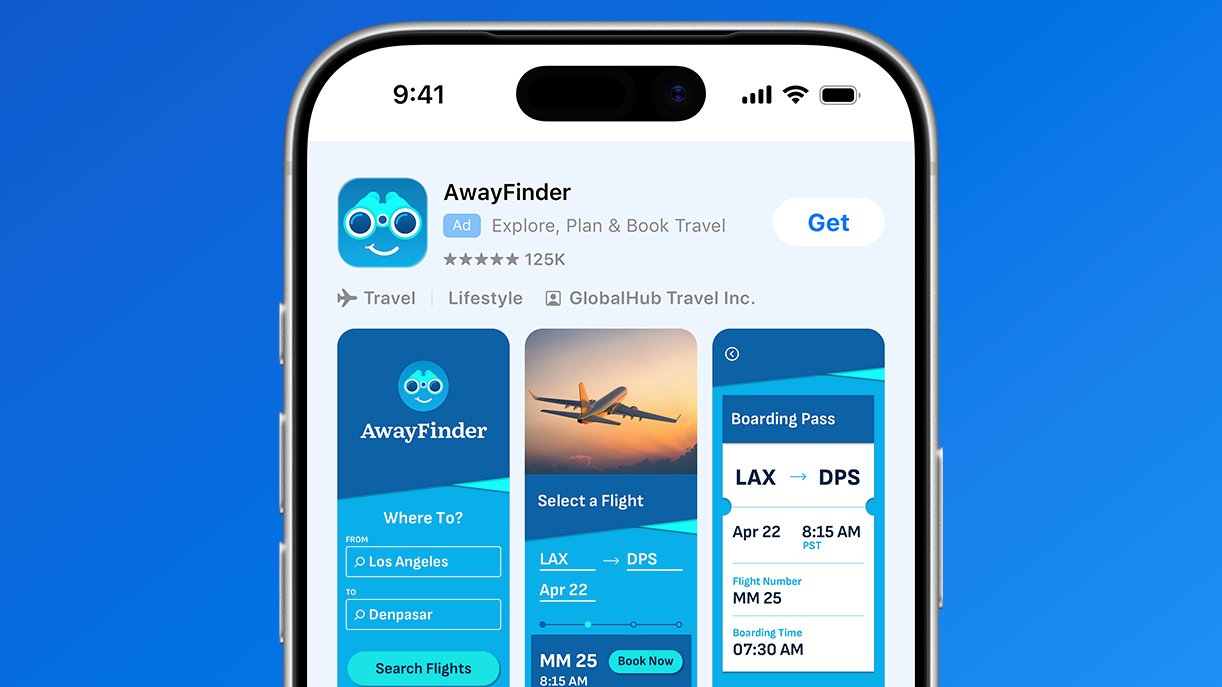
For users, identifying these sponsored placements will remain straightforward. Apps that appear due to paid promotion will continue to feature a clear "Ad" label. This labeling is crucial for maintaining transparency and helping users distinguish between organic search results and paid advertisements, ensuring they are aware when content is sponsored.
Why the Expansion? Apple's Strategy and Services Revenue
At its core, the introduction of additional ad slots directly translates to additional services revenue for Apple. In recent years, Apple has heavily emphasized the growth of its services division, which includes everything from Apple Music and iCloud to the App Store itself and, increasingly, its advertising business. As iPhone sales growth begins to stabilize in some markets, services represent a vital growth engine for the company.
The App Store is a colossal marketplace, generating billions of dollars annually through app sales, in-app purchases, and subscriptions, from which Apple takes a commission. Advertising within the App Store adds another significant revenue stream that leverages the existing user base and developer ecosystem without directly impacting the app transaction model. By offering more opportunities for developers to promote their apps, Apple directly benefits from increased ad spending.
This move is consistent with a broader trend seen across many digital platforms, where advertising becomes an increasingly central component of the business model. Google, Amazon, and Meta (Facebook) all derive substantial portions of their revenue from ads. For Apple, building out its advertising capabilities within its own ecosystem, while maintaining its strong privacy stance, presents a unique challenge and opportunity.
Understanding the User Experience: What to Expect
For the average iPhone or iPad user, the most noticeable change will be the increased presence of "Ad" labels within App Store search results. While currently limited to a single top slot, users will soon encounter sponsored apps interspersed further down the list. This change will be visible on devices running iOS 26.2 or iPadOS 26.2 and later, ensuring a consistent experience for users with up-to-date software.
Potential Impact on App Discovery
The increased number of ads could subtly alter the app discovery process. On one hand, more ad slots might mean that highly relevant, but perhaps lesser-known, apps have new avenues to gain visibility, especially if they can target niche keywords effectively. On the other hand, it could lead to a more crowded search results page, potentially pushing organic (non-paid) results further down and making it harder for apps that don't pay for promotion to stand out.
Users who prefer to avoid ads might find the experience slightly more cluttered, but Apple's commitment to clearly labeling ads should help them differentiate. The goal for Apple, presumably, is to make these ads as relevant as possible so that they enhance, rather than detract from, the user's search experience. If an ad for a meditation app appears when a user searches for "mindfulness," it could be genuinely helpful.
Existing Ad Placements Beyond Search
It's important to remember that App Store ads aren't entirely new, and search results aren't the only place they appear. Apple has already integrated ads into several other high-visibility areas of the App Store:
- Today Tab: This editorial section, designed to highlight new apps and stories, also features sponsored content.
- "You Might Also Like" Section: Found at the bottom of individual app listings, this section offers suggestions for similar apps, some of which are paid placements.
- Search Tab's "Suggested" Section: Even before a user types in a search query, the search tab displays suggested apps and categories, some of which can be advertisements.
These existing ad placements, combined with the expansion in search results, illustrate Apple's comprehensive strategy to monetize its App Store ecosystem through advertising.
Impact on App Developers and Marketing Strategies
For app developers, especially those focused on user acquisition and growth, this expansion presents both opportunities and challenges.
Increased Visibility and Competition
The immediate benefit for advertisers is the increased opportunity for visibility. More ad slots mean more chances for an app to appear in front of users actively searching for relevant keywords. This can be particularly beneficial for new apps trying to break through the noise or established apps looking to maintain a competitive edge.
However, increased opportunity often comes with increased competition. With more slots available, more developers are likely to enter the bidding wars. This could drive up the cost-per-tap (CPT) or cost-per-acquisition (CPA) for popular keywords, making App Store advertising a more expensive endeavor overall. Developers will need to carefully monitor their ad spend and return on investment (ROI) to ensure profitability.
The Importance of Keyword Strategy
A sophisticated keyword strategy will become even more critical. Developers will need to research not only the most popular keywords but also long-tail, niche keywords where competition might be lower but user intent is still high. Understanding how users search for apps and mapping those searches to relevant ad campaigns will be key to success.
Since developers can't select specific ad positions, their bidding strategy will need to be robust enough to perform well whether their ad lands at the top or further down the search results. This means focusing on the overall quality score of their ads and the relevance of their app to the targeted keywords.
Impact on Organic Discovery
A concern for some developers, particularly smaller studios with limited marketing budgets, is the potential impact on organic app discovery. If paid ads occupy more prominent positions on the search results page, organic listings could be pushed down, making it harder for users to find apps that rely solely on App Store Optimization (ASO) and word-of-mouth.
This could further emphasize the need for a diversified marketing strategy that includes ASO, public relations, social media, and potentially other paid channels beyond the App Store. The landscape of app discovery is continuously evolving, and developers must adapt to these changes.
Apple's Broader Advertising Ambitions: From Search Ads to Apple Ads
This expansion in the App Store is not an isolated event but rather a piece of Apple's larger strategy for its advertising business. Last year, Apple rebranded its "Search Ads" business to the more encompassing "Apple Ads." This rebranding was a strong indicator of the company's ambition to move beyond just search result ads and into a wider array of advertising placements across its ecosystem.
Reports have consistently suggested that Apple is preparing to show ads in more places within its native apps and services. One of the most talked-about potential expansions is into Apple Maps. Imagine searching for a coffee shop and seeing sponsored listings for specific cafes near you. This would open up a massive new advertising frontier for local businesses and national brands alike.
Other rumored ad placements include Apple News, and potentially even within the Apple TV+ interface, offering opportunities for studios to promote new shows or movies. While these are still speculative, the consistent reports and the strategic rebranding strongly suggest that Apple Ads will become an increasingly pervasive element of the Apple user experience.
This strategic push into advertising aligns with Apple's long-term financial goals, leveraging its vast user base and the rich data within its ecosystem (all while adhering to its privacy principles, as we will discuss) to create a powerful new revenue stream.
Balancing Privacy and Profit: The Apple Way
One of the most interesting aspects of Apple's growing ad business is how it reconciles with the company's very public and stringent stance on user privacy. Apple has famously championed features like App Tracking Transparency (ATT), which requires apps to ask users for permission before tracking them across other apps and websites. This policy has significantly disrupted the digital advertising industry, particularly for companies like Meta, which relied heavily on such tracking.
So, how does Apple grow its ad business while upholding its privacy principles?
Contextual Advertising vs. Cross-App Tracking
The key lies in the distinction between contextual advertising and cross-app tracking. Apple's advertising approach largely focuses on contextual ads. This means that the ads you see are primarily based on what you are doing within a specific Apple app at that moment, or general demographic data that is anonymized and aggregated, rather than tracking your activity across different apps and websites owned by other companies.
For example, if you search for "fitness tracker" in the App Store, an ad for a fitness app is a contextual ad. Apple knows you're interested in fitness trackers because you just searched for it within the App Store. This doesn't require Apple to track your browsing history on Safari, your location in Maps, or your activity on a third-party social media app.
Anonymity and Aggregation
Apple emphasizes that its advertising platform uses anonymized and aggregated data. This means individual user data is not shared with advertisers. Instead, advertisers target broad audience segments based on demographics, app genres they use, or search terms they enter, but they don't receive personal information about specific users who see their ads.
Users also have controls to limit personalized ads within Apple's own advertising platform through their device settings. This level of user control and the focus on privacy-preserving advertising methods are what Apple argues differentiate its ad business from others that rely more heavily on intrusive tracking.
This delicate balance between monetizing its platform through advertising and maintaining its reputation as a privacy-focused company will be an ongoing challenge for Apple. Each expansion of its ad business will be scrutinized through this lens.
The Evolving App Economy
The App Store's evolution with more ads is a reflection of the broader changes within the app economy. App discovery has always been a significant hurdle for developers. With millions of apps available, simply launching a great app is no guarantee of success. Visibility is paramount.
In the early days of the App Store, organic discovery through categories, featured lists, and top charts was more prevalent. As the store matured and became saturated, App Store Optimization (ASO) became crucial—optimizing app titles, descriptions, keywords, and screenshots to rank higher in search results. Now, paid advertising is undeniably a cornerstone of app growth strategies.
The increasing prominence of ads means that developers must now factor advertising budgets into their overall app development and marketing plans from day one. It transforms the App Store from a purely meritocratic platform (where the best app wins purely on quality and ASO) into a hybrid model where advertising spend plays a significant role in an app's success.
This shift could potentially favor larger developers and publishers with deeper pockets, who can afford to bid higher for prominent ad slots. Smaller independent developers will need to be even more strategic and creative in how they allocate their resources and find their niche.
Looking Ahead: The Future of Discovery on iOS
As Apple continues to expand its advertising footprint, the future of app discovery on iOS will likely involve an intricate dance between organic optimization, paid promotion, and personalized recommendations.
We can anticipate Apple refining its ad targeting capabilities, perhaps offering more sophisticated tools for developers to reach very specific audiences while still respecting user privacy. The integration of ads might become even more seamless, designed to feel less like interruptions and more like helpful suggestions, aligning with Apple's commitment to user experience.
Furthermore, the data generated by these new ad placements will provide Apple with valuable insights into user behavior and app market trends, which could, in turn, influence future App Store features and policies. The growth of Apple Ads is not just about revenue; it's about evolving the entire app ecosystem to meet the demands of a hyper-competitive market while sustaining Apple's services growth.
Key Takeaways and Discussion
In summary, the expansion of ads within App Store search results marks a significant step for Apple's growing advertising business. Here are the key points to remember:
- When: Additional ads start rolling out Tuesday, March 3, beginning in the U.K. and Japan, expanding globally by the end of March.
- Where: More ad slots will appear within App Store search results, further down the page, in addition to the existing top slot.
- How: Developers with existing search ad campaigns are automatically eligible. Apple's system determines ad placement; specific slots cannot be chosen.
- Why: Increased services revenue for Apple, leveraging the high-intent nature of App Store searches (65% of downloads from search).
- User Impact: More clearly labeled "Ad" placements, visible on iOS 26.2/iPadOS 26.2 and later.
- Developer Impact: More opportunities for visibility but likely increased competition and ad spend. Enhanced focus on keyword strategy is essential.
- Broader Strategy: Part of Apple's larger "Apple Ads" initiative, with potential future expansion into other services like Apple Maps.
- Privacy: Apple maintains its privacy stance by focusing on contextual, anonymized, and aggregated advertising rather than cross-app tracking.
This move is a clear indication that Apple is serious about expanding its advertising business, balancing the needs of developers to gain visibility, its own financial growth targets, and its unwavering commitment to user privacy. The app ecosystem is continually evolving, and staying informed about these changes is crucial for both consumers and creators alike.
This article, "Apple to Show More Ads in App Store Starting in March" first appeared on MacRumors.com
Discuss this article in our forums
from MacRumors
-via DynaSage

Post a Comment