Apple Can Still Offer a Key iPhone Privacy Feature in France, Says Judge
Apple's Privacy Feature, App Tracking Transparency, Prevails in French Court
In a significant decision for digital privacy, a judge in Paris has ruled against suspending Apple's App Tracking Transparency (ATT) feature in France. This ruling allows Apple to continue implementing its privacy-focused tool, which requires applications to seek user permission before tracking their activity across different apps and websites. The news, reported by the French newspaper La Tribune, marks a crucial victory for Apple in its ongoing global push for stronger user privacy controls, particularly amidst scrutiny from various European regulators and advertising industry players.
Following the court's decision, Apple released a statement expressing its satisfaction with the outcome. The company reiterated its commitment to supporting robust privacy protections for its users, emphasizing that this ruling reinforces its stance on giving individuals greater control over their personal data in the digital realm. This legal victory in France is particularly noteworthy given the considerable pressure Apple has faced from advertisers and competition authorities across Europe regarding the perceived impact of ATT on the digital advertising ecosystem.
Understanding Apple's App Tracking Transparency (ATT)
To fully grasp the significance of this French court ruling, it's essential to understand what App Tracking Transparency is and why it has become such a contentious feature. Introduced with iOS 14.5 in April 2021, ATT is a core privacy feature designed to empower users with a clear choice regarding how their activity is tracked by apps. Before ATT, many apps could freely access a device's unique identifier (known as the IDFA – Identifier for Advertisers) to track user behavior across other apps and websites. This tracking data is then used to build detailed user profiles, enabling highly personalized advertising.
How ATT Works for Users
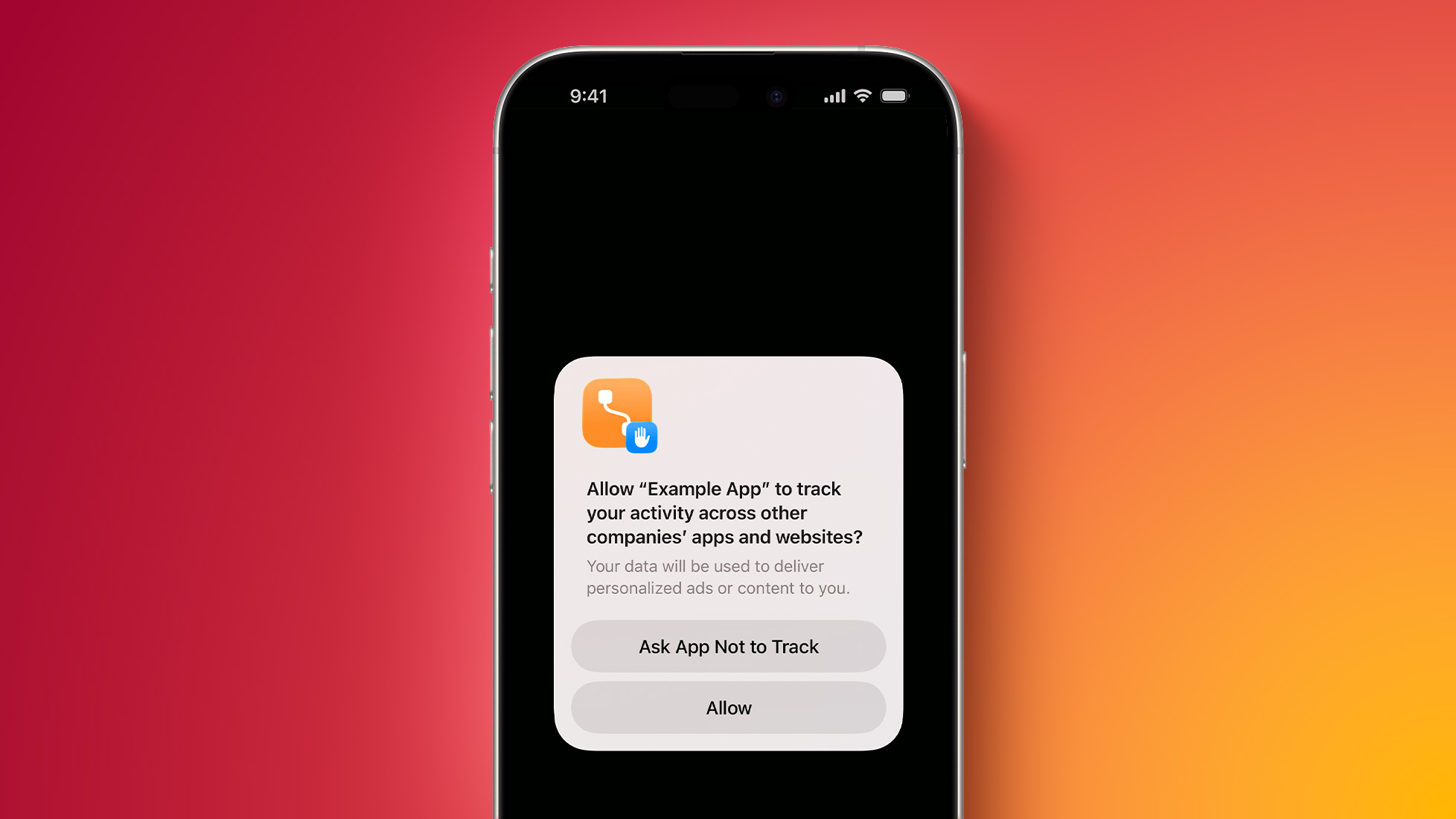
With ATT, when a user opens an app that wishes to track their activity across other companies' apps and websites, they are presented with a clear, concise pop-up prompt. This prompt offers two distinct options: "Ask App Not to Track" or "Allow." If a user selects "Ask App Not to Track," the app is prevented from accessing the device's IDFA, effectively limiting its ability to build a comprehensive profile of the user's cross-app and cross-website activities. This simple, binary choice puts the power directly into the user's hands, allowing them to make an informed decision about their privacy.
Apple's rationale behind ATT is rooted in its long-standing philosophy that privacy is a fundamental human right. The company argues that users should have transparency and control over their data, especially when it comes to how their online activities are monitored and used for commercial purposes. ATT is designed to combat pervasive, often hidden, data collection practices that many users were unaware of prior to its introduction. By making tracking an opt-in choice rather than an opt-out, Apple fundamentally shifted the default privacy setting, placing user consent at the forefront.
The Advertising Industry's Backlash and Financial Impact
While ATT has been widely lauded by privacy advocates and many users, it has been met with fierce opposition from a significant portion of the digital advertising industry. Companies that rely heavily on precise user targeting for their revenue, such as Meta (Facebook), Google, and countless smaller ad tech firms, argued that ATT severely hampered their ability to deliver effective personalized ads. The inability to access the IDFA for a large percentage of iOS users, who overwhelmingly opted out of tracking, meant that ad campaigns became less targeted, less efficient, and consequently, less profitable.
Estimates of the financial impact of ATT on the advertising industry have been substantial. Many reports have suggested that major platforms like Facebook lost billions in advertising revenue due as advertisers struggled to reach their desired audiences with the same precision. For smaller businesses and app developers, particularly those offering free apps supported by advertising, ATT presented a significant challenge to their business models. They argued that reduced ad effectiveness would lead to lower advertising payouts, making it harder to monetize their creations and potentially forcing them to introduce paid subscriptions or reduce their services.
The core of the advertisers' complaint is that ATT disrupts the established mechanism of targeted advertising, which they view as essential for funding the "free" internet and app ecosystem. They argue that without the ability to track users and deliver relevant ads, the quality of ads decreases, user engagement drops, and ultimately, the entire advertising economy suffers. Some have also raised concerns that ATT gives Apple an unfair advantage, as the company still collects its own data within its ecosystem, even if it applies the same ATT rules to its first-party apps.
France's Competition Regulator and the €150 Million Fine
The concerns raised by advertisers and app developers did not go unnoticed by regulatory bodies. In France, the Autorité de la concurrence, the country's competition regulator, took a strong stance against Apple's implementation of ATT. Last year, Apple was fined €150 million by France's competition regulator. This substantial penalty was imposed after the regulator determined that Apple's decision to introduce App Tracking Transparency constituted an abuse of its dominant market position.
Specifically, the French regulator argued that ATT unfairly disadvantaged both third-party app developers and advertisers. Their primary concern was that Apple, as the operator of the iOS platform and the App Store, held a unique position of power. By suddenly imposing a new privacy feature that drastically altered the rules of the game for advertising, Apple was accused of leveraging its market dominance to its own benefit, or at least, to the detriment of its competitors and the broader ad tech ecosystem. The regulator posited that Apple's actions created an imbalance, making it harder for other companies to compete effectively in the digital advertising space on iOS devices.
This ruling and fine underscored the tension between privacy regulations and competition law. While Apple maintained that ATT was a privacy-enhancing feature for users, the regulator viewed it through the lens of market fairness and equal opportunity for businesses operating within the Apple ecosystem. The regulator's decision reflected a growing global trend among antitrust authorities to scrutinize the power of large tech companies and their impact on competition in digital markets.
The Latest French Court Ruling: A Victory for Apple and Privacy
Despite the earlier fine and the ongoing legal challenges, the recent decision by a Paris judge not to suspend ATT in France represents a significant win for Apple. This particular legal action was initiated by several French advertising and publishing industry groups who sought an injunction to prevent Apple from enforcing ATT in the country. They likely argued that ATT was anti-competitive and harmful to their business interests, echoing the sentiments of the competition regulator.
However, the court ultimately sided with Apple, rejecting the request for suspension. While the full details of the judge's reasoning are not entirely public, such a decision often hinges on several factors. The court likely considered the fundamental right to privacy, the benefits ATT provides to users in terms of control over their data, and potentially, whether the plaintiffs could demonstrate irreparable harm that justified an immediate suspension of the feature. The judge's refusal to suspend ATT indicates a recognition of the legitimate privacy concerns that Apple is addressing, and perhaps a reluctance to intervene in a feature designed to protect user rights without stronger evidence of anti-competitive practices that warrant such a drastic measure.
This ruling suggests that, at least in this instance, the French judiciary has prioritized user privacy and Apple's right to implement features it deems necessary for its users' protection, over the immediate economic concerns of the advertising industry. It reinforces the idea that companies like Apple have a right to dictate the privacy terms within their own ecosystems, provided they do so in a transparent manner and apply these rules consistently.
Broader European Scrutiny and Regulatory Pressures
The situation in France is not isolated. Apple has faced similar regulatory pressures and investigations regarding App Tracking Transparency in various other European Union countries and from the overarching European Commission. Last year, Apple itself warned that it might be forced to stop offering App Tracking Transparency in the EU due to this growing regulatory scrutiny.
Countries such as Italy, Germany, and Poland have all initiated their own probes or expressed concerns regarding ATT. These investigations often stem from complaints by local advertising industry groups or from the national competition authorities, mirroring the arguments made in France. The core of these concerns revolves around questions of market power, whether ATT unfairly favors Apple's own advertising services (even though Apple maintains it applies ATT universally), and the overall impact on the competitive landscape for digital advertising and app development.
The European Commission, as the executive arm of the EU, is also keeping a close eye on such developments. With its new Digital Markets Act (DMA) and Digital Services Act (DSA), the EU is actively seeking to rein in the power of large tech "gatekeepers" and ensure fair competition and user protection in digital markets. ATT, as a significant policy implemented by a gatekeeper like Apple, falls squarely within the scope of these new regulations. While the recent French ruling is favorable for Apple, the company must continue to navigate a complex and evolving regulatory landscape across the entire European Union.
The Intersection of Privacy and Competition
The ongoing debate surrounding ATT perfectly illustrates the challenging intersection of privacy concerns and competition policy in the digital age. On one hand, regulators and privacy advocates argue for stronger protections for user data, recognizing the potential for exploitation and manipulation through pervasive tracking. On the other hand, competition authorities must ensure that such privacy-enhancing features do not inadvertently create new barriers to entry, stifle innovation, or unfairly advantage dominant platforms.
Apple's argument is clear: ATT is about empowering users with choice and protecting their fundamental right to privacy. The company asserts that it is merely providing a tool for users to control their data, not seeking to undermine competition. They point out that all apps, including Apple's own, must abide by the ATT framework. However, critics argue that given Apple's vast ecosystem and control over iOS, even a seemingly neutral privacy feature can have profound anti-competitive effects on third-party businesses that operate within that ecosystem.
The recent French court decision suggests a judicial acknowledgement of the validity of Apple's privacy arguments in this specific context. However, the broader regulatory scrutiny across Europe, particularly under the new DMA, means that the legal and competitive challenges for ATT are far from over. The DMA, for instance, includes provisions that could force gatekeepers to allow third-party app stores or to not self-preference their own services. While ATT isn't directly addressed, the spirit of the DMA is to ensure a level playing field, which could still lead to future challenges for how Apple implements such features.
The Future of Digital Advertising in a Privacy-First World
Regardless of the specific legal outcomes for ATT in various jurisdictions, the overarching trend toward greater digital privacy is undeniable. Regulations like the GDPR in Europe and the CCPA in California have already reshaped how personal data is handled, and ATT represents another significant step in this direction. This shift is forcing the advertising industry to adapt and innovate.
Advertisers are now exploring alternative methods for measurement and targeting that are more privacy-preserving. Contextual advertising, where ads are shown based on the content of a webpage or app rather than user behavior, is seeing a resurgence. First-party data strategies, where companies focus on collecting and utilizing data directly from their own customers with explicit consent, are also becoming more crucial. Apple itself has introduced tools like SKAdNetwork, which provides advertisers with aggregated, anonymized campaign performance data without revealing individual user information, offering a privacy-centric alternative to IDFA-based tracking.
The long-term impact of ATT and similar privacy measures will likely be a more fragmented and complex digital advertising landscape. While highly personalized advertising might become more challenging on platforms with strong privacy controls, it will also foster greater transparency and trust between users and digital services. The debate between user privacy and the economics of a "free" internet funded by advertising will continue, but the recent French ruling signals that the push for stronger privacy controls has significant legal backing.
Conclusion: A Win for User Choice, But the Battle Continues
The Paris court's decision to allow Apple to maintain its App Tracking Transparency feature in France is a clear victory for the company and for the principle of user privacy. It affirms Apple's ability to offer a critical privacy control to its iPhone users, giving them the power to decide whether their activity is tracked across apps and websites for personalized advertising. In a statement to the French publication La Tribune, Apple welcomed the court's decision, reaffirming its commitment to strong privacy protections.
This ruling, however, does not end the broader legal and regulatory challenges Apple faces across the European Union. The €150 million fine previously imposed by France's competition regulator, alongside ongoing probes in countries like Italy, Germany, and Poland, and the watchful eye of the European Commission, indicate that the debate over ATT's competitive impact is far from settled. While ATT appears safe in France for now, following this favorable ruling, Apple will continue to navigate the intricate balance between enhancing user privacy and addressing the concerns of antitrust authorities and the advertising industry.
Ultimately, this case highlights the evolving landscape of digital rights, where the power of platform providers intersects with the rights of individual users and the business models of an entire industry. The French judge's decision emphasizes the growing recognition of privacy as a fundamental value, setting a precedent that could influence future rulings and regulatory approaches across the globe.
This article, "Apple Can Still Offer a Key iPhone Privacy Feature in France, Says Judge" first appeared on MacRumors.com
Want to share your thoughts on this topic? Discuss this article in our forums.
from MacRumors
-via DynaSage

Post a Comment