Mac Pro Reportedly on 'Back Burner' and 'Largely Written Off' at Apple
Is Apple Abandoning the Mac Pro? What a Shocking New Report Means for Pro Users
For decades, the Apple Mac Pro has been the undisputed king of the creative world. It was the machine for professionals who needed uncompromising power, endless customization, and the absolute peak of performance. From Hollywood editing bays to world-class recording studios, the iconic tower has been a symbol of high-end computing. However, a seismic shift may be underway in Cupertino. According to a new report from a highly reliable source, the future of Apple's most powerful desktop computer is in serious doubt, with the company reportedly putting the legendary machine "on the back burner."
This news signals a potential end of an era for a certain class of professional user and a major strategic pivot for Apple's high-end desktop lineup. The question on everyone's mind is: What does this mean for the future of professional computing on the Mac? Is the Mac Pro truly finished, and has its smaller, more powerful sibling, the Mac Studio, already replaced it? Let's dive deep into the latest rumors, analyze what they mean, and explore what this changing of the guard could signal for Apple and its most demanding customers.
The Bombshell Report: Mac Pro "Largely Written Off" by Apple
The source of this startling revelation is Mark Gurman of Bloomberg, one of the most accurate and well-connected journalists covering Apple. In his latest Power On newsletter, Gurman dropped a bombshell that has sent ripples through the professional tech community. He stated that Apple's high-end Mac Pro desktop computer is currently "on the back burner."
But he didn't stop there. Gurman elaborated that he has heard Apple has "largely written off" the Mac Pro. In corporate language, these phrases are incredibly telling. "On the back burner" suggests a project that has been deprioritized, with resources and attention being funneled elsewhere. "Written off" is even more definitive, implying that the company no longer sees a viable or profitable future for the product in its current form. The sentiment inside Apple, according to the report, is that the Mac Studio now represents both the present and, more importantly, the future of Apple's professional desktop computers.
This isn't just a simple delay or a change in the product cycle; it's a fundamental shift in philosophy. For years, the Mac Pro stood alone at the top of the pyramid. Now, it seems Apple believes that a different product is better suited to carry that torch, leaving the iconic tower in a state of limbo from which it may never return.
The Rise of the Mac Studio: A More Practical Powerhouse?
To understand why Apple might be willing to sideline the Mac Pro, we must look at the meteoric rise and resounding success of the Mac Studio. When it was first introduced, many saw it as a "pro" Mac mini. In reality, it was much more: a new class of desktop computer that packed the power of Apple's top-tier chips into a remarkably compact and efficient design.
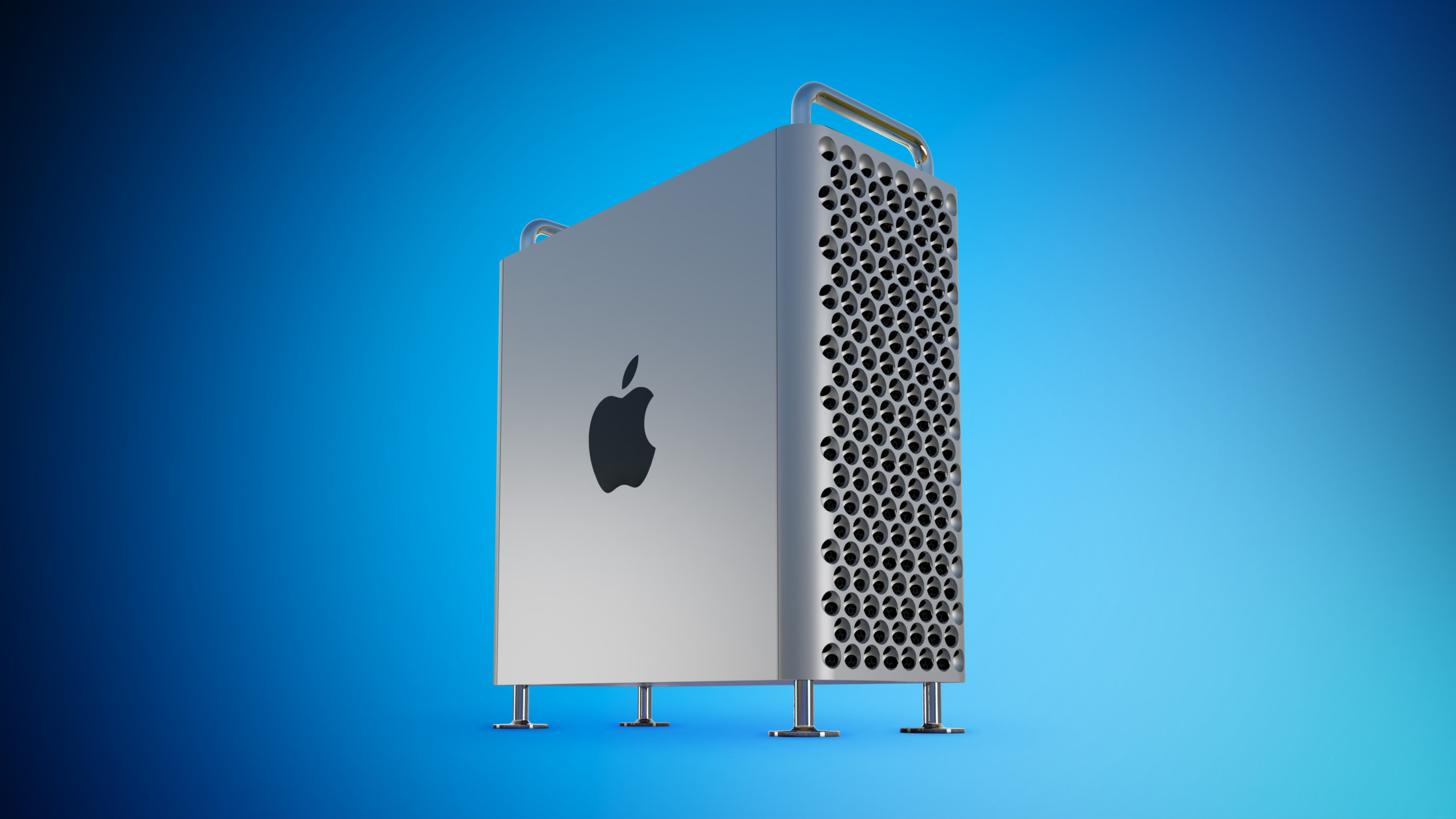
Let's compare the two machines. The current Mac Pro, which was last updated with the M2 Ultra chip in June 2023, is essentially a larger, more expensive Mac Studio with one key difference: PCIe expansion slots. Here's a breakdown:
- Performance: When equipped with the same M2 Ultra chip, the Mac Pro and the Mac Studio deliver virtually identical performance. For tasks that rely on the CPU, GPU, and Neural Engine, there is no meaningful difference between them. Both can handle intensive 8K video editing, complex 3D rendering, and massive code compilations with ease.
- Form Factor: This is a huge differentiator. The Mac Pro is a massive tower, designed to sit on the floor. The Mac Studio, by contrast, is a tiny aluminum box that fits comfortably under most monitors, freeing up valuable desk space. For many modern creative professionals working in smaller studios or home offices, this compact size is a massive advantage.
- Price: The price gap is significant. A Mac Studio with the M2 Ultra chip starts at $3,999. The Mac Pro with the very same M2 Ultra chip starts at a staggering $6,999. That's a $3,000 premium for a larger chassis and the inclusion of PCIe slots.
For the vast majority of professional users, the Mac Studio offers all the power they could ever need at a much lower price and in a more convenient form factor. This incredible value proposition has made the Mac Studio a massive hit and has, in the process, made the Mac Pro feel redundant and overpriced for all but a very specific niche of users.
The PCIe Dilemma: The Mac Pro's Last and Only Stand
The one area where the Mac Pro still holds a clear advantage is its modularity, specifically its seven PCIe (Peripheral Component Interconnect Express) expansion slots. These slots allow users to install specialized cards to add functionality that isn't built into the computer. This is the sole reason a professional would choose a Mac Pro over a Mac Studio today.
So, who are these users? The need for PCIe expansion is concentrated in a few key high-end industries:
- Audio Production: Professional recording studios often rely on specialized DSP (Digital Signal Processor) cards like the Avid Pro Tools | HDX systems or high-end audio interfaces that use PCIe for the lowest possible latency.
- Video and Broadcast: Video professionals might need to install video capture and output cards (from companies like Blackmagic Design or AJA) for ingesting footage from high-end cameras or for professional monitoring workflows.
- Scientific and Data Research: Researchers sometimes use specialized accelerator or data acquisition cards for complex computations and experiments.
- Networking and Storage: Users who need ultra-fast networking can install 10Gb, 25Gb, or even 100Gb Ethernet cards. Similarly, high-speed RAID storage cards can be installed for massive, fast media arrays.
However, the transition to Apple Silicon dealt a major blow to the Mac Pro's biggest selling point. The unified architecture of Apple's chips, which integrates the CPU, GPU, and memory, means that the Mac Pro does not support third-party graphics cards (GPUs). For years, a primary reason to buy a Mac Pro was to install one or more powerful GPUs from NVIDIA or AMD for 3D rendering, machine learning, and video effects. With that capability gone, a huge portion of the Mac Pro's target audience found that the machine no longer met their needs, pushing them toward high-end PC workstations instead.
This crucial limitation has significantly narrowed the Mac Pro's appeal. It is now a machine for a niche within a niche: professionals who need non-GPU PCIe expansion and are willing to pay a $3,000 premium for it.
The Future of Pro Chips: An M5 Ultra for the Mac Studio Only?
Gurman's report goes further, offering a glimpse into Apple's future silicon roadmap. He confirms that Apple is actively developing a high-end M5 Ultra chip. Following Apple's established pattern, the "Ultra" chips are their most powerful desktop-class offerings, created by fusing two "Max" chips together to double the performance. An M5 Ultra would undoubtedly be a powerhouse, pushing the boundaries of what's possible with a personal computer.
The most telling part of Gurman's report, however, is not that the M5 Ultra exists, but where Apple plans to use it. He states that the company is currently "only" focused on bringing this new, top-of-the-line chip to a future Mac Studio. He makes no mention of an M5 Ultra-powered Mac Pro being in the works.
This leads him to believe that the Mac Pro "won't be updated in 2026 in a significant way." If Apple's most powerful desktop chip is being exclusively developed for the Mac Studio, it leaves the Mac Pro with no clear upgrade path. It reinforces the idea that all of Apple's high-end desktop engineering and R&D efforts are now centered on the Studio. While Gurman doesn't completely rule out the possibility of a last-minute change of plans, the current trajectory is clear: the Mac Studio is set to inherit the performance crown permanently.

What Should Professional Users Do Now?
This news leaves many creative and technical professionals in a difficult position. If you rely on the unique capabilities of the Mac Pro, or were planning to upgrade to one in the future, what are your options?
For Current Mac Pro Users
If you currently use an Intel or Apple Silicon Mac Pro and it meets your needs, there's no immediate reason to panic. Your machine will continue to be supported by macOS for years to come. However, it's crucial to understand that a direct, compelling upgrade may not be on the horizon. The current M2 Ultra Mac Pro might be the last of its kind, so planning for a future without a modular Mac from Apple is a wise move.
For Professionals Shopping for a New Desktop
If you're in the market for a new high-end Mac desktop, your decision-making process has just become much clearer:
- The Default Choice: The Mac Studio. For an estimated 95% of professional users, including video editors, graphic designers, developers, and most musicians, the Mac Studio is the right choice. It offers identical performance to the Mac Pro for a fraction of the cost and in a much more practical package. A future M5 Ultra Mac Studio will likely be one of the most powerful desktop computers on the planet.
- If You Absolutely Need PCIe: If you fall into that small group of users who require non-GPU PCIe cards for your workflow, the current M2 Ultra Mac Pro is your only option in the Apple ecosystem. However, you should purchase it with the understanding that its future is in jeopardy and that you may be buying into a dead-end product line.
- Consider Alternatives: For those who were holding out for a new Mac Pro with eGPU support or even greater modularity, it may be time to look elsewhere. The world of high-end PC workstations offers unparalleled customization, GPU choice, and upgradeability. Alternatively, investigate whether your workflow can be adapted to use high-speed Thunderbolt 4 peripherals, which can often replace the functionality of older PCIe cards.
Conclusion: The End of an Era and a Changing of the Guard
The Mac Pro has a long and storied history as the ultimate tool for creation. From the iconic "Power Mac G5" design to the legendary "cheese grater" towers and the controversial "trash can," it has always represented Apple's commitment to the professional market. But technology evolves, and so do the needs of users.
The latest reports strongly suggest that this era is coming to a close. Apple, in its relentless pursuit of efficiency and integration, appears to have decided that the traditional, modular tower computer is a relic of the past. The incredible power and efficiency of Apple Silicon, packed into the dense, compact form of the Mac Studio, has proven to be what the vast majority of modern professionals want and need.
While this news may be disappointing for the small but passionate community of users who rely on the Mac Pro's unique expansion capabilities, it represents a logical and pragmatic streamlining of Apple's product line. The guard is changing. The Mac Studio is no longer the Mac Pro's smaller sibling; it is the heir apparent. The future of professional desktop computing at Apple is small, powerful, and incredibly efficient—and it seems there's no longer room for a big, expandable tower.
This article, "Mac Pro Reportedly on 'Back Burner' and 'Largely Written Off' at Apple" first appeared on MacRumors.com
Discuss this article in our forums
from MacRumors
-via DynaSage

Post a Comment