Crease-Free iPhone Fold on Track for 2026 Launch as Development Advances
The iPhone Fold is Coming: Apple Reportedly Solves the Crease Problem for a 2026 Launch
For years, the tech world has been buzzing with whispers and rumors about one of Apple’s most anticipated and secret projects: a foldable iPhone. While other companies have launched their own folding devices, Apple has patiently remained on the sidelines, waiting for the technology to mature. Now, a groundbreaking report suggests that the wait is almost over. Apple is not just making progress; it's reportedly on track for a 2026 release of a book-style foldable iPhone, and it may have solved the single biggest issue plaguing every other foldable phone on the market today: the dreaded screen crease.
According to a detailed report from the Chinese publication UDN, which cites sources deep within Apple's supply chain, the development of this revolutionary device has reached a critical new stage. This isn't just a concept anymore; Apple is allegedly moving forward with concrete plans for mass production. This news signals a major shift, suggesting that the "iPhone Fold," as it's being called, is closer than ever to becoming a reality. Let's dive into what this new report reveals and what it means for the future of the iPhone.
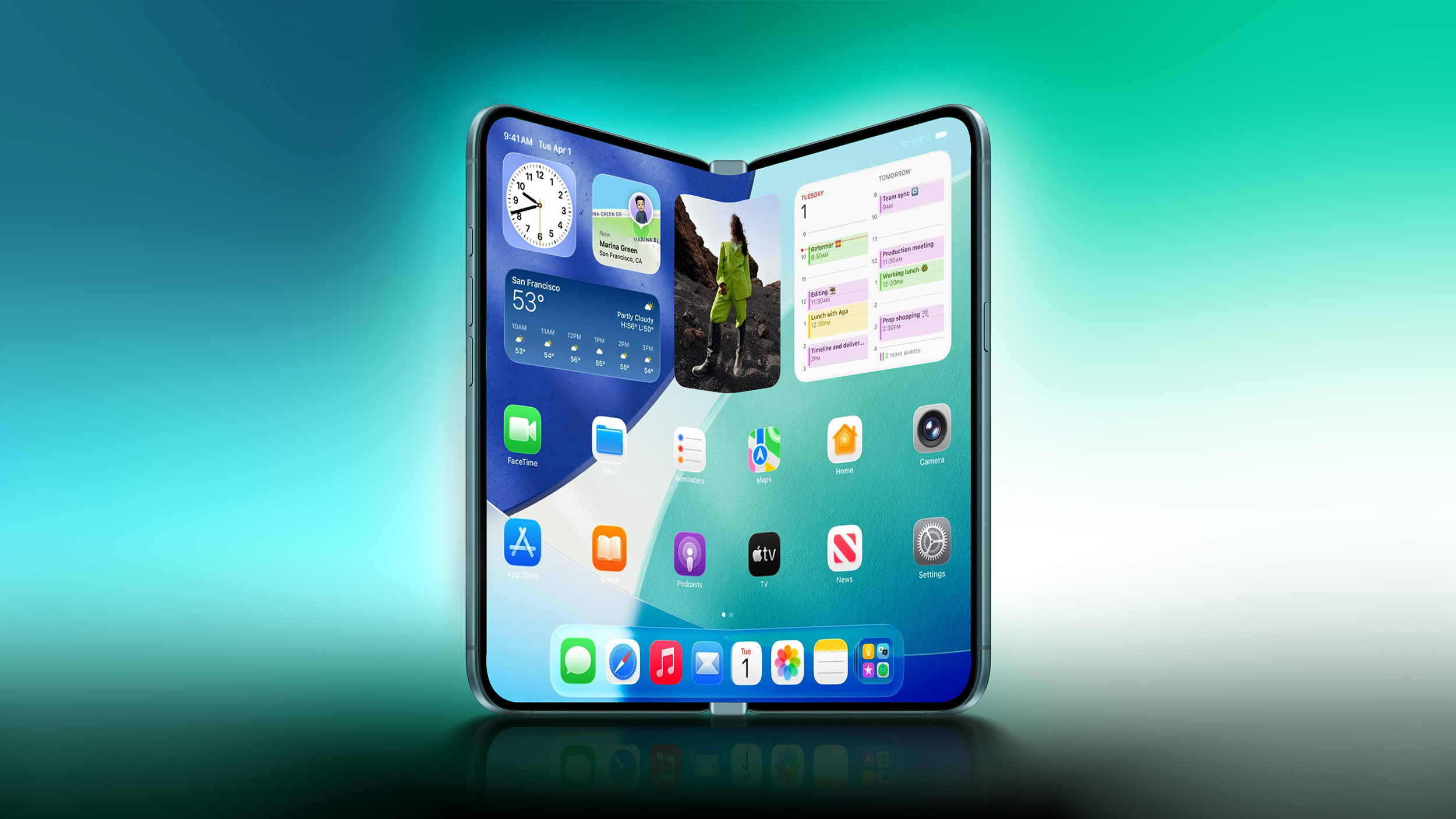
A Major Leap Forward: The "iPhone Fold" Enters Engineering Validation
One of the most significant pieces of information from the report is that the foldable iPhone has officially entered the "engineering validation stage," or EVT. For those unfamiliar with Apple's product development process, this is a massive milestone. It means the device has moved far beyond the initial drawing board and early prototype phases. During EVT, Apple’s engineers work with its manufacturing partners to test and validate the core design and components. The primary goal is to ensure that the device can be built reliably, consistently, and at the massive scale required for an iPhone launch.
Think of it as the bridge between a brilliant idea and a real-world product. Engineers are building and rigorously testing a small batch of units to iron out any potential manufacturing defects, test the durability of the components, and finalize the assembly process. Successfully passing this stage is crucial before moving on to further phases like Design Validation Testing (DVT) and Production Validation Testing (PVT), which occur just before mass production kicks off. The fact that the iPhone Fold is reportedly at this stage now strongly supports the rumored 2026 launch timeline. A product in EVT in late 2024 or early 2025 is perfectly positioned for a full-scale launch in the latter half of 2026.
This news directly addresses previous rumors that suggested Apple might delay the foldable iPhone even further, possibly to 2027 or beyond. While delays are always possible in the complex world of tech manufacturing, entering the EVT stage is a clear sign of confidence from Apple. It indicates that the company believes it has overcome the major technical hurdles and is now focused on the practicalities of bringing this futuristic device to millions of customers.
The Holy Grail: Apple Aims to Deliver the First Truly Crease-Free Foldable
Perhaps the most exciting claim in the entire report is that Apple has solved "the crease problem." Anyone who has used or seen a foldable smartphone from Samsung, Google, or other brands knows exactly what this means. It's the subtle but persistent line or indentation that runs down the center of the screen where the device folds. While the technology has improved over the years, the crease has remained an unavoidable compromise—a constant visual and tactile reminder of the screen's flexible nature.
According to UDN's supply chain sources, Apple isn't just minimizing the crease; it's aiming to eliminate it entirely. The report boldly states that the foldable iPhone is poised to be the "first crease-free foldable smartphone on the market." This is a classic Apple move. The company often waits to enter a new product category until it can address the fundamental flaws and pain points of existing products. It didn't invent the MP3 player, smartphone, or tablet, but it arguably perfected them by focusing on a superior user experience. If Apple can deliver a large, beautiful folding display that feels and looks like a single, seamless pane of glass, it would be a monumental achievement and a massive competitive advantage.
This isn't the first time we've heard whispers about Apple's obsession with creating a flawless folding screen. Previous rumors have consistently highlighted the company's intensive research and development efforts focused specifically on the hinge mechanism and display technology. The goal has always been to create a device that feels as solid and polished as a traditional iPhone, even with its complex moving parts. This new report reinforces that narrative, suggesting that Apple's patience and investment in advanced engineering are about to pay off in a big way.
The Technology Behind the Magic: A Custom Hinge and Advanced Materials
So, how exactly has Apple supposedly achieved what others have not? The secret appears to lie in a combination of a highly customized display structure and a revolutionary hinge design built with exotic materials.
A Unique Partnership for the Display
The report clarifies that while the flexible inner OLED panel will be supplied by Samsung Display—the industry leader in this technology—Apple is not simply using an off-the-shelf component. Instead, the entire architecture of the screen has been designed by Apple. This includes the "panel structure, lamination method, and material process." In simpler terms, Apple has dictated exactly how the various layers of the display are constructed and bonded together. This level of control allows Apple to optimize for durability, visual quality, and, most importantly, the ability to fold repeatedly without forming a permanent crease.
By designing the entire display stack, Apple can ensure that every layer, from the protective top coat to the internal support structures, works in perfect harmony with its unique hinge system. This deep-level engineering is what separates Apple from many of its competitors, who often rely more heavily on their suppliers' pre-existing designs.
The Game-Changing Hinge and "Liquid Metal"
The true star of the show seems to be the hinge. The hinge is the mechanical heart of any foldable device, and its design is directly responsible for how the screen folds and whether a crease forms. A poorly designed hinge forces the flexible screen into a tight, sharp angle, causing stress and leading to a visible indentation. A well-designed hinge, on the other hand, allows the screen to form a much gentler, wider "teardrop" curve inside the device when it's closed, which significantly reduces stress on the display panel.
Apple has reportedly worked hand-in-hand with its suppliers to create a hinge that achieves this perfectly. To do so, it's turning to an advanced material known as "Liquid Metal." Liquid Metal is not actually a liquid at room temperature; it's the commercial name for a series of amorphous metal alloys. Unlike traditional crystalline metals (like steel or aluminum), Liquid Metal's atoms are arranged in a random, non-crystalline structure. This unique atomic structure gives it incredible properties: it's extremely strong, highly elastic (meaning it can bend and return to its original shape without being permanently deformed), and highly resistant to corrosion and wear.
Apple has held exclusive rights to use Liquidmetal Technologies' alloys in consumer electronics for over a decade, though its use so far has been limited to small components like the SIM card ejector tool. Using it for a major, complex, and mechanically critical component like the iPhone Fold's hinge would be a massive step up. The properties of Liquid Metal would allow Apple's engineers to design hinge components that are both incredibly strong and surprisingly thin. This is the key to achieving two crucial goals simultaneously: a durable hinge mechanism that can withstand hundreds of thousands of folds, and an overall device design that remains sleek and slim, avoiding the bulkiness that has characterized some earlier foldable phones.
What Will It Be Called and When Can We Expect It?
With all this exciting technology, what will Apple call its first foldable? The report suggests that Apple will go with a straightforward and intuitive name: the "iPhone Fold." This is the name that tech sites and fans have unofficially adopted for years when discussing the rumored device, and its simplicity aligns well with Apple's recent product branding (e.g., Apple Watch, Apple TV).
As for the launch date, all signs currently point to a September 2026 release. This would align with Apple's traditional fall launch window for its flagship iPhone models. The fact that the device is progressing through key pre-production milestones like EVT makes this timeline entirely plausible. While the world of tech development is always subject to change, this is the most concrete evidence yet that we are roughly two years away from seeing Apple's vision for a foldable future.
The Future is Foldable: What an iPhone Fold Means for the Market
Apple's entry into the foldable market has the potential to be a watershed moment. Just as the original iPhone redefined the smartphone, the Apple Watch legitimized the smartwatch category, and the AirPods created the market for true wireless earbuds, the iPhone Fold could transform the foldable phone from a niche enthusiast product into a mainstream phenomenon.
If Apple successfully launches a slim, durable, and truly crease-free foldable device, it will set a new standard for the entire industry. Competitors will be forced to respond, accelerating innovation in hinge technology and flexible displays across the board. For consumers, it means more choice and, eventually, more refined and polished foldable devices from all manufacturers.
Of course, many questions remain. What will the software experience be like on a folding version of iOS? How will Apple leverage the larger screen for multitasking and productivity? And perhaps most importantly, what will it cost? Given the advanced materials and complex engineering involved, the iPhone Fold will almost certainly be a premium-priced device, likely sitting at the very top of Apple's lineup.
For now, we can only wait and watch as more details emerge. But this latest report is a clear and powerful signal that Apple is not just experimenting with foldable technology; it's actively and aggressively working to perfect it. The era of the foldable iPhone is on the horizon, and if Apple gets it right, it could change everything once again.
This article, "Crease-Free iPhone Fold on Track for 2026 Launch as Development Advances" first appeared on MacRumors.com
Discuss this article in our forums
from MacRumors
-via DynaSage

Post a Comment