Apple's First Foldable Could Have Biggest Ever iPhone Battery
Apple's Foldable iPhone: A Deep Dive into Rumors of a Massive Battery and Revolutionary Design
The tech world has been buzzing with anticipation for years, waiting for Apple to finally step into the foldable smartphone arena. While companies like Samsung and Google have pioneered the category, many consumers are holding out for Apple's polished and user-centric take on the form factor. The biggest question on everyone's mind has been how Apple will tackle the inherent challenges of foldable technology, particularly the delicate balance between a sleek, thin design and the demanding power requirements of two separate displays. Now, a wave of new rumors suggests Apple isn't just trying to solve this problem—it's aiming to blow the competition out of the water.
Apple's first foldable iPhone, expected to launch in 2026, is shaping up to be a game-changer. While we've heard plenty of whispers about its innovative design and versatile camera system, the most exciting new detail points to a potential solution for the biggest pain point of current foldable phones: battery life. According to recent leaks, Apple is developing a device that could house the largest battery ever seen in an iPhone, promising to deliver the kind of endurance users have only dreamed of in a foldable device.
The Foldable Conundrum: Balancing Sleek Design with All-Day Power
Apple's design philosophy has always revolved around elegance, minimalism, and an almost obsessive pursuit of thinness. We saw this most recently with the launch of the "impossibly thin" M4 iPad Pro. This commitment to a slender profile, however, seems to be at direct odds with the physical realities of a foldable phone. A foldable device needs to accommodate a large, flexible internal screen, a durable external cover screen, and a complex, precision-engineered hinge mechanism. All of these components take up valuable internal space.
Furthermore, powering two displays, especially a large, tablet-sized internal screen, is incredibly power-intensive. This has forced existing foldable manufacturers into a difficult compromise. They can either include a massive battery, resulting in a thick and heavy device, or they can prioritize a slimmer form factor at the expense of all-day battery life. For many users, this compromise has been a major barrier to adoption. The fear of your phone dying halfway through the day, especially when you're relying on that large, beautiful inner screen, is a significant concern.
This is the challenge Apple faces. Can the company that prides itself on making devices thinner and lighter with each generation deliver a foldable phone that doesn't feel like a brick, yet still provides the legendary battery life iPhone users have come to expect? The latest reports suggest Apple has a plan, and it starts with a giant leap in battery capacity.
A Battery Breakthrough? The Largest Power Pack in iPhone History
The most compelling new rumor comes from the news aggregator account "yeux1122" on the Korean Naver blog, a source that has previously provided accurate insights into Apple's supply chain. According to their information, Apple is currently testing a battery for its foldable iPhone with a capacity somewhere in the massive 5,400–5,800 mAh range.
To put that number into perspective, this would make it the largest and most powerful battery ever placed inside an iPhone. For comparison, the rumored iPhone 17 Pro Max, expected to be a standard flagship, is said to feature a 5,088 mAh battery. The idea that Apple's first-generation foldable could surpass even its largest traditional iPhone is a powerful statement of intent.
When compared to its future foldable rivals, Apple's rumored battery capacity looks even more impressive. The Google Pixel 10 Pro Fold is anticipated to have a battery around 5,015 mAh, while the Samsung Galaxy Z Fold 7 is expected to stick with a smaller 4,400 mAh battery. If Apple manages to ship its foldable with a battery at the higher end of its testing range, around 5,800 mAh, it would offer a significant advantage in longevity. This wouldn't just be an incremental improvement; it would be a class-leading feature that could redefine expectations for the entire foldable category.
For the end-user, this translates to true freedom. It means unfolding the large screen to watch a full-length movie, play graphically intensive games, or multitask between demanding productivity apps without constantly checking the battery percentage. It could easily mean a full day of heavy use or potentially even two days of moderate use on a single charge—a holy grail for power users and a massive selling point for mainstream consumers.
The Secret Sauce: How Apple Could Make It Happen
Simply cramming a huge battery into a device isn't Apple's style. The company's approach is always more holistic, combining hardware innovation with software optimization to achieve a superior user experience. A March report from the same source highlighted that Apple is placing a heavy emphasis on improving power efficiency while simultaneously slimming down other key components. This suggests a multi-pronged strategy to achieve its ambitious battery goals.
High-Density Battery Technology
Renowned Apple analyst Ming-Chi Kuo has previously stated that the foldable iPhone will utilize high-density battery cells. In simple terms, this technology allows Apple to pack more power into the same physical space. Think of it like vacuum-sealing clothes in a suitcase; you can fit more in without increasing the size of the bag. By using more advanced battery chemistry and construction, Apple can increase the mAh capacity without making the battery itself proportionally larger, helping to preserve a slim profile.
The Power of Efficiency
A big battery is only half the equation. Apple's biggest advantage has always been the deep integration between its hardware and software. The A-series Bionic chips are custom-designed to be incredibly powerful yet remarkably power-efficient. Paired with iOS, which is meticulously optimized to minimize unnecessary power drain, Apple can squeeze more life out of every milliampere-hour than its competitors. This synergy means that a 5,800 mAh battery in an iPhone could last significantly longer than a battery of the same size in an Android device.
Smart Component Miniaturization
To make room for a larger battery, something else has to shrink. Apple is reportedly working on slimming down other internal components. This could include a more compact logic board, smaller camera modules, and other redesigned internal parts. Every millimeter of saved space can be dedicated to the battery, allowing Apple to maximize capacity without compromising the device's overall form factor.
More Than Just a Battery: Crafting the Complete Foldable Experience
While the battery is a headline feature, it's just one piece of what promises to be a very compelling package. Multiple reliable sources have started to paint a consistent picture of the foldable iPhone's other key specifications.
A Tale of Two Screens
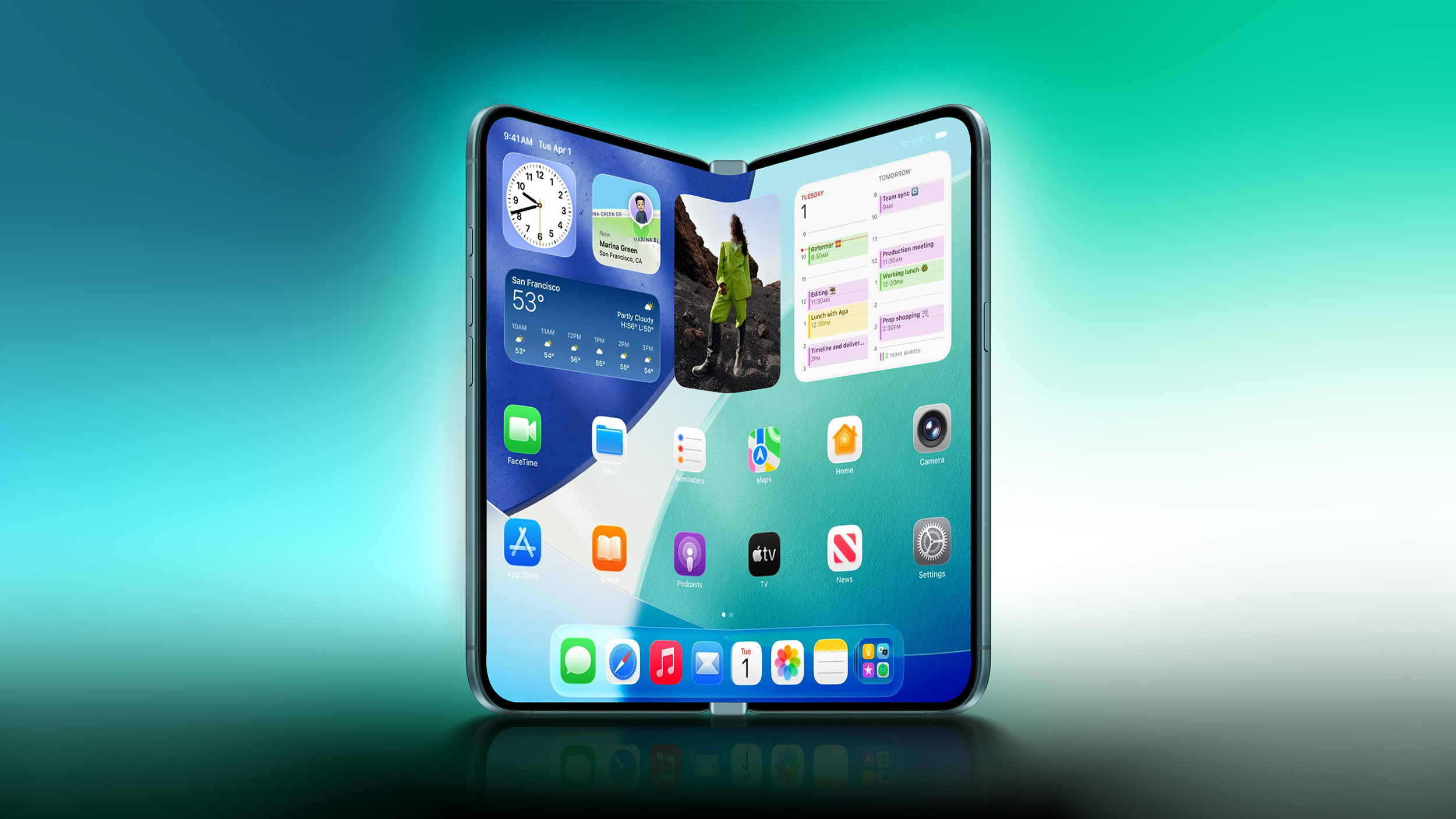
The consensus among analysts like Ming-Chi Kuo, Jeff Pu, and the leaker Digital Chat Station is that the device will feature a book-style design. It will have a 5.5-inch cover display on the outside and unfold to reveal a large 7.8-inch main display on the inside. The 5.5-inch external screen would be perfect for quick interactions like checking notifications, answering calls, or replying to texts, feeling much like a classic, compact iPhone. Unfolding the device would transform it into a mini-tablet, offering an expansive canvas for immersive gaming, media consumption, and enhanced productivity.
Unlocking with a Touch
Interestingly, Apple is expected to forgo its signature Face ID technology on the foldable iPhone. Instead, it will likely integrate Touch ID into the side button, similar to the design of the iPad Air and iPad mini. This decision makes practical sense for a foldable. It provides a consistent and easily accessible unlocking method whether the device is open or closed and avoids the complex engineering challenge of incorporating the TrueDepth camera system into the thin bezel of a foldable screen.
A Versatile and Innovative Camera System
The device is rumored to be equipped with a total of four cameras. This array will likely consist of one front-facing camera on the cover display for standard selfies, two powerful rear cameras for high-quality photography and videography, and one inner camera for video calls when the device is unfolded. The most exciting rumor about this setup is that the inner camera could be an under-screen camera. This would allow for a truly seamless, uninterrupted internal display without any notches or cutouts, providing a completely immersive viewing experience.
Future-Proof Connectivity
Under the hood, the foldable iPhone will reportedly be powered by Apple's second-generation C2 modem, ensuring fast and reliable cellular connectivity. In a move that continues its broader strategy, Apple is also expected to make the device eSIM-only, completely removing the physical SIM card slot. This simplifies the internal design, improves water and dust resistance, and pushes the industry further towards a more secure, digital standard.
Reading the Tea Leaves: Timelines and Trusted Sources
While the excitement is palpable, it's crucial to remember that these details come from leaks and supply chain rumors, not official announcements from Apple. The primary source for the battery information, "yeux1122," has a mixed track record—sometimes accurate, sometimes not. Therefore, a healthy degree of skepticism is warranted. However, when multiple high-profile analysts and leakers begin to align on key specifications like display sizes and design features, it adds significant weight to the rumors.
As for when we can expect to see this device, the timeline is starting to solidify. According to Bloomberg's Mark Gurman, a highly reliable source for Apple's product roadmap, the company is targeting a launch in the fall of 2026. He believes the foldable iPhone will debut alongside the iPhone 18 Pro models, positioning it as a new, ultra-premium tier in the iPhone family. This two-year window gives Apple ample time to perfect its hinge technology, secure its supply chain for foldable displays, and fine-tune the software experience for the new form factor.
The Foldable Future is Charged Up
Apple's entry into the foldable market has the potential to be a watershed moment for the category. By waiting and learning from the successes and failures of its competitors, Apple is poised to enter the market with a device that addresses the biggest concerns of current-generation foldables. If these rumors hold true, the foldable iPhone won't just be another option; it could be the device that finally takes foldable technology from a niche gadget for early adopters to a mainstream product for the masses.
The combination of a revolutionary design, a versatile camera system, and, most importantly, a massive, class-leading battery could create the first truly no-compromise foldable smartphone. The wait until 2026 may feel long, but if the result is a device that seamlessly blends the portability of an iPhone with the productivity of an iPad, all while lasting the entire day and then some, it will undoubtedly be worth it.
This article, "Apple's First Foldable Could Have Biggest Ever iPhone Battery" first appeared on MacRumors.com
Discuss this article in our forums
from MacRumors
-via DynaSage

Post a Comment