Apple Developing These 5 New Satellite Features for iPhone
Apple's Next Frontier: 5 Groundbreaking Satellite Features Coming to Your iPhone
For years, being "off the grid" meant being completely cut off from the digital world. A lost signal was a dead end for communication, navigation, and help. Apple began to change that narrative by introducing Emergency SOS via satellite on the iPhone, a feature that has already proven to be a lifesaver in critical situations. But it turns out, that was just the beginning. Apple is not content with satellite connectivity being just an emergency lifeline; they envision it as an everyday utility.
According to a recent "Power On" newsletter from Bloomberg's renowned tech journalist Mark Gurman, Apple is actively developing a suite of powerful new satellite features that could fundamentally change how we use our iPhones when cellular and Wi-Fi signals are non-existent. These advancements aim to move beyond simple text-based emergency messages and integrate satellite capabilities deep into the core iPhone experience, from maps to messaging with photos. Let's explore the five major upgrades Apple has in the pipeline and what they could mean for you.
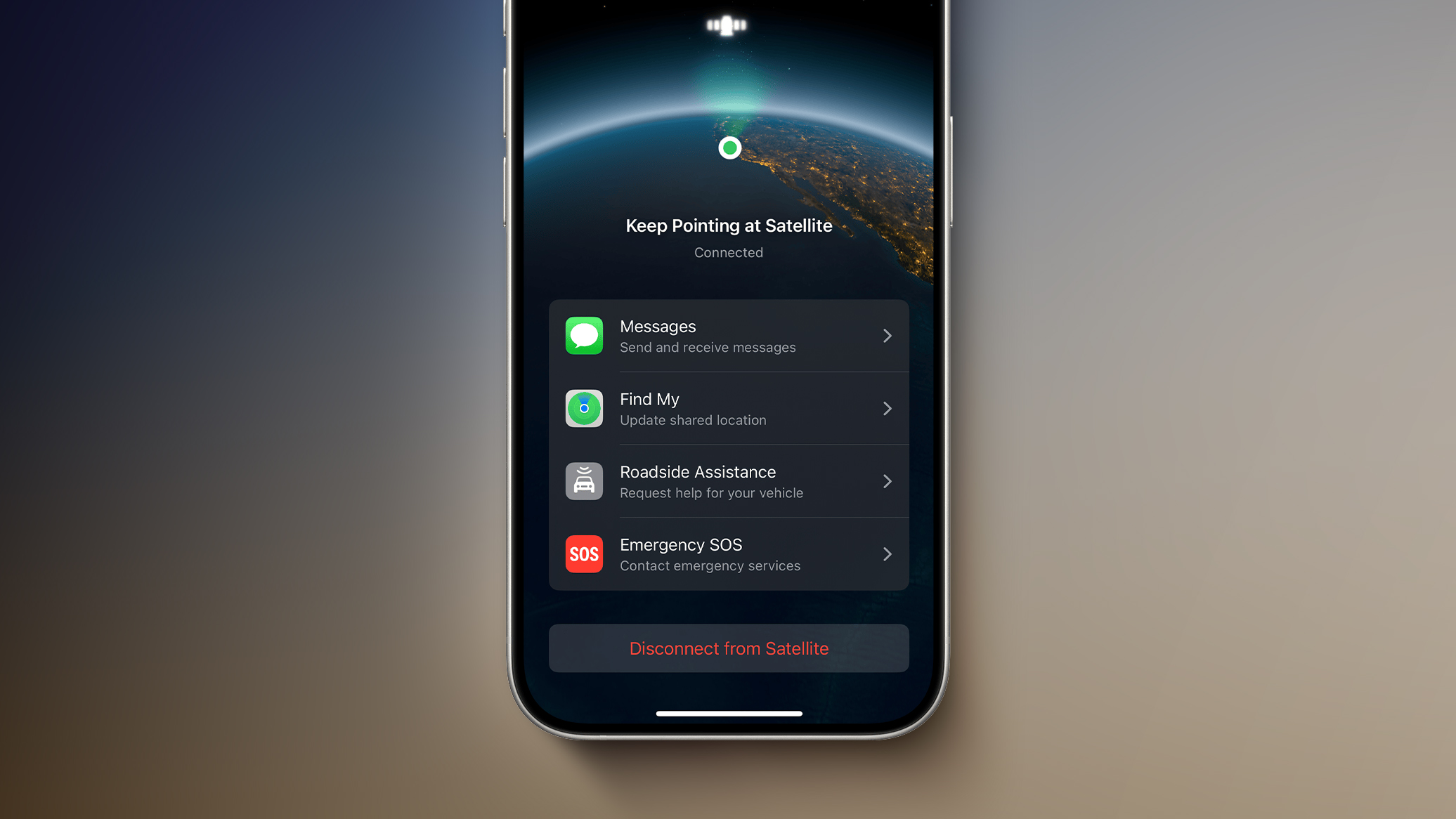
The Future of Connectivity: What Apple is Working On
The current satellite features are remarkable but limited. You can send a compressed text to emergency services or share your location via Find My, but that's about it. The upcoming features, as detailed in Gurman's report, promise to erase many of these limitations, making your iPhone more useful than ever when you're far from a cell tower.
1. Never Get Lost Again: Apple Maps via Satellite
One of the most anticipated and practical new features is the ability to use Apple Maps for navigation even without a cellular or Wi-Fi connection. While you can currently download maps for offline use, this new feature would likely take it a step further by providing real-time turn-by-turn directions and precise GPS tracking directly through a satellite link.
Why this is a game-changer: Imagine you're hiking in a national park, driving through a remote desert, or sailing far from shore. In these scenarios, a wrong turn can be more than just an inconvenience; it can be dangerous. With satellite-powered Apple Maps, you could confidently navigate your way back to safety or to your destination without ever worrying about a "No Service" notification. This could make outdoor adventures safer and more accessible for everyone, providing peace of mind that your digital compass and guide will always work, no matter how remote your location is.
2. A Picture is Worth a Thousand Words: Photos in Messages via Satellite
The current Emergency SOS feature is limited to text. While you can describe a situation, you can't show it. Apple is working to change this by enabling support for sending photos through the Messages app using a satellite connection. Due to the limited bandwidth of satellite communication, these images would likely be heavily compressed to ensure they can be sent successfully, but even a low-resolution image can convey critical information that text cannot.
Why this is a game-changer: Think of the possibilities in an emergency. A hiker could send a photo of a snake bite to a medical expert for identification and first-aid advice. Someone involved in a car accident in a remote area could send a picture of the damage to their insurance provider or a tow truck service. You could even send a picture of a landmark to a search party to help them pinpoint your location. This feature transforms satellite communication from a simple distress signal into a rich, informational tool that could dramatically improve emergency response outcomes.
3. Seamless and Simple: "Natural Usage" Without Pointing at the Sky
One of the current requirements for using satellite features on the iPhone is that you need to be outdoors with a clear, unobstructed view of the sky. The iPhone even guides you to point your device in the right direction to connect with an overhead satellite. This is a practical limitation of the technology, but it can be a significant hurdle in a real emergency, especially if you are injured, trapped, or indoors.
Apple is reportedly working to eliminate this friction with what Gurman calls "Natural Usage." The goal is to allow satellite connectivity from more challenging environments, such as from within a building or a vehicle, without the user needing to manually orient their phone toward the sky. Achieving this would require significant advancements in both the iPhone's antenna hardware and the sensitivity of the satellite network itself, making the connection far more robust and reliable.
Why this is a game-changer: This improvement is all about reliability and ease of use when it matters most. An emergency doesn't wait for you to be in an open field. If you're trapped in a vehicle after a crash or stuck inside a building during a natural disaster, you need to be able to call for help without struggling to find a signal. Making satellite access as seamless as connecting to Wi-Fi would be a monumental step forward in personal safety technology.
4. Boosting Your Signal Everywhere: Satellite over 5G
This is perhaps the most technically ambitious feature on the list, but it has the potential to benefit the largest number of people, even those who never venture "off the grid." Apple is reportedly exploring support for 5G NTN, which stands for "Non-Terrestrial Networks." In simple terms, this technology allows standard cell towers to use satellites to get their internet and network connection, a process known as "backhaul."
Normally, a cell tower connects to the broader network via a physical fiber optic cable. In rural or hard-to-reach areas, laying this fiber is incredibly expensive or impossible. With 5G NTN, a carrier could install a cell tower and simply point it at the sky to connect to the network via satellite. This would allow carriers to dramatically expand their coverage maps, bringing reliable 5G service to previously unserved or underserved communities.
Why this is a game-changer: This isn't just about your individual iPhone talking to a satellite; it's about making the entire cellular network more resilient and widespread. It could help close the digital divide by bringing high-speed internet to rural areas, provide a backup connection for networks during natural disasters when ground infrastructure is damaged, and ultimately lead to fewer dead zones for everyone.
5. Unlocking Innovation: A Satellite API for Third-Party Apps
Apple understands that some of the most creative and useful applications of a new technology come from the developer community. That's why they are reportedly building an API (Application Programming Interface) for satellite connectivity. An API is essentially a set of tools that allows developers to integrate a specific feature into their own apps.
With a satellite API, developers could build satellite communication directly into their applications. Of course, not every app function would be compatible—you won't be streaming movies via satellite. The API would likely be restricted to sending and receiving small packets of data, such as text, location coordinates, or other critical, low-bandwidth information. The key is that developers could choose to voluntarily add this functionality to their apps.
Why this is a game-changer: The possibilities are endless. Imagine a hiking app like AllTrails allowing you to share your real-time location with family via satellite. A weather app for pilots or sailors could pull down critical forecast data even when out of cellular range. A vehicle assistance app from AAA or a car manufacturer could transmit diagnostic codes and your precise location after a breakdown. By opening this technology to developers, Apple could spark a wave of innovation, creating a new category of apps that keep you safe and connected anywhere on Earth.
What's Not Coming (At Least for Now)
It's also important to manage expectations. The laws of physics and the current state of satellite technology still impose firm limits. According to Gurman, Apple has no immediate plans to enable high-bandwidth activities like standard phone calls, video calls (like FaceTime), or general web browsing via satellite. These services require a constant, high-speed data stream that today's personal satellite communicators can't support. The focus for the foreseeable future will remain on efficient, low-data "burst" communications designed for safety, navigation, and essential messaging.
The Business of Staying Connected: From Free Service to Paid Subscriptions
Currently, Apple offers its satellite features for free for a limited time with the purchase of a new iPhone. However, as these capabilities expand from purely emergency use to daily convenience, a paid model seems inevitable. Apple is reportedly exploring how to monetize these more advanced features. One possibility is allowing customers to pay satellite carriers directly for service. Another path could involve Apple partnering with a major satellite provider like SpaceX and offering a paid subscription plan for enhanced connectivity.
Gurman also notes that while Apple has had internal discussions about creating its own satellite service, the company is hesitant to take on the complex role of a communications carrier. This suggests that partnerships will be the most likely path forward.
The Power Players: Globalstar, Apple, and SpaceX
The rollout of these ambitious features depends heavily on the ground (and space) infrastructure. Apple has already invested hundreds of millions of dollars to help its current partner, Globalstar, upgrade its satellite constellation and ground stations. However, many of the new features in development will require even more significant upgrades to Globalstar's network.
An interesting wrinkle mentioned by Gurman is the possibility of SpaceX acquiring Globalstar. If such a deal were to happen, it could dramatically accelerate the deployment of these new technologies. SpaceX's massive Starlink constellation and cutting-edge technology could provide the bandwidth and power needed to make features like photo messaging and indoor connectivity a reality much faster than Globalstar could on its own.

Conclusion: A Truly Connected Future
Apple's vision for satellite connectivity is bold and transformative. They are working to evolve the iPhone from a device that connects you to the internet into a device that keeps you connected to what matters, period. By integrating satellite technology into core apps like Maps and Messages, and by opening the door for third-party developers, Apple is laying the groundwork for a future where a "dead zone" is a thing of the past.
While these features are still in development, they represent one of the most exciting frontiers in personal technology. They promise not only to enhance our convenience but to fundamentally improve our safety, giving us a reliable link to the digital world from anywhere on the planet.
This article, "Apple Developing These 5 New Satellite Features for iPhone" first appeared on MacRumors.com
Discuss this article in our forums
from MacRumors
-via DynaSage

Post a Comment