Review: ViewSonic's VP2788-5K Display Offers a Cheaper Alternative to Apple's Studio Display
ViewSonic VP2788-5K Review: A Budget-Friendly Alternative to Apple's Studio Display
For years, Mac users seeking a high-resolution 27-inch 5K display faced limited options: primarily the Apple-approved LG UltraFine 5K and, later, the Apple Studio Display. However, the landscape has recently expanded, offering consumers more choices. This review focuses on the ViewSonic VP2788-5K, a $950 alternative that aims to compete with the premium options.
Over the past few months, several new 5K monitors have emerged, including the ASUS ProArt Display 5K, the BenQ PD2730S, and the Alogic Clarity 5K Touch (with its unique touchscreen feature). This review compares the ViewSonic VP2788-5K to these and particularly to the Apple Studio Display, based on extensive daily use alongside a pair of LG UltraFine 5K displays which have served as a reliable benchmark since 2016.
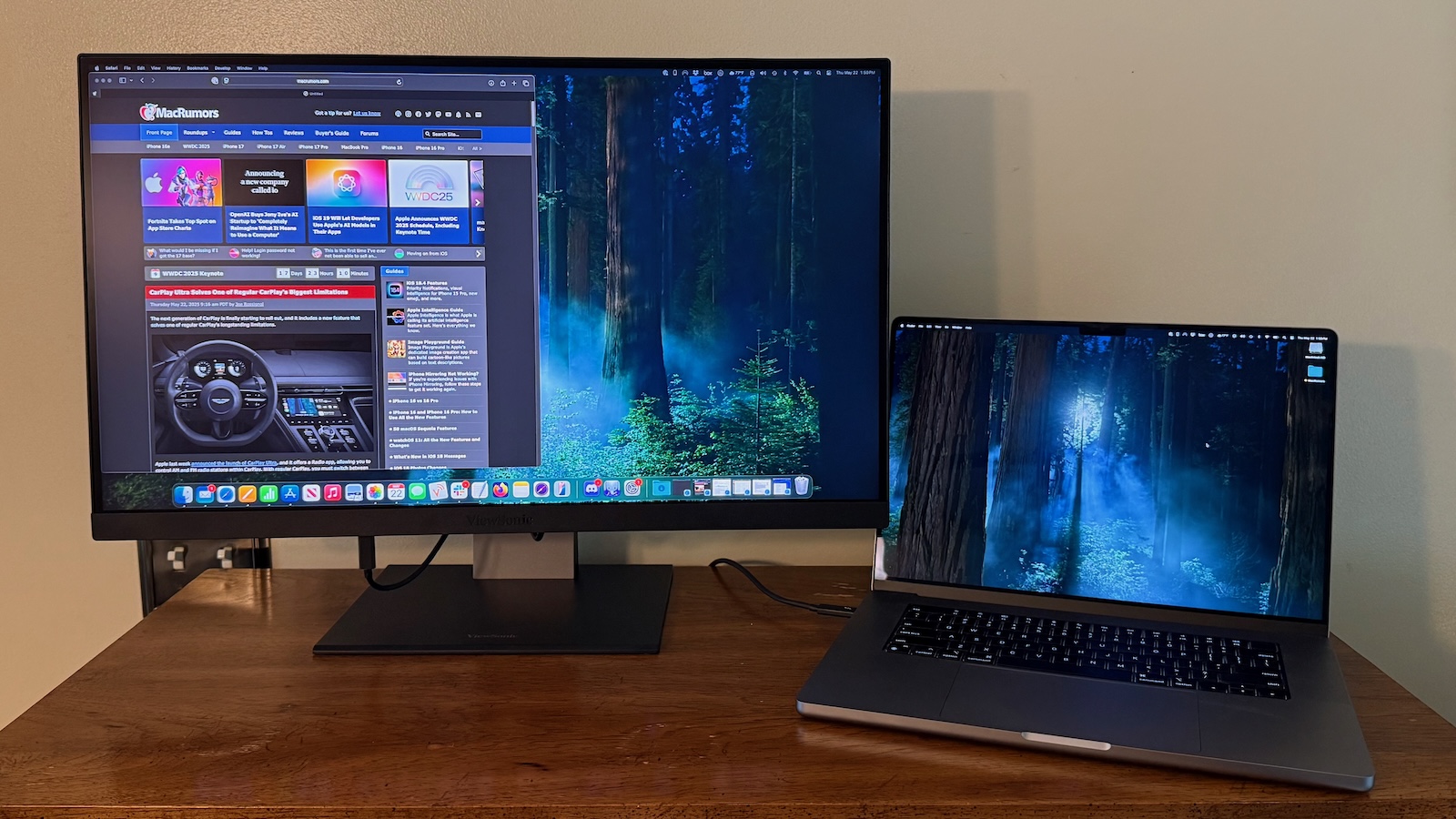 ViewSonic VP2788-5K
Unboxing and Design
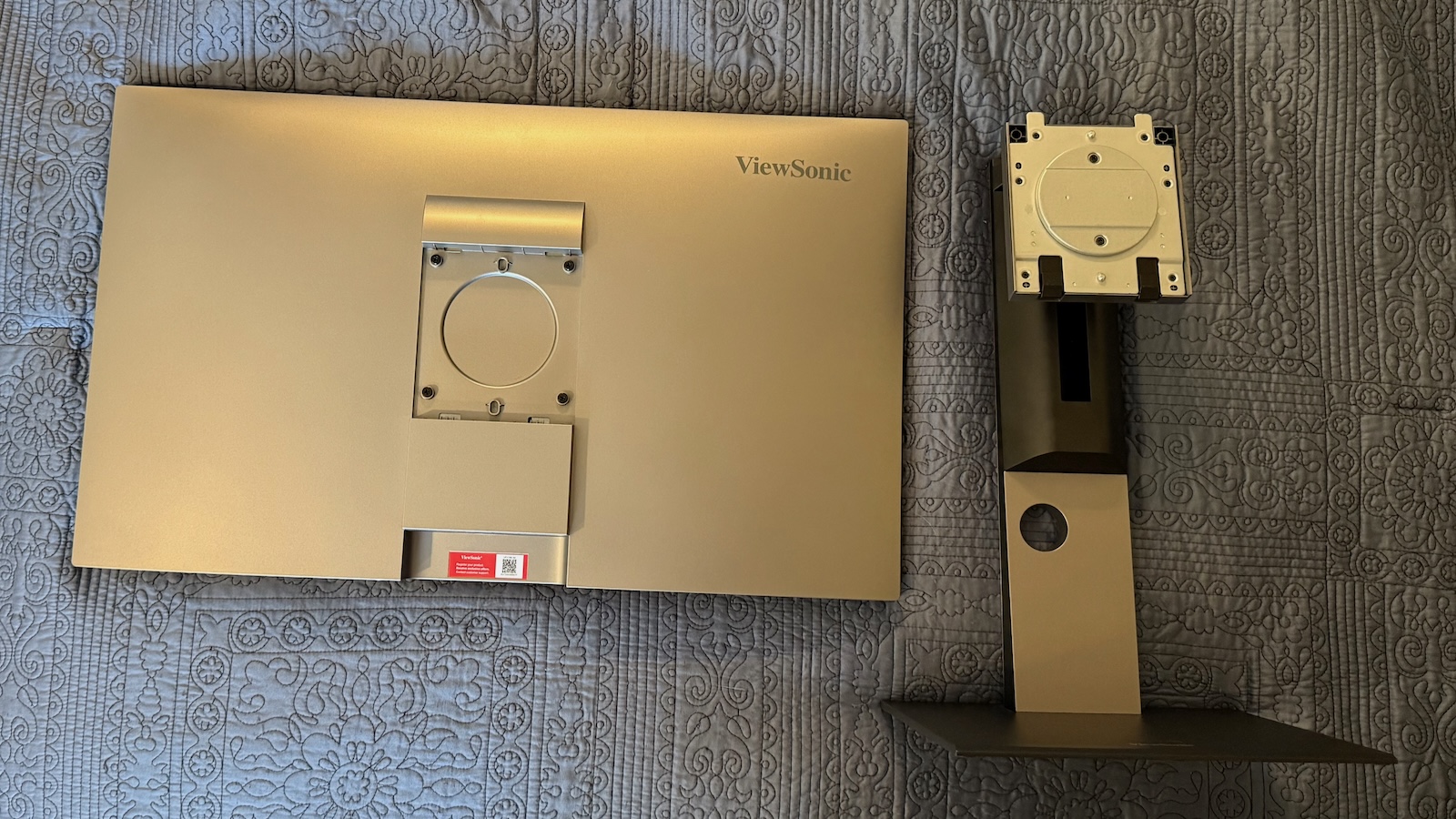
The VP2788-5K arrives in a compact box. Assembly is straightforward. The sturdy metal stand base attaches securely to the display neck with a recessed thumbscrew, preventing scratches. A click-in cover for the rear of the display neatly slides onto the stand neck. For VESA mounting (100x100mm), simply remove this cover.
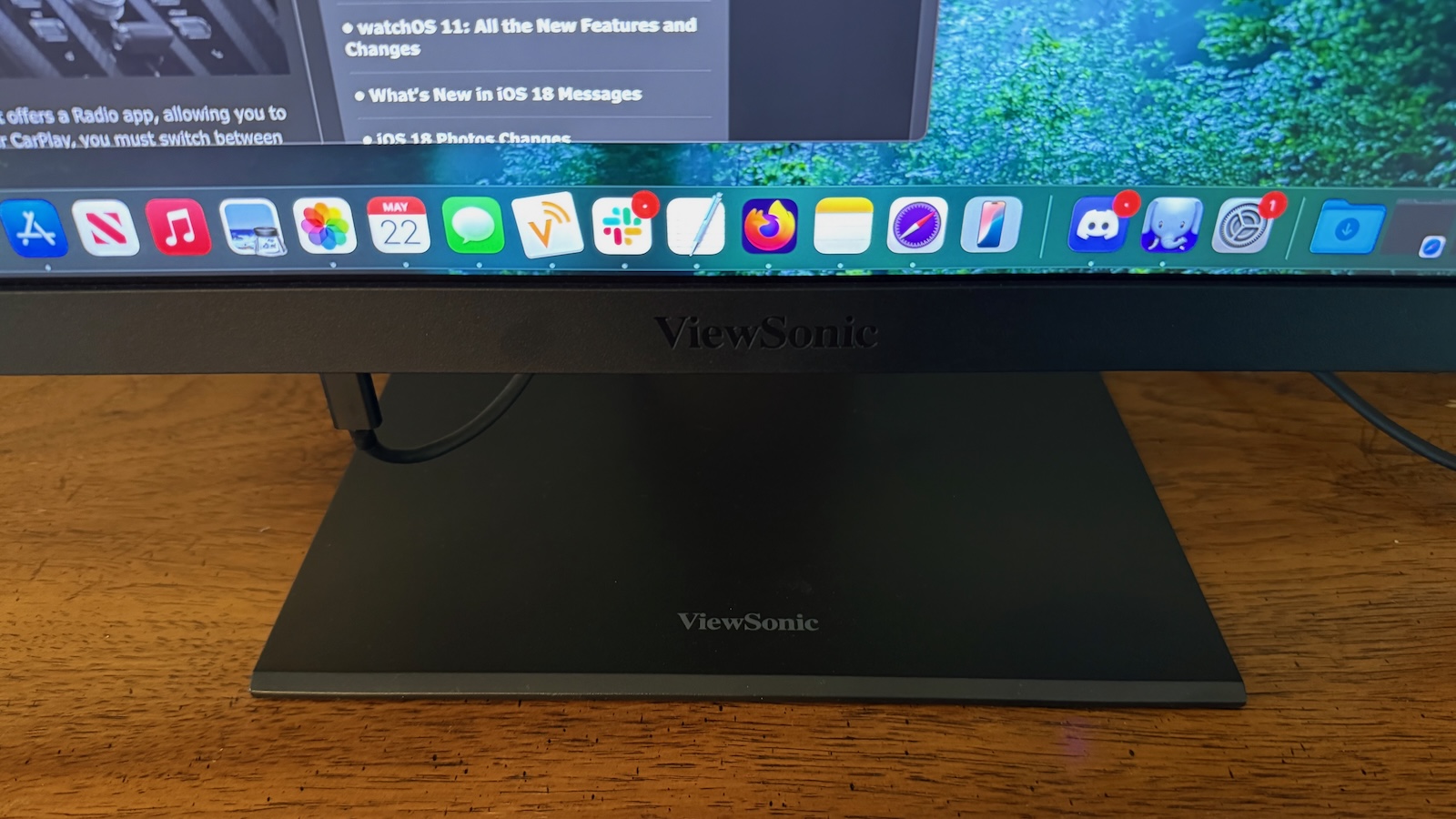
The design is understated and primarily comprised of black and dark gray plastic, except for the metal stand base. Bezels are slim on the top and sides, slightly thicker at the bottom with subtle ViewSonic branding. Additional branding is found on the stand base.
Ergonomics and Connectivity
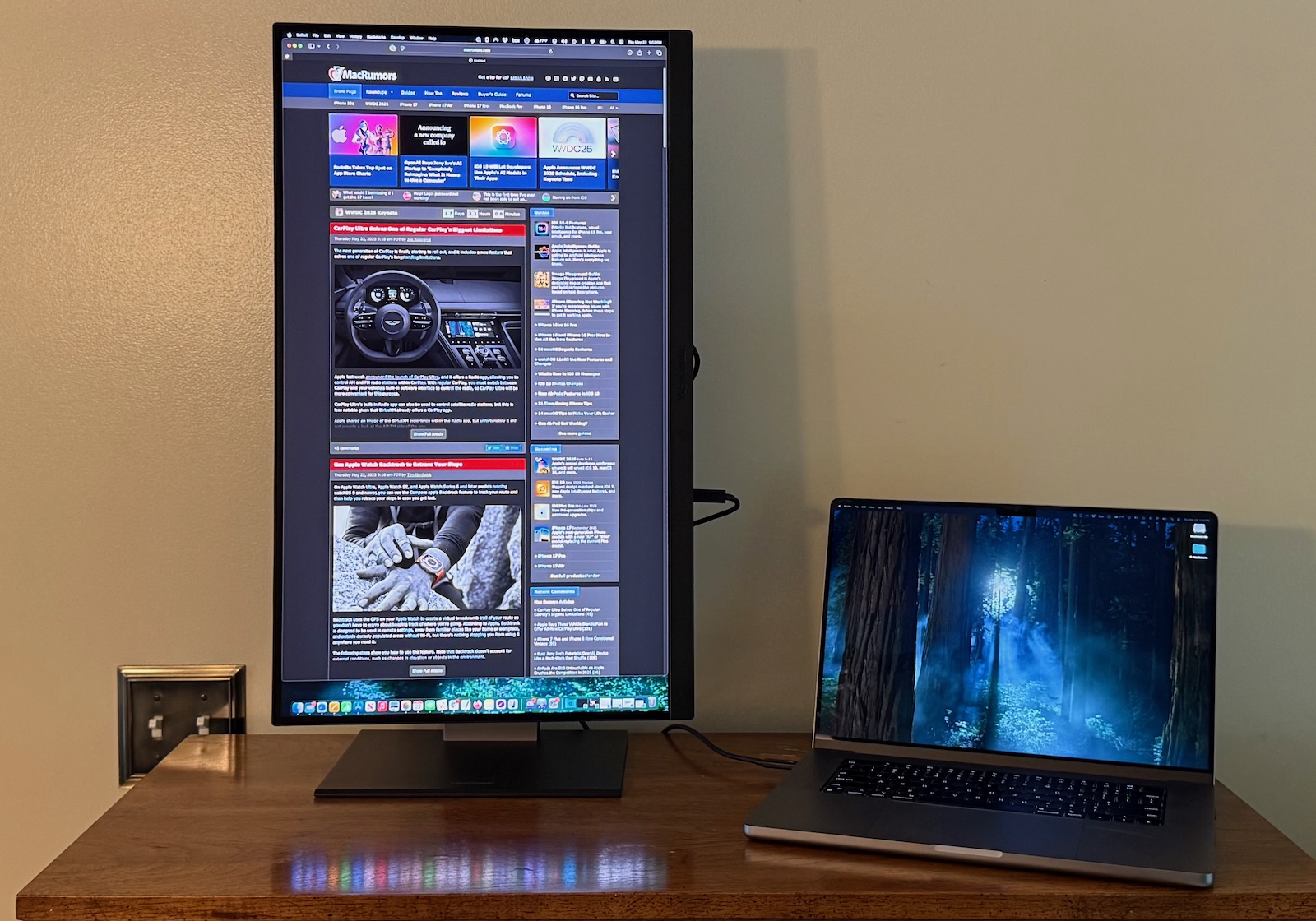
The VP2788-5K excels in adjustability, offering height (120mm range), tilt (5º forward to 22º back), swivel (up to 30º), and pivot (90º) capabilities, allowing for portrait mode use. This surpasses the Apple Studio Display's base model, which only offers tilt. Height adjustment and swivel/pivot require expensive upgrades for the Apple display.
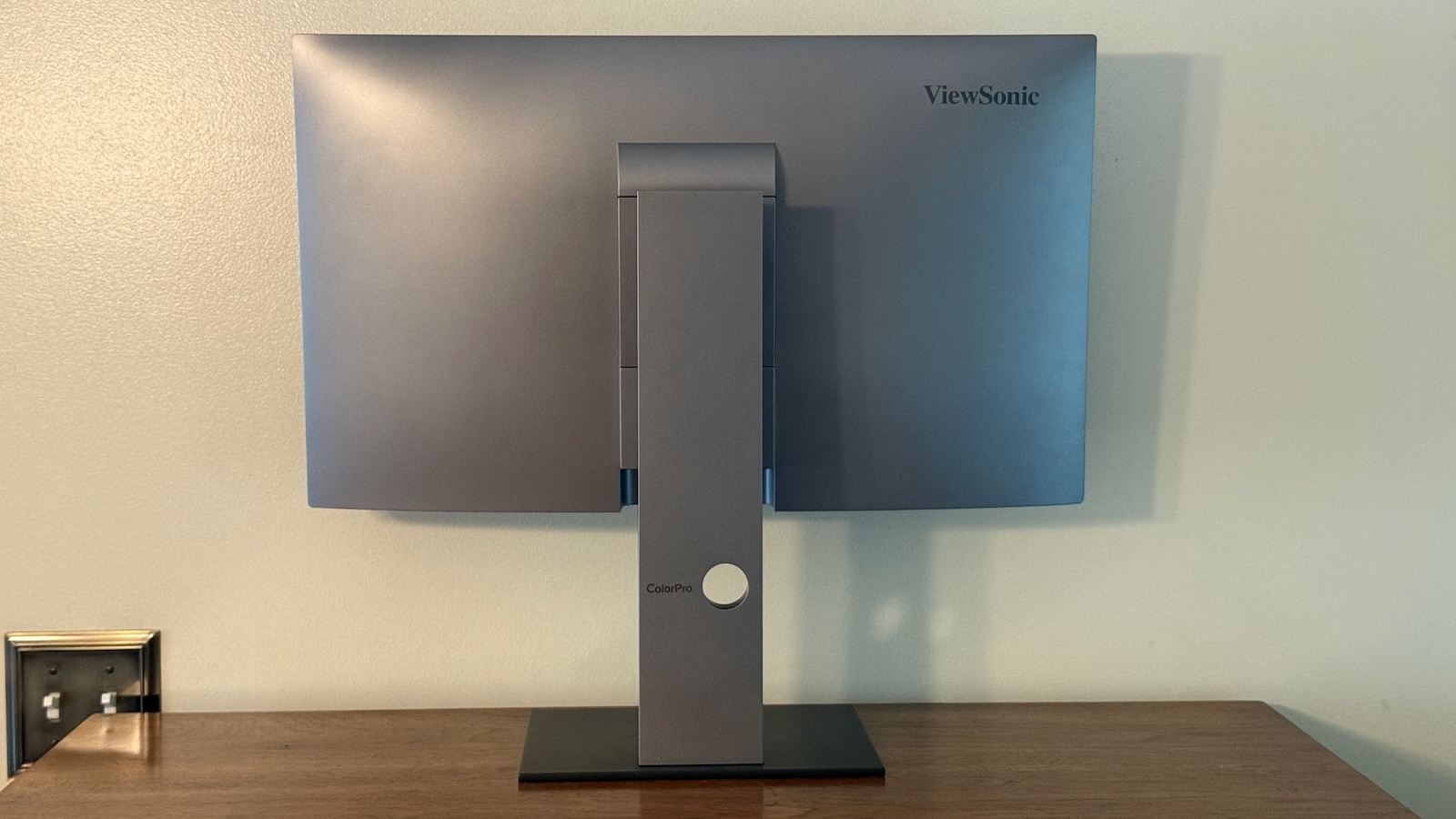
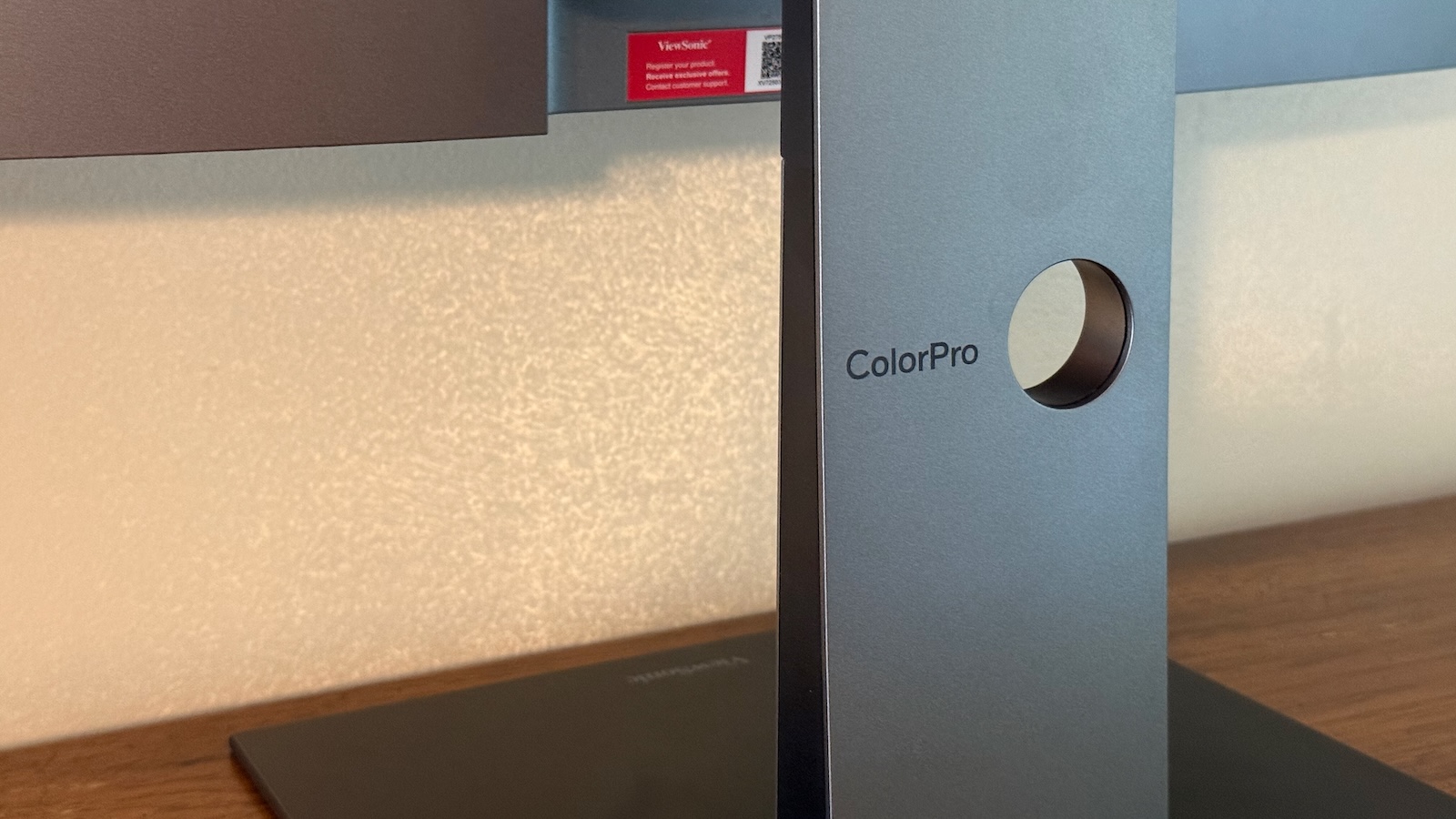
Cable management is facilitated by a well-placed hole in the stand neck, keeping cables hidden from view unless the display is at its highest position.
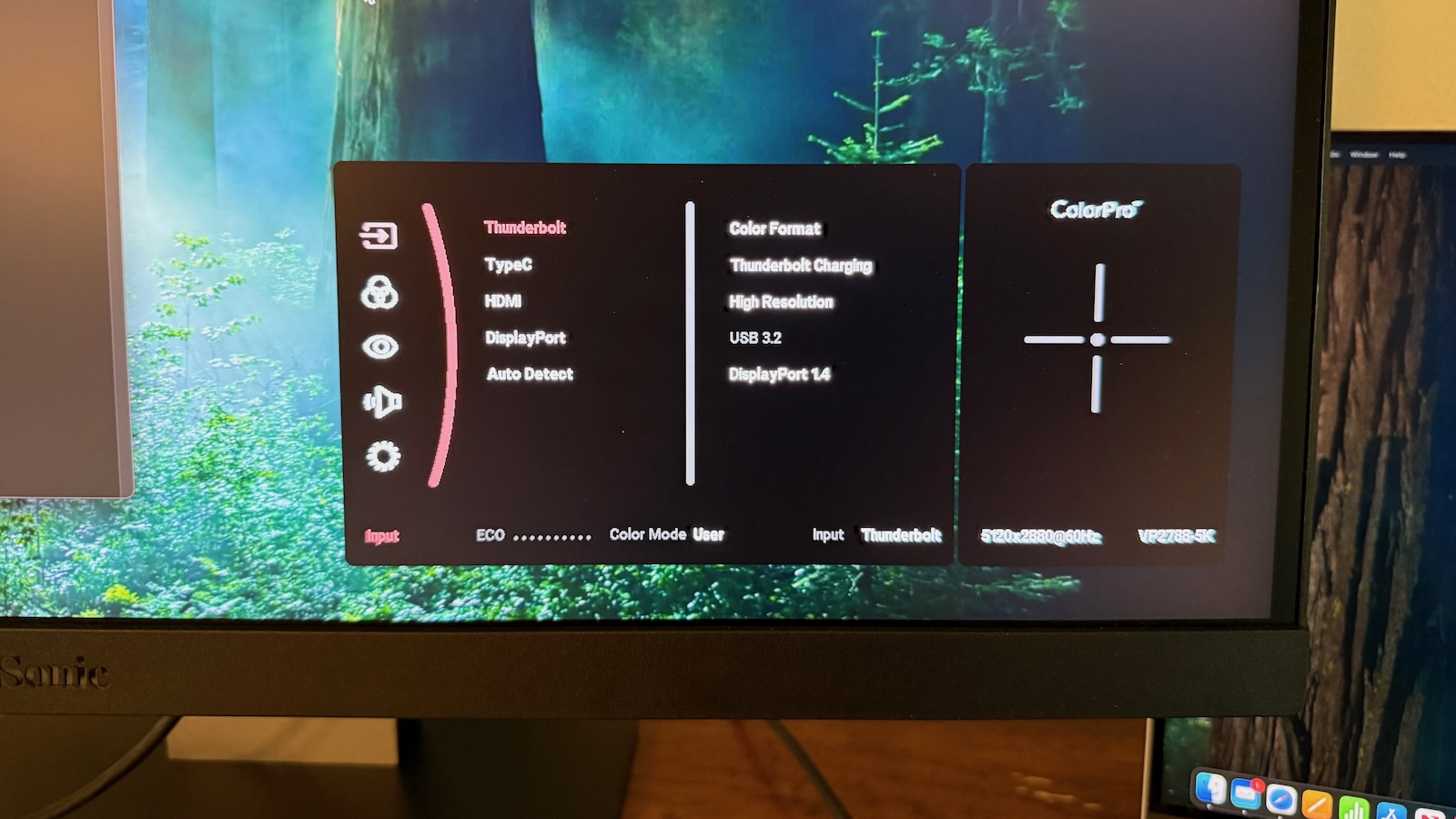
Unlike the Apple and LG displays with their single Thunderbolt 3 input, the VP2788-5K offers broader connectivity: Thunderbolt 4 (upstream), HDMI 2.1, DisplayPort 1.4, and a second upstream USB-C port. Downstream, it provides another Thunderbolt 4 port, a 15-watt USB-C port, and two 10-watt USB-A ports. This allows for daisy-chaining displays on compatible computers. All necessary cables are included.
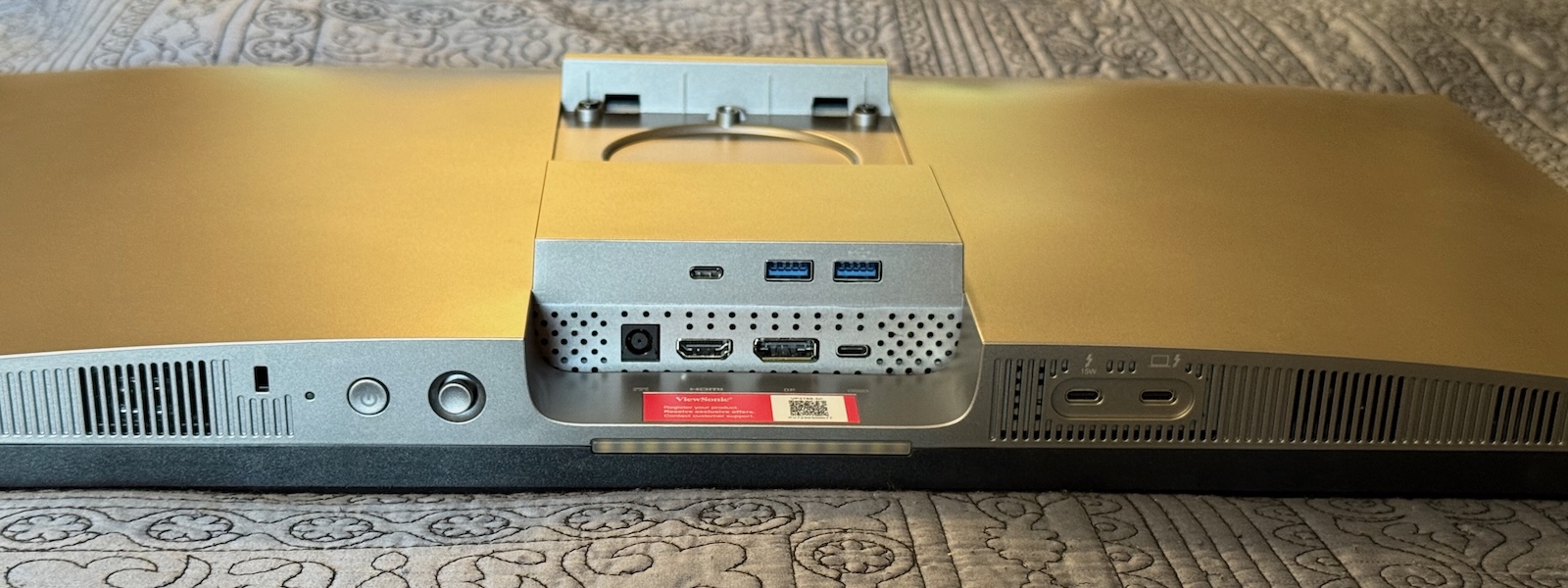
The ports' downward-facing orientation, while potentially beneficial for VESA mounting, makes some cables visible from the front. The main Thunderbolt 4 port's position, flush with the bottom, results in visible cable clutter. This is a minor design flaw that could have been easily avoided.
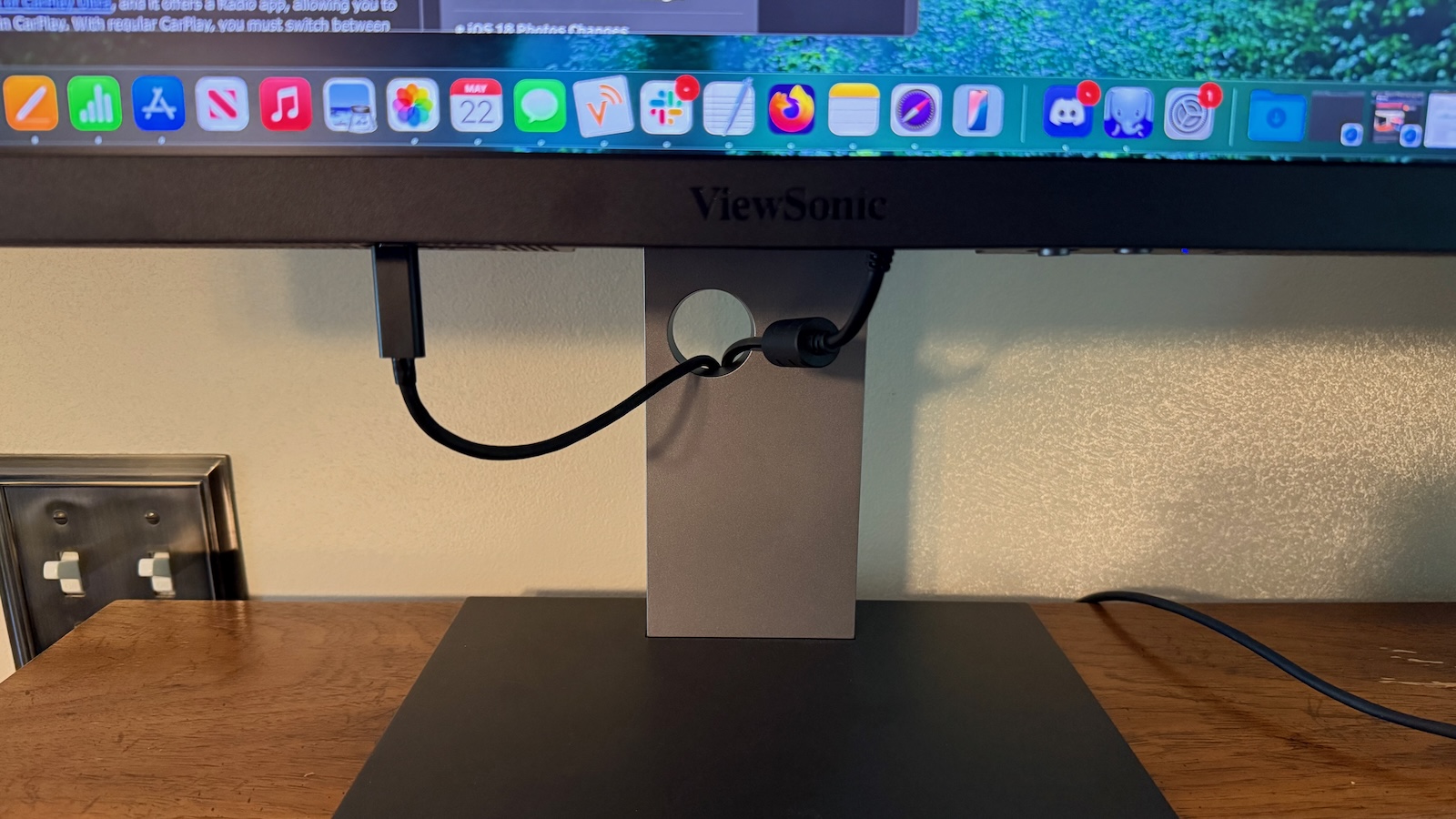
The Thunderbolt 4 port offers up to 100 watts of power delivery, sufficient for charging a MacBook Pro without an additional power adapter. However, the display itself uses an external power brick.
Display Quality and Performance
The VP2788-5K boasts up to 500 nits of brightness, comparable to the LG UltraFine 5K and MacBook Pro displays, although the Apple Studio Display offers 600 nits. It supports up to 75Hz refresh rate via scalar processing, but 60Hz is recommended for consistent performance. This is sufficient for general computing but not ideal for gaming.
Color accuracy is excellent, covering 100% of the sRGB spectrum and 99% of DCI-P3, with HDR400 support. Colors appear natural and well-matched to other displays. The 5K resolution delivers sharp, Retina-quality visuals in 2560x1440 HiDPI mode.
The anti-glare coating (AGLR) is effective, minimizing reflections without significantly impacting color quality. This is a substantial improvement over the glossy LG UltraFine displays. While Apple's Studio Display also offers low-reflectivity glass, a nano-texture option is an extra cost upgrade.
One area where the VP2788-5K lags behind the Apple Studio Display and LG UltraFine is macOS integration. It lacks keyboard shortcuts for brightness and volume control. Adjustments are made via an on-screen display menu controlled by a joystick button. While not a major drawback for all users, it might be an issue for some. ViewSonic is aware of this limitation and is working on a software solution but hasn't provided a timeline.
The integrated 5-watt speakers are underwhelming, producing a hollow sound. External speakers are recommended for better audio quality.
The VP2788-5K lacks a built-in webcam and microphone, requiring external solutions like a connected Mac's camera, a dedicated webcam, or an iPhone using Continuity Camera.
Price and Value
Priced at $949.99, the ViewSonic VP2788-5K is significantly cheaper than the Apple Studio Display and most other 27-inch 5K displays. It's also available from retailers like Best Buy and B&H.
Its lower price makes it attractive, especially considering its multiple input options and excellent adjustability. However, it falls short in seamless macOS integration and lacks the webcam found in the Apple Studio Display. The build quality is also slightly less refined. Overall, the ViewSonic VP2788-5K offers a solid value proposition for users who prioritize features like connectivity and adjustability over premium build quality and complete macOS integration.
Note: ViewSonic provided MacRumors with the VP2788-5K display for the purposes of this review. No other compensation was received. MacRumors is an affiliate partner with some of vendors mentioned in this article. When you click a link and make a purchase, we may receive a small payment, which helps us keep the site running.
This article, "Review: ViewSonic's VP2788-5K Display Offers a Cheaper Alternative to Apple's Studio Display" first appeared on MacRumors.com
Discuss this article in our forums
from MacRumors
-via DynaSage

Post a Comment