Turning Old Cellphones into SBCs
Giving Old Cell Phones a New Life as Single-Board Computers
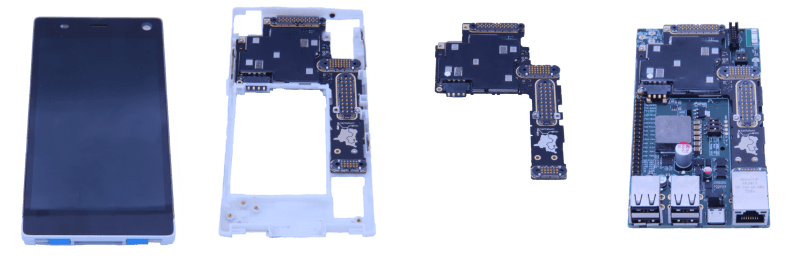
Imagine giving your old cell phone a second life, not as another hand-me-down, but as the brains of a new project. That's the exciting idea behind Citronics, a Belgian company aiming to transform discarded cell phones into powerful single-board computers (SBCs) perfect for running embedded Linux applications.
Repurposing Pocket Supercomputers
We often overlook the incredible computing power tucked away in our pockets. Instead of letting old phones languish in recycling bins, Citronics sees an opportunity to harness their potential. This resonates with the growing movement to repurpose old technology, breathing new life into devices that would otherwise be discarded. This isn't a new concept, and many have wondered why more isn't being done in this space.
Unlocking the Power Within
One of the biggest challenges in repurposing phones is accessing the internal components. Most phones offer limited external connectivity, typically just a single USB port. Citronics addresses this with a custom breakout board, currently prototyped for the Fairphone 2. This board expands connectivity significantly, offering multiple USB 2.0 ports, an Ethernet port, and a Raspberry Pi-compatible header for UART, SPI, I2C, and GPIO. This provides makers and developers with a wealth of options for connecting sensors, actuators, and other peripherals.
While Citronics' design removes the phone's screen, touch interface, and camera, the core processing power and RF capabilities remain intact. This streamlined approach focuses on the phone's computational strengths while simplifying the hardware and software integration.
The Power of Linux
Citronics' SBCs run Linux, a powerful and versatile operating system well-suited for embedded applications. This choice, however, means compatibility isn't universal. Projects like PostmarketOS are working to expand Linux support to a wider range of phone models, with over 250 devices already supported. The removal of the screen and camera by Citronics actually simplifies this process, as these components are often the biggest hurdle for custom Linux distributions.
The Future of Repurposed Phones
While details about Citronics' breakout boards remain limited, the concept holds immense promise. Repurposing old cell phones into SBCs offers a sustainable and cost-effective solution for various applications. The abundance of cheap, used, and broken phones provides a vast resource ripe for repurposing. This innovative approach not only reduces electronic waste but also empowers makers and developers with powerful and affordable hardware. The question now is: how soon will we see open-source implementations of this idea, and what innovative applications will emerge from this exciting new frontier in repurposed technology?
Benefits of Repurposing Cell Phones as SBCs
- Sustainability: Reduces electronic waste by giving old phones a new purpose.
- Cost-Effectiveness: Leverages readily available and often inexpensive hardware.
- Powerful Hardware: Utilizes the advanced processing capabilities of modern cell phones.
- Linux Compatibility: Opens up a world of possibilities with a versatile and open-source operating system.
- Community Driven Innovation: Encourages the development of open-source hardware and software solutions.
The potential applications for these repurposed SBCs are vast, ranging from smart home automation and robotics to educational projects and embedded systems development. Citronics’ innovative approach paves the way for a more sustainable and accessible future for computing.
from Hackaday
-via DynaSage

Post a Comment