The Transputer in your Browser
Reliving the Transputer Dream in Your Browser
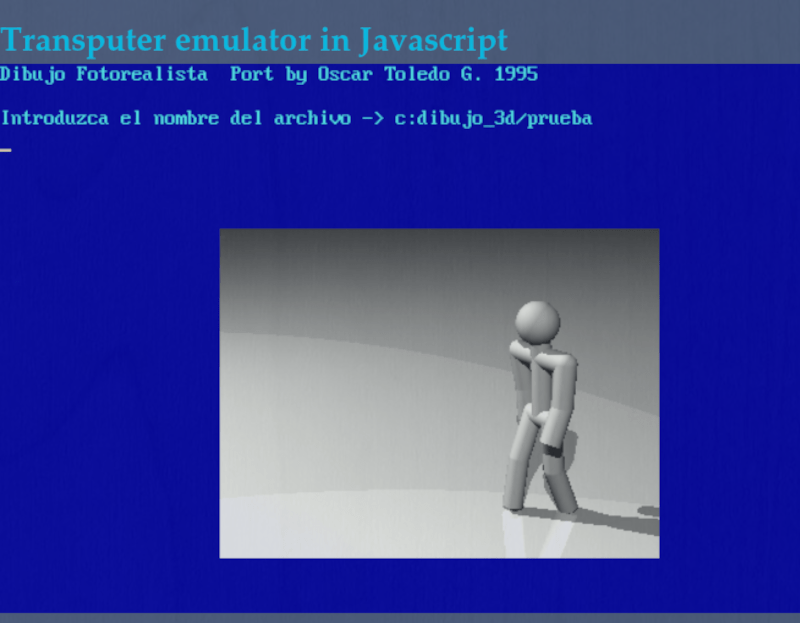
Remember the transputer? Back in the day, it was touted as the future of computing. Everyone predicted it would revolutionize the industry. While it ultimately didn't dominate the market as expected, the transputer offered a fascinating glimpse into a different path for computer architecture. Now, thanks to a JavaScript transputer emulator created by Oscar Toledo G., you can experience this piece of computing history right in your web browser.
A Different Approach to Processing Power
The transputer was a unique CPU designed for parallel processing. Instead of relying on a single, powerful central processing unit like most computers at the time, the transputer utilized multiple smaller, simpler CPUs working together. These CPUs could be linked together, creating a network of processors to tackle complex tasks concurrently. While this concept held immense promise, it didn't quite achieve mainstream success. However, the transputer's influence can still be seen in modern CPU design, particularly in the multi-core processors prevalent today.
Designed for Concurrent Programming
The transputer was specifically designed to work with the occam programming language, which was built from the ground up for concurrent programming. This synergy allowed for efficient context switching (quickly changing between different tasks), simplified message passing between processors, and hardware-level scheduling of processes. These features made the transputer a powerful platform for applications that could benefit from parallel processing.
Exploring the Emulator
The online transputer emulator offers a hands-on experience with this historical technology. While some of the emulator's messages are in Spanish, even non-Spanish speakers should be able to navigate and experiment with its functionalities. For example, we successfully ran the ray tracing demo, although it ran a bit slowly. This demonstrates the power of the transputer's parallel processing capabilities, even within the limitations of a browser-based emulator.
Delving Deeper into Transputer History
If you're interested in learning more about the transputer and its impact on computing, there are numerous resources available. For a deeper dive into the history and technical details of the transputer, check out our previous article: Retrotechtacular: Transputer. It provides a comprehensive overview of this pioneering technology.
Emulation and the Future
Interestingly, with today's technology, emulating a transputer on modern hardware, like a Raspberry Pi Pico, can easily outperform the original hardware. The transputer's concept of parallel processing has evolved significantly. While emulating a transputer on a single device is interesting, the real potential lies in leveraging the massive parallel processing power of GPUs. Imagine a GPU-based transputer emulation; that would truly unlock the performance potential envisioned by the transputer's designers.
This JavaScript emulator offers a valuable opportunity to explore a significant chapter in computing history. It provides a tangible way to understand the transputer's architecture and its approach to parallel processing, paving the way for appreciating the evolution of multi-core processors we use today.
from Hackaday
-via DynaSage

Post a Comment