Satisfy Your High-Voltage Urges with This Printable Flyback Transformer
Building a Giant 3D-Printed Flyback Transformer
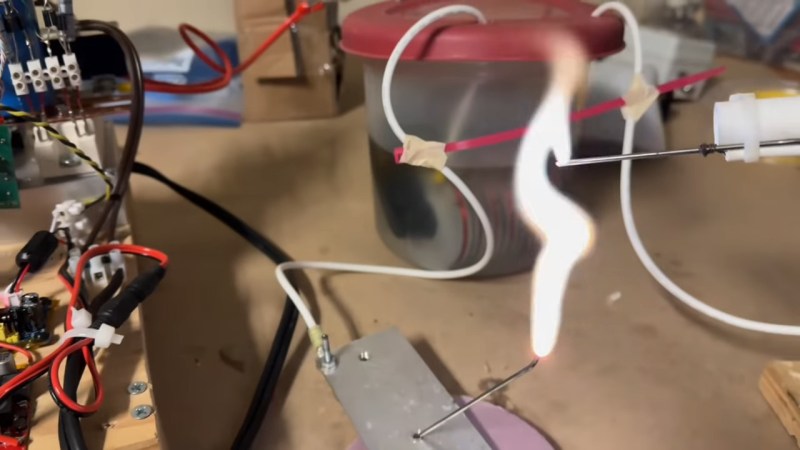
Tired of scavenging flyback transformers from old TVs and monitors for your high-voltage projects? There's a new way to get the high-voltage kick you need: a 3D-printed flyback transformer! Watch the video here: Large Printable Flyback Transformer.
Why Build When You Can Buy?
While finding new flyback transformers isn't particularly difficult, YouTuber SciTubeHD embarked on a quest to build an exceptionally large one. This project was partly inspired by a friendly competition with another YouTuber, Jay Bowles, known for his impressive high-voltage creations (see his work here). While not entirely 3D-printed, the project showcases an innovative approach to building a custom flyback.
Constructing the Coil
The core of the transformer was purchased commercially, but the secondary coil was where the real work began. SciTubeHD designed and 3D-printed a series of interlocking discs that formed the secondary coil's structure. These discs were then bonded together with epoxy for added strength and stability. The secondary coil itself consists of approximately one kilometer of thin 30-gauge magnet wire, painstakingly wound onto the 3D-printed form. In contrast, the primary coil uses only ten turns of much thicker 8-gauge wire, insulated with silicone to handle the high voltage.
Preventing Arcs and Testing the Transformer
To minimize the risk of electrical arcing, the entire transformer assembly was submerged in mineral oil, a type of liquid dielectric that prevents electrical discharge. The transformer and oil were placed in a plastic container, ensuring the secondary coil was fully immersed. To remove any trapped air bubbles that could compromise the dielectric properties of the oil, the entire setup was degassed in a vacuum chamber for 24 hours.
Once prepared, SciTubeHD connected the primary coil to two different, but equally powerful, full-bridge inverters to test the transformer's performance. The results were impressive, producing dramatic electrical arcs. Measurements showed the transformer drawing 20 amps at 35 volts AC input, highlighting its significant power and the need for careful handling.
Future Plans and Availability
SciTubeHD plans to release the STL files for the 3D-printed components soon, allowing others to replicate the project. It's also expected that schematics for the power supply used in the testing will be made available, further enabling enthusiasts to explore the world of high-voltage experimentation.
from Hackaday
-via DynaSage

Post a Comment