Improving Magnetoplasmadynamic Ion Thrusters With Superconductors
Revolutionizing Space Travel: Superconducting Ion Thrusters
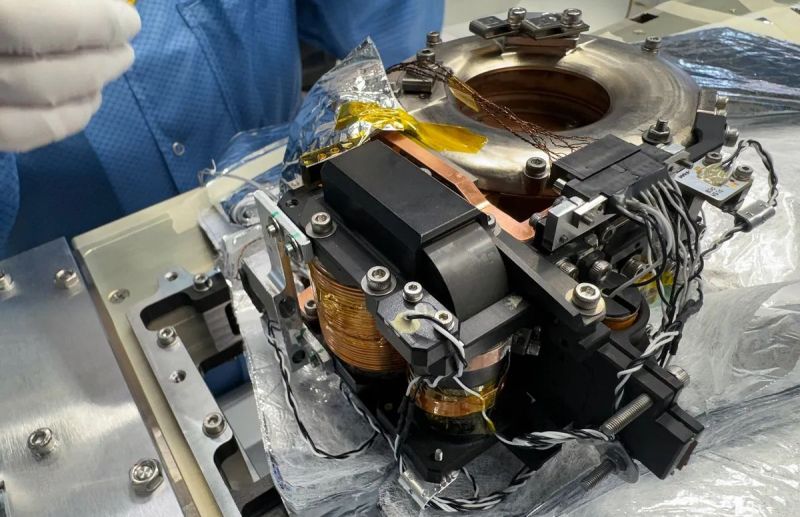
Ion thrusters offer an incredibly efficient method of spacecraft propulsion, achieving high speeds with minimal fuel. However, generating significant thrust currently requires a tremendous amount of electricity. This high energy demand limits their use to applications where fuel efficiency trumps powerful thrust, such as fine-tuning the orientation and position (attitude control) of satellites and other spacecraft.
A Breakthrough in Efficiency
Researchers in New Zealand have developed a prototype magnetoplasmadynamic (MPD) thruster incorporating a superconducting electromagnet. This innovation promises to drastically reduce the power requirements while significantly boosting the magnetic field strength. Initial estimates suggest a potential 99% reduction in required input power while generating a magnetic field three times stronger than current models. This breakthrough could pave the way for more powerful and versatile ion thrusters in future space missions.
The Promise of MPD Thrusters
MPD thrusters, like their electrostatic counterparts known as Hall-effect thrusters, have been a subject of research since the 1970s. However, the limited power availability on spacecraft has hampered their widespread adoption for more ambitious missions. Traditional electromagnets consume significant power, restricting the performance and feasibility of MPD thrusters. The key advantage of the new prototype lies in its use of a high-temperature superconducting electromagnet integrated with a cryocooler. Superconductors, materials that conduct electricity with zero resistance at very low temperatures, enable the creation of incredibly strong magnetic fields with minimal power consumption. The cryocooler ensures the superconductor maintains its operational temperature.
How MPD Thrusters Work
MPD thrusters utilize the interaction between a magnetic field and an electrically charged gas (plasma) to generate thrust. A powerful electric current flows through the plasma, creating its own magnetic field. This interacts with the magnetic field generated by the superconducting electromagnet, resulting in a force that propels the plasma – and thus the spacecraft – forward. The stronger the magnetic field, the greater the thrust produced.
Putting the Technology to the Test
The true test of this promising technology will occur later this year when the prototype thruster is installed on the International Space Station (ISS) for experimental trials. These experiments will assess the thruster's performance in a real-world space environment and evaluate its reliability. If successful, this technology could revolutionize space travel, enabling missions previously deemed impossible due to power constraints.
The Implications for Space Exploration
The potential applications of this technology are far-reaching. More powerful and efficient ion thrusters could significantly shorten travel times for interplanetary missions, reduce the amount of fuel required for deep space exploration, and enable the development of new types of spacecraft. Imagine faster journeys to Mars, missions to the outer planets becoming more feasible, and even the possibility of interstellar travel becoming a reality. This new generation of ion thrusters could unlock a new era of space exploration.
Further Reading
For more in-depth information about electric propulsion and MPD thrusters, you can explore the following resources:
from Hackaday
-via DynaSage

Post a Comment