Hybrid Mechanical Clock Shows it Both Ways
Hybrid Mechanical Clock Blends Digital and Analog Time
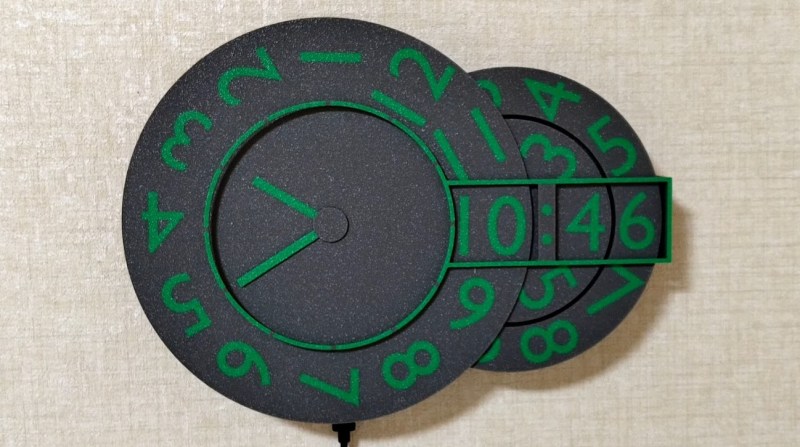
Inspired by recent innovative clock designs, maker [shiura] has created a stunning 3D-printed hybrid clock that seamlessly blends analog and digital time displays. This unique timepiece showcases a captivating mechanism powered by a single motor, making it a remarkable feat of engineering.
Ingenious Mechanism Driven by a Single Motor
The clock's face features multiple rotating rings, giving it a complex appearance. However, the underlying mechanism is surprisingly simple, driven by a single stepper motor. Each ring has a small hook that interacts with its neighboring ring. As one ring completes a full rotation from 0 to 9, its hook advances the next ring by one digit. This chain reaction continues across all the rings, creating a captivating visual display of time.
The rightmost ring represents the single minutes, rotating continuously from 0 to 9. Once it completes a rotation, it triggers the ten-minute ring to advance. This cascading effect continues for the remaining rings, representing the hours. While this mechanism means the analog minute hand jumps forward every ten minutes instead of moving smoothly, it's a clever compromise for the elegant simplicity of the design.
Electronics and Control
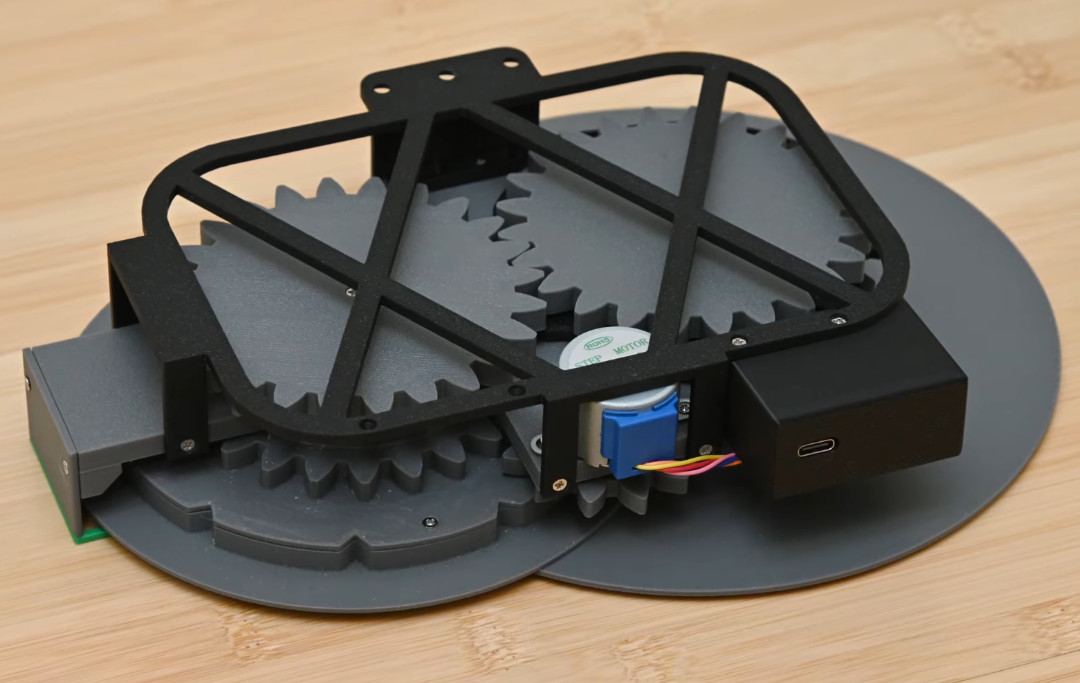
The electronics driving this ingenious clock are surprisingly minimal. A 28BYJ-48 geared stepper motor, combined with its driver board, provides the mechanical power. A Seeed Studio XIAO ESP32C6 microcontroller acts as the brains of the operation. This WiFi-enabled microcontroller fetches the current time from the internet and controls the stepper motor accordingly. It's important to note that because of the mechanical nature of the time display, updating the time can take a while as the rings rotate into position. The video embedded below demonstrates this process at 60x speed.
Recreating the Hybrid Clock
Detailed instructions for building this clock are available on Instructables. You can find the complete guide here. The most challenging aspect of recreating this project is likely the 3D printing process. The original design utilizes multi-material printing to achieve the detailed finish and color variations. While it's possible to print the clock using a standard single-material 3D printer, some surface details on the face might be lost, and careful planning of filament swaps will be necessary.
Inspiration and Further Exploration
[shiura] mentions being inspired by a recent post about a sliding tile clock, which sparked the idea for this hybrid creation. You can check out the sliding tile clock project here. This demonstrates how innovative projects often inspire new and exciting creations within the maker community.
Watch the Clock in Action
See the hybrid clock in motion and witness the intricate mechanism at work:
from Hackaday
-via DynaSage

Post a Comment