Handheld 18650 Analyzer Scopes Out Salvaged Cells
Handheld 18650 Analyzer for Salvaged Batteries
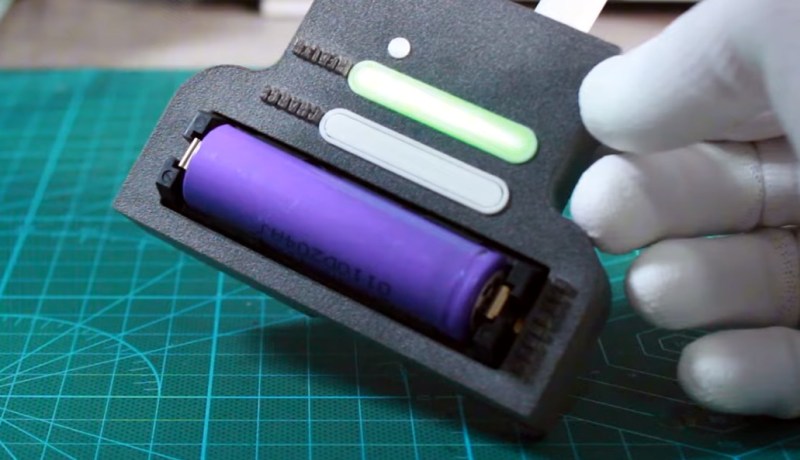
You can often salvage 18650 lithium-ion batteries from old electronics like vapes and power tools. The challenge is determining if these salvaged batteries are still usable. Just because a battery accepts a charge doesn't mean it has retained its capacity or can handle a heavy load. You need a way to test them.
Testing Your Salvaged Batteries
For serious battery salvaging, investing in a smart charger with capacity testing capabilities is recommended. However, for a more hands-on approach, you can build your own portable battery health monitor. This DIY project, designed by DIY GUY Chris, offers a portable and affordable solution for testing individual 18650 cells.
“Battery Health Monitor” designed by [DIY GUY Chris] might be single-cell limited, its portability makes it ideal for on-the-go testing during salvaging expeditions, powered simply by a USB-C connection.
The Hardware Behind the Analyzer
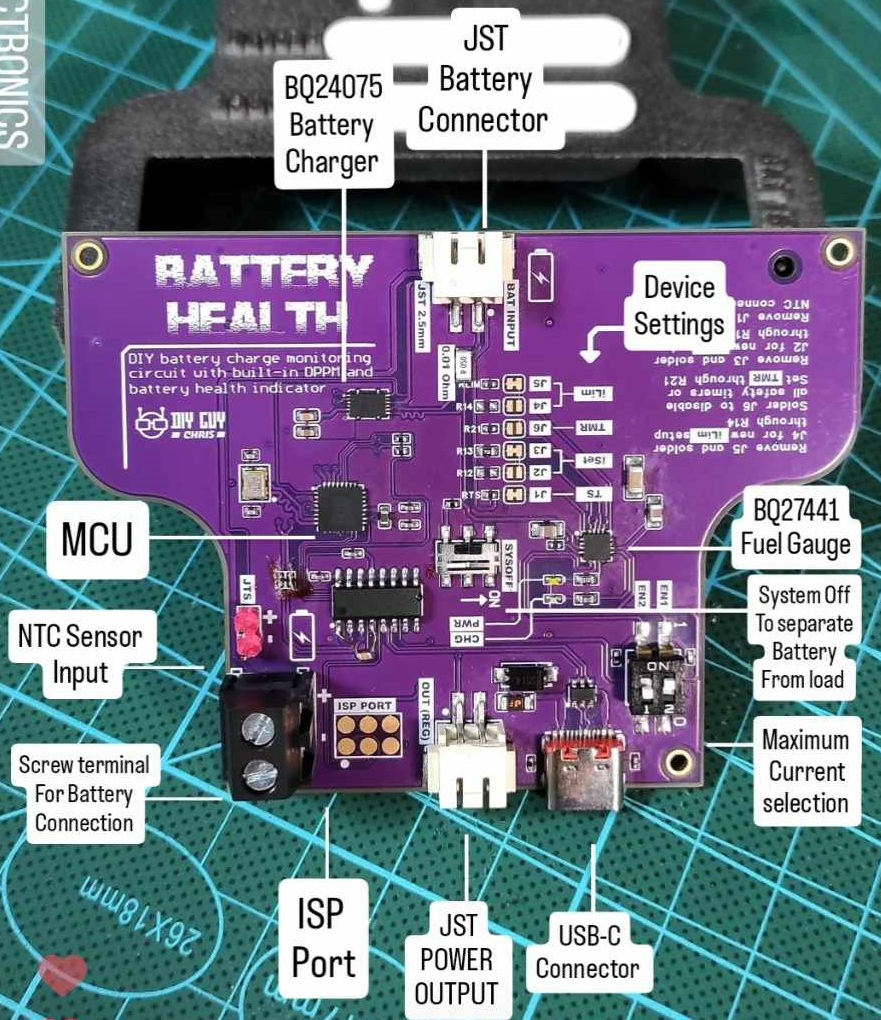 This project relies on two key integrated circuits (ICs) from Texas Instruments. The BQ27441 is a "fuel gauge" IC that measures the remaining capacity of the 18650 battery. By comparing this measurement to the battery's original design capacity, the IC can estimate the battery's overall health. The second IC, the BQ24075, is a battery charge controller. It monitors the charging process to ensure the battery is charged safely and efficiently.
Software and User Interface
An ATmega328P microcontroller, programmed with Arduino-compatible firmware, acts as the brains of the operation, connecting the two specialized ICs. The user interface consists of two WS2812B addressable LED bars, which visually display the battery’s health and charge levels. For more detailed data, connecting the device to a computer allows access to charging statistics via the serial port.
Building Your Own Analyzer
The entire project is open-source, released under the MIT license. All the necessary files, including STL files for 3D printing the enclosure and the Arduino code for the microcontroller, are available. Detailed step-by-step assembly instructions and a build video are provided, making it easy to follow along and create your own battery analyzer.
Scaling Up Your Battery Testing
If you’re dealing with a large quantity of salvaged batteries, a single-cell tester might not be efficient. For larger-scale operations, consider upgrading to a more robust solution, such as a 40-slot wall-mounted unit. You can find more information about building a larger testing station here: 40-slot wall mounted unit.
Build Video
from Hackaday
-via DynaSage

Post a Comment