Clever Engineering Leaves Appliance Useless
When Clever Engineering Backfires: The Case of the Faulty Dehumidifier
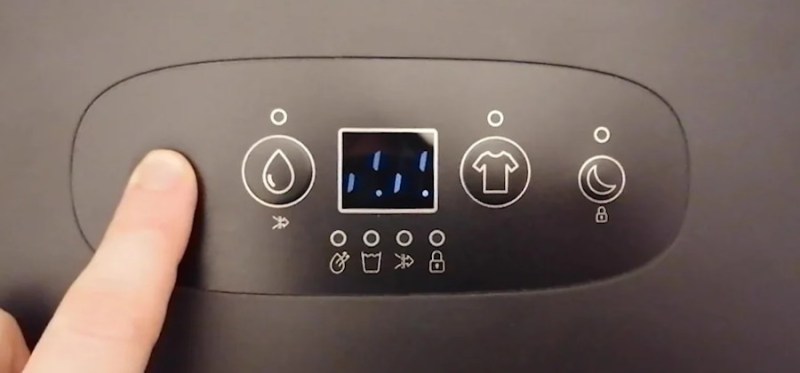
We often appreciate ingenious hacks that maximize functionality with minimal resources. For instance, if someone cleverly used a technique called multiplexing to control a gadget's display with fewer microcontroller pins, we'd be impressed. But what happens when this cleverness leads to a widespread product flaw?
This is the story of the Meaco Arete dehumidifier. When one user's dehumidifier malfunctioned, some online sleuthing revealed a surprising culprit. The problem stemmed from the dehumidifier's LED display and its interaction with the microcontroller. Internet forums revealed the root cause: if a segment in the low-cost LED display fails and short-circuits, the multiplexing system, designed to simplify the display control, misinterprets this short as a pressed button, causing the microcontroller to freeze.
A Hidden Cost of Optimization
This case serves as a cautionary tale about the potential downsides of over-optimization. While reducing components and simplifying designs can be beneficial, it can also introduce unexpected vulnerabilities.
Discussions on the Badcaps forum indicate that this issue was identified last summer. However, unless you owned this specific dehumidifier and encountered the problem, you likely wouldn't have heard about it. Users initially followed standard troubleshooting procedures, but these proved ineffective.

A Simple Fix, But a Bigger Problem
One user finally discovered the issue by meticulously testing the connections to the two-digit seven-segment LED display. They found a complete short circuit on one of the segments. Removing the faulty display revived the dehumidifier. A replacement display was easily sourced online, fully restoring the appliance's functionality.
While a shorted component can cause problems anywhere in a circuit, it's plausible that the cheaply manufactured LED display, with its seemingly high failure rate, is the primary culprit. Typically, a non-functional display would be considered a symptom of a problem, not the cause, making this a particularly challenging issue to diagnose.
A Widespread Issue
The prevalence of this problem is evident in the number of people reporting similar experiences online. The existence of an iFixit guide dedicated to replacing the faulty display and numerous discussions on Reddit suggests that cost-cutting measures during the product's development may have gone too far. This ultimately compromised the dehumidifier’s reliability.
from Hackaday
-via DynaSage

Post a Comment