Ask Hackaday: What’s a Sun-Like Star?
What Makes a Star "Sun-Like" and a Planet "Earth-Like"?
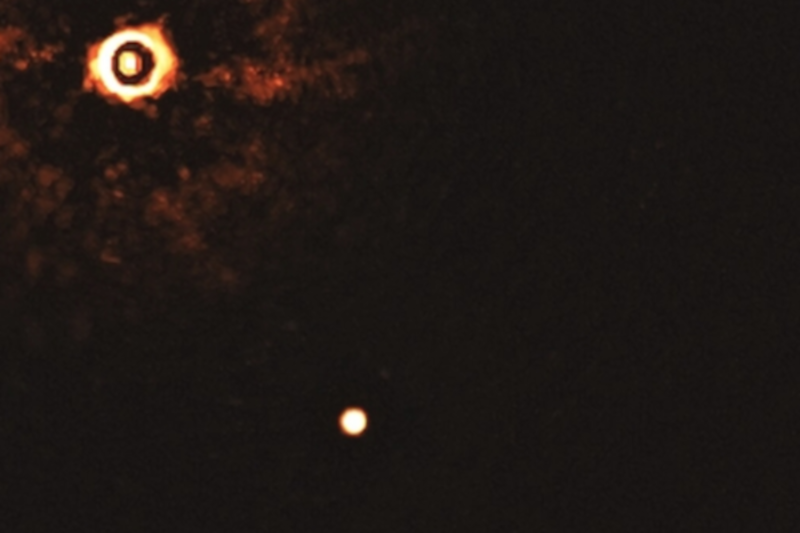
We often hear about "sun-like" stars and "Earth-like" planets in the news. But what do these terms actually mean? Comparing things requires context. A bicycle and a motorcycle both have two wheels, but one needs gasoline and the other doesn't. Similarly, labeling a star "sun-like" implies shared characteristics, but which ones are truly important?
Even scientific textbooks struggle with consistency. Author Paul Gilster points out this discrepancy, noting that the classification of stars like Centauri A and B as "sun-like" varies depending on the source. So, let's explore this question: what truly defines a star as "sun-like" and a planet as "Earth-like"?
The Challenge of Defining "Sun-Like" and "Earth-Like"
A major hurdle is our limited knowledge of other star systems. We're constantly learning, but our understanding is still developing. Identifying a distant celestial body as "Earth-like" is a bit like trying to determine if a faraway speck of light is a motorcycle. It's a challenging task.
The question seems simple initially, but its complexity unfolds upon closer examination. Does the presence of water make a planet "Earth-like"? What if the planet is entirely submerged? What about the existence of life? Even the presence of life doesn't guarantee an "Earth-like" environment. Life on other planets might be radically different, perhaps based on silicon and methane rather than carbon and oxygen.
While the phrase "I know it when I see it" captures the inherent difficulty of defining these terms, it lacks scientific rigor. We need more specific criteria.
What Makes a Star "Sun-Like"?
When astronomers refer to a "sun-like" star, they're typically looking for similarities to our own Sun in terms of several key properties. These can include:
- Mass and Size: Stars with similar mass and size to our Sun tend to have similar lifespans and energy output.
- Temperature and Spectral Type: Our Sun is a G-type main-sequence star with a surface temperature of around 5,500 degrees Celsius. "Sun-like" stars often fall within the G or K spectral types.
- Chemical Composition: The Sun is primarily composed of hydrogen and helium, with traces of heavier elements. Similar chemical composition is another factor in determining "sun-likeness".
- Stability: Our Sun is relatively stable, without dramatic fluctuations in its energy output. This stability is crucial for the development and sustenance of life.
However, even with these criteria, there's room for variation. A star might be similar to the Sun in some respects but differ in others. This is why the definition of "sun-like" can be somewhat flexible.
What Makes a Planet "Earth-Like"?
Defining an "Earth-like" planet is even more complex, encompassing a wider range of factors:
- Size and Mass: A planet's size and mass influence its gravity and ability to retain an atmosphere.
- Surface Temperature: A temperature range that allows for liquid water is considered essential for life as we know it.
- Presence of an Atmosphere: An atmosphere provides protection from radiation and regulates temperature.
- Composition of the Atmosphere: The presence of certain gases, like oxygen and nitrogen, can be indicators of potential habitability.
- Presence of Liquid Water: Water is a key ingredient for life as we understand it.
- Distance from its Star: A planet's distance from its star determines the amount of energy it receives, influencing its temperature.
- Presence of a Magnetic Field: A magnetic field shields the planet from harmful solar radiation.
As with "sun-like" stars, the term "Earth-like" doesn't require a perfect match. A planet could be considered "Earth-like" even if it differs from Earth in some aspects, as long as it shares key characteristics that suggest the potential for habitability.
The Ongoing Search for Sun-Like Stars and Earth-Like Planets
The search for sun-like stars and Earth-like planets is a major focus of ongoing astronomical research. Scientists are constantly developing new technologies and techniques to detect and characterize exoplanets, planets orbiting other stars. The discovery of truly Earth-like planets would be a monumental event, offering profound insights into the possibility of life beyond our solar system.
And let's not even begin to discuss super-Earths, which present another layer of complexity. We are continually learning more about our neighbors in the cosmos, constantly refining our understanding of what it means for a star to be "sun-like" and a planet to be "Earth-like." What are your thoughts? Share your perspectives in the comments below.
from Hackaday
-via DynaSage

Post a Comment