A Low F Number Lens, From Scratch
Building a Super-Fast F0.5 Lens: A DIY Photography Hack
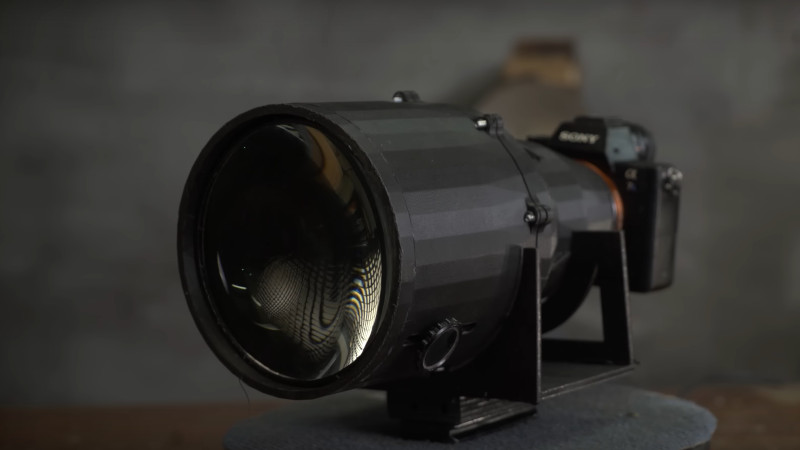
A lens's F-number indicates how much light it can gather. A lower F-number means more light, which is highly desirable for photographers. These "fast" lenses are typically expensive due to the complexity of their design and manufacturing. However, one ambitious individual, known as Rulof, has taken on the challenge of building his own 80mm f0.5 lens, compatible with Sony E-mount cameras.
You can watch his fascinating journey and learn about lens design in his video:
Repurposing and Adapting Existing Lenses
Instead of crafting individual lenses from scratch, Rulof cleverly repurposed a lens from an old projector. This provided him with the large aperture necessary for an f0.5 lens, even though projector lenses aren't designed for photography. One particularly ingenious aspect of his build is the use of a drafting tool, typically used for drawing circles, as the diaphragm (the part of the lens that controls the aperture). This unconventional component closely resembles a standard photographic diaphragm and functions remarkably well.
Rulof combined the projector lens with a triplet lens (a lens assembly with three individual lenses) salvaged from an old SLR camera. He housed these components within a custom 3D-printed enclosure. The result is a functional, albeit imperfect, f0.5 lens. While the lens achieves the sought-after "bokeh" (the aesthetically pleasing blur in the background of an image), it currently lacks sharpness.
The Challenges of Lens Hacking
Adjusting the various elements within a compound lens like this is a delicate and complex process. Achieving optimal image quality requires precise alignment and spacing of the lenses. This complexity is likely one reason why we don't see more lens hacking projects. Cameras and lenses are expensive, and modifying them carries the risk of damage. However, that doesn't mean lens hacking is nonexistent. Other inventive individuals have also explored the inner workings of lenses, pushing the boundaries of what's possible with DIY modifications. You can see an example of this ingenuity in this article about Canon autofocus lenses: A Deep Dive into Canon Autofocus Lenses.
The Future of DIY Lens Building
Rulof's project demonstrates that building a fast lens like an f0.5 is possible with ingenuity and readily available resources. While his lens may not yet rival commercially available lenses in terms of sharpness, it's a testament to the spirit of experimentation and the potential of DIY in the world of photography. As more makers delve into lens modification and design, we can expect to see even more innovative and accessible lens hacking projects in the future. This could lead to a wider range of affordable lens options for photographers and videographers, opening up new creative possibilities.
from Hackaday
-via DynaSage

Post a Comment