Keebin’ with Kristina: the One with the Funny Keyboard

What’s the most important keyboard macro you know? Honestly, it’s probably Ctrl-S. But do you use that one often enough? Chances are, you do not. What you need is a giant, dedicated Save keyboard that looks like a floppy disk.
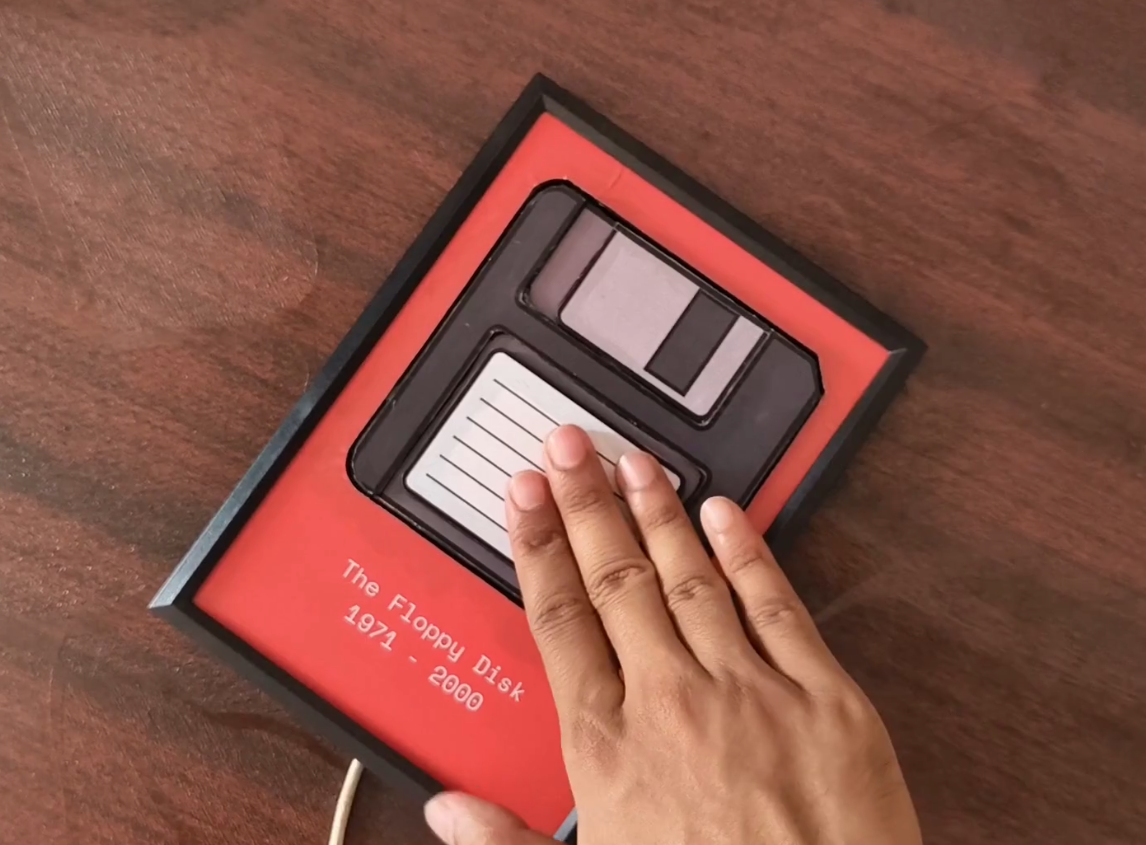
Just like you’d expect, pressing the floppy icon triggers Ctrl-S when connected over USB-C. Internally, it’s a Seeeduino Xiao, a push button, and some wires.
The floppy disk itself is made of foam board, and everything is encased in a picture frame. If you want to make one for yourself, [Makestreme] has some great instructions over on IO.
Folding Keyboard Working After Five Hours of Debugging
Wishing for something compact and foldable, [sushiiiiiiiiiiiiii] created this seemingly nameless wonder that sort of resembles a concertina. The initial idea was to have both halves separate and make the thumb cluster unfold, but the making the linkage work correctly turned out to be a nightmare.
" data-medium-file="https://hackaday.com/wp-content/uploads/2024/12/prototype-working.webp?w=400" data-large-file="https://hackaday.com/wp-content/uploads/2024/12/prototype-working.webp?w=800" class="size-medium wp-image-736592" src="https://hackaday.com/wp-content/uploads/2024/12/prototype-working.webp?w=400" alt="A prototype of a keyboard with wonderful marshmallow-y keys on both the front and the back." width="400" height="300" srcset="https://hackaday.com/wp-content/uploads/2024/12/prototype-working.webp 4032w, https://hackaday.com/wp-content/uploads/2024/12/prototype-working.webp?resize=250,188 250w, https://hackaday.com/wp-content/uploads/2024/12/prototype-working.webp?resize=400,300 400w, https://hackaday.com/wp-content/uploads/2024/12/prototype-working.webp?resize=800,600 800w, https://hackaday.com/wp-content/uploads/2024/12/prototype-working.webp?resize=1536,1152 1536w, https://hackaday.com/wp-content/uploads/2024/12/prototype-working.webp?resize=2048,1536 2048w" sizes="(max-width: 400px) 100vw, 400px" />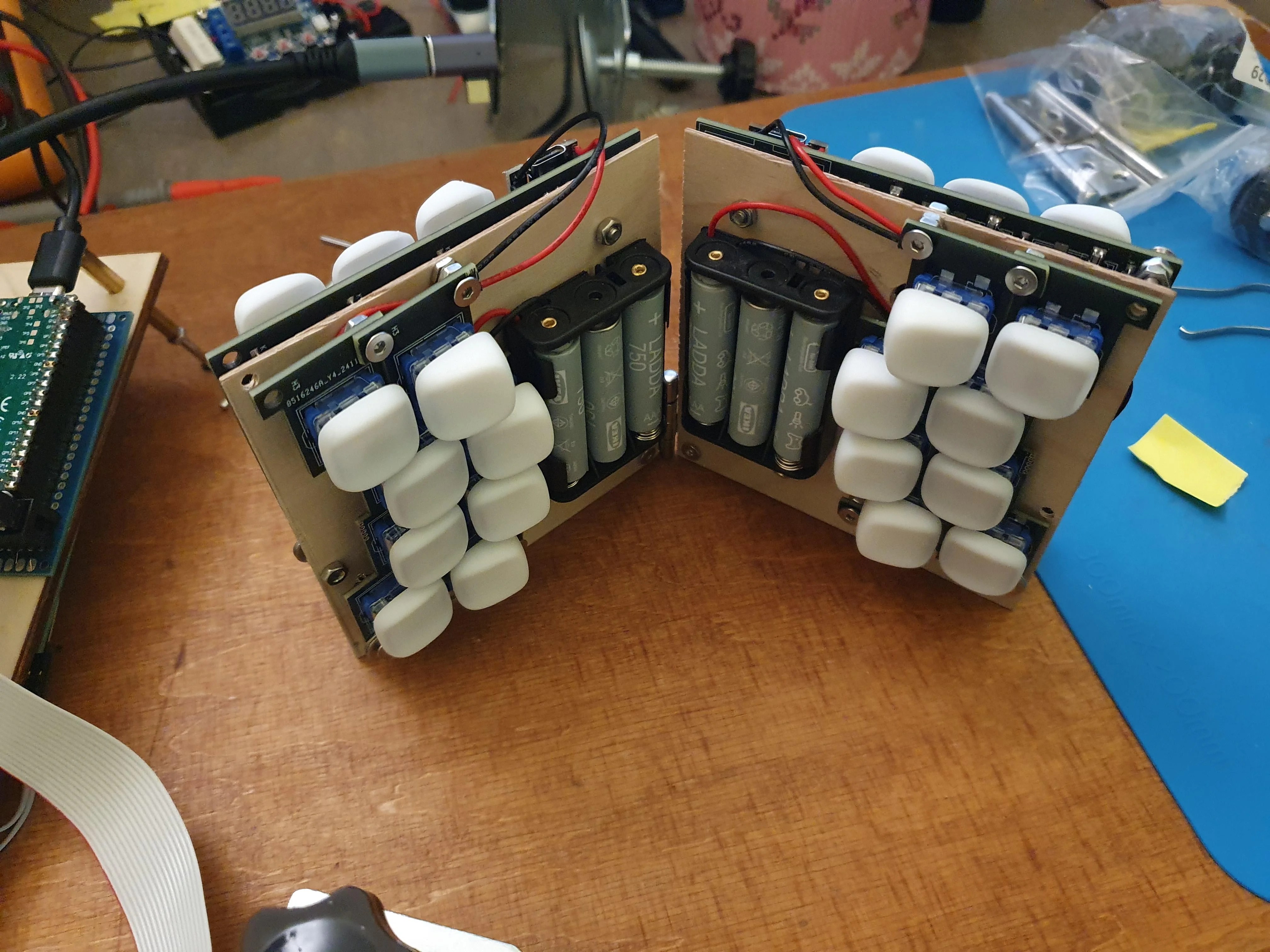 reddit
They are topped with beautiful KLP Lamé keycaps I’d really like to touch that [sushiiiiiiiiiiiiii] had printed through JLC. It runs on six IKEA LADDA Ni-MH AAA cells [sushiiiiiiiiiiiiii] had laying around that the integrated Li-ion charger “shouldn’t explode” based on research.
Programming was a different kind of nightmare. [sushiiiiiiiiiiiiii] went through the ZMK setup, but the thing just would not show up on any Bluetooth device. After several hours of checking absolutely everything, [sushiiiiiiiiiiiiii] went back to the guide and discovered the programmer’s bane — an errant space after a comma that screwed everything up. The next version will have a reworked hinge and be less wobbly.
The Centerfold: A Little Comic Relief
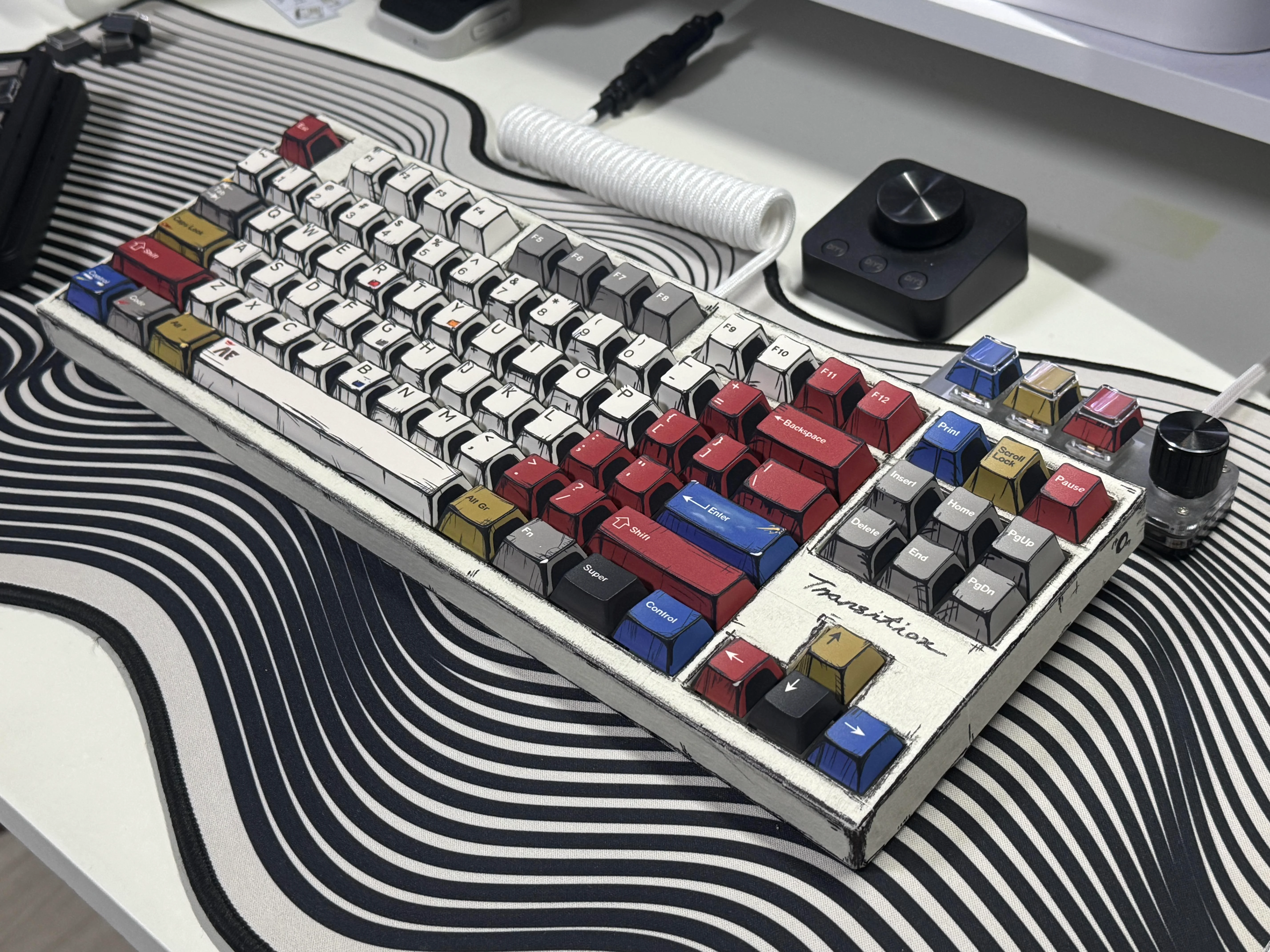
Do you rock a sweet set of peripherals on a screamin’ desk pad? Send me a picture along with your handle and all the gory details, and you could be featured here!
Historical Clackers: Defi-ing Typical Typewriter Prices
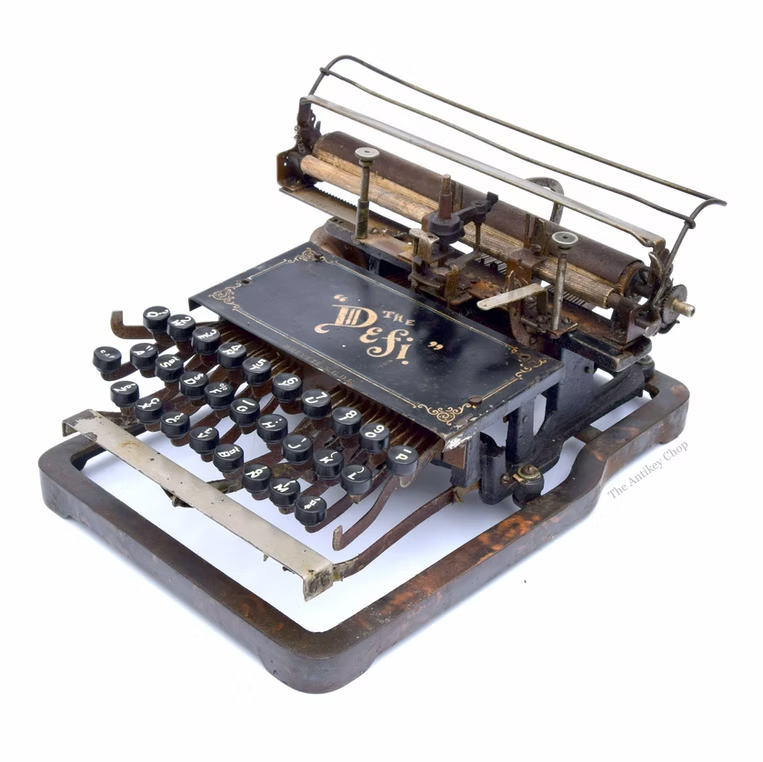
First and foremost: although it looks nice, the reason why this Defi is screwed to a metal base is unknown. This typewriter came standard with a wood base and cost a mere $25 in the early 1900s, whereas most machines were more like $60-$100. A metal base would probably have made it cost more.
The Defi was built with a three-row, 84-character keyboard bearing two Shifts, presumably one for upper case, and the other for figures and symbols. From here, it looks as though every key has a second function, which gives it a really nice balance between usability and portability.
One of the most interesting bits to me is the semi-circular type element, which looks like one of those old rocking desk ink blotter things. Speaking of ink, the Defi used a ribbon spool. The whole thing was only a foot square and five inches tall, weighing about nine pounds total, presumably with the wood base.
ICYMI: the Lancaster ASCII keyboard Clacks Again
If you want a cool keyboard in 2024, you’re probably gonna have to build it yourself. And if you wanted a cool keyboard fifty years ago, you definitely had to build it yourself.
" data-medium-file="https://hackaday.com/wp-content/uploads/2024/12/lancaster.jpeg?w=400" data-large-file="https://hackaday.com/wp-content/uploads/2024/12/lancaster.jpeg?w=800" class="size-medium wp-image-736675" src="https://hackaday.com/wp-content/uploads/2024/12/lancaster.jpeg?w=400" alt="The Lancaster ASCII keyboard, recreated." width="400" height="201" srcset="https://hackaday.com/wp-content/uploads/2024/12/lancaster.jpeg 3097w, https://hackaday.com/wp-content/uploads/2024/12/lancaster.jpeg?resize=250,125 250w, https://hackaday.com/wp-content/uploads/2024/12/lancaster.jpeg?resize=400,201 400w, https://hackaday.com/wp-content/uploads/2024/12/lancaster.jpeg?resize=800,401 800w, https://hackaday.com/wp-content/uploads/2024/12/lancaster.jpeg?resize=1536,771 1536w, https://hackaday.com/wp-content/uploads/2024/12/lancaster.jpeg?resize=2048,1028 2048w" sizes="auto, (max-width: 400px) 100vw, 400px" /> GitHub
[Artem Kalinchuk] wanted to recreate this famous keyboard, and he did, twice. One PCB is true to the original key switches, and the other, more practical version is made for the MX footprint. Both are up on GitHub if you’re interested.
While the board itself is nice, you would also need the ASCII encoder board, which is fairly simple with a few ICs, diodes, and a couple of transistors. I really love the look of this keyboard, and although far more practical, it would be a shame to cover up all that beautiful wiring. Perhaps clear acrylic is in order?
Got a hot tip that has like, anything to do with keyboards? Help me out by sending in a link or two. Don’t want all the Hackaday scribes to see it? Feel free to email me directly.
from Hackaday
-via DopeSatan

Post a Comment