In a Twist, Humans Take Jobs from AI
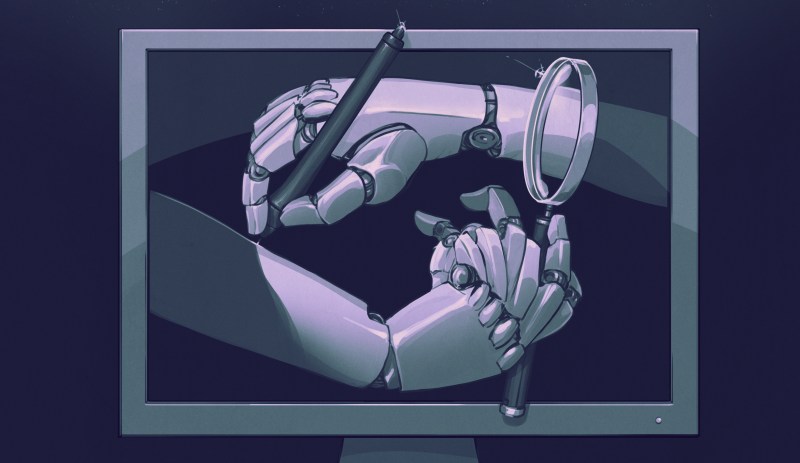
Back in the 1970s, Rockwell had an ad that proudly proclaimed: “The best electronic brains are still human.” They weren’t wrong. Computers are great and amazing, but — for now — seemingly simple tasks for humans are out of reach for computers. That’s changing, of course, but computers are still not good at tasks that require a little judgment. Suppose you have a website where people can post things for sale, including pictures. Good luck finding a computer that can reliably reject items that appear to be illegal or from a business instead of an individual. Most people could easily do that with a far greater success rate than a computer. Even more so than a reasonable-sized computer.
Earlier this month, we reported on Amazon stepping away from the “just walk out” shopping approach. You know, where you just grab what you want and walk out and they bill your credit card without a checkout line. As part of the shutdown, they revealed that 70% of the transactions required some human intervention which means that a team of 1,000 people were behind the amazing technology.
Humans in the Loop
That’s nothing new. Amazon even has a service called Mechanical Turk that lets you connect with people willing to earn a penny a picture, for example, to identify a picture as pornographic or “not a car” or any other task you really need a human to do. While some workers make up to $6 an hour handling tasks, the average worker makes a mere $2 an hour, according to reports. (See the video below to see how little you can make!) The name comes from an infamous 200-year-old chess-playing “robot.” It played chess as well as a human because it was really a human hiding inside of it.
Is that very common? Apparently, more than you would think. A company called Presto, for example, promises fast-food restaurants an AI order-taker. What could be better? The AI doesn’t get distracted by a cell phone, get into altercations with Karen, or call in sick. The problem is that about 70% of the orders require human intervention by Presto agents in the Philippines. They aren’t mentioned in the video below showing the system about a year ago, although the manager did mention he could intervene if necessary.
This has been going on for a while. You might remember Facebook’s announcement back in 2015 that they were testing an AI you could use with Facebook Messenger that would arrange your travel, place orders, and reserve restaurant tables. ChatGPT in 2015 (see the old Wall Street Journal video below)? Nope. M used human operators. They had bought the developer of the technology, Wit.ai, and shut down the test in 2018. Only 30% of user requests during the trial were handled without human intervention. Supposedly, the humans were training the AI, but it appears that M never really learned how to handle random requests. Not to be left behind, Twitter did the same scam as did lesser-known GoButler.
Does it Matter?
You might wonder why it matters. If you want flowers sent to a friend, do you care if a robot takes your request or a human? It depends. Suppose you call the florist or even walk into the shop. Sure, the kid working the counter might skim your credit card. It happens all the time. But if they do, you can hold the store accountable, and you presume they should have known the employee might be a little shady.
But imagine you go to a fast food place with a not-so-AI order taker. Some random person halfway around the world who gets paid a few cents per order might get access to your credit card. If something happens, do you think the restaurant manager has any idea about it? Or even the owners of the place? Probably not. Besides, one bad actor might get access to sensitive information from multiple places worldwide. Hard to track down and difficult to get accountability.
That’s not to say that you shouldn’t have people working with credit cards or other private information. But it does mean that maybe you shouldn’t pass them off as robots. Then, I get to decide how I share my information.
So while many people worry that they will think they’re talking to a person but it is really a computer — like Google Duplex that also relies on human intervention sometimes. However, we are also worried about the opposite case. We think it is great to create more jobs for more people. But don’t turn people into fake AI bots. We have enough of them already.
from Hackaday
-via DopeSatan

Post a Comment